Back to featured insights
Corporate Website Redesign: The Ultimate Guide
Corporate website redesign is a strategic step to keep your business competitive in the digital era. This guide explains key signs your website needs a redesign, the benefits of updating your corporate site, and best practices to build a modern, effective online presence.
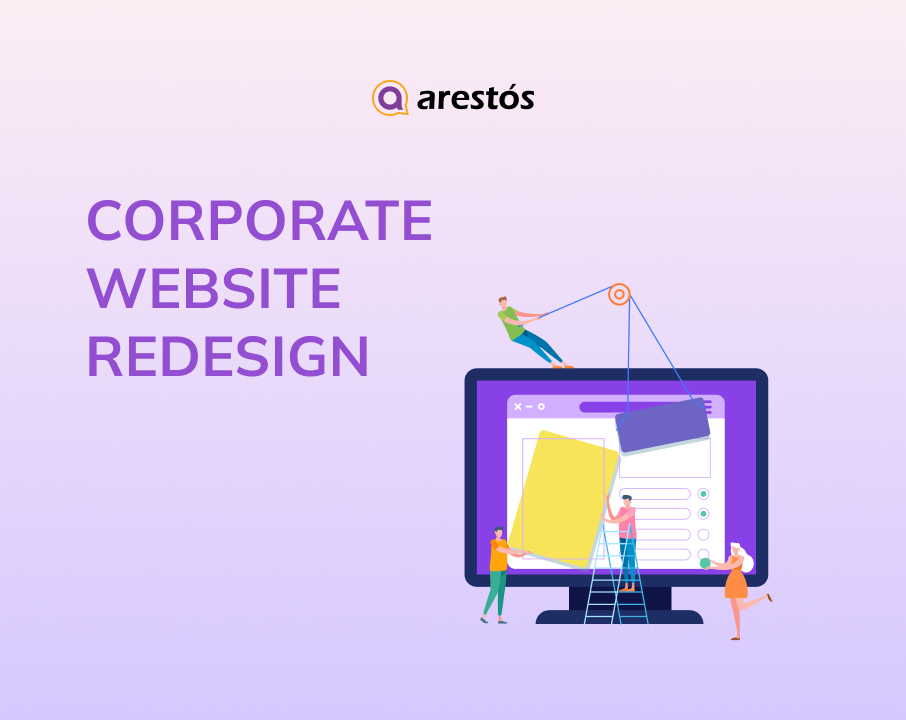

Table of Content
Share
Corporate website redesign is becoming increasingly essential as businesses strive to stay competitive in a fast-evolving digital landscape. A well-executed redesign improves user experience, strengthens brand perception, and drives measurable business results.
This topic is especially crucial for organisations whose websites feel outdated, underperforming, or misaligned with their current goals. In this guide, you’ll learn the key benefits, best practices, and the clear signs that indicate when your corporate website truly needs a redesign.
What is a website redesign?
A website redesign is the process of updating and improving an existing website to make it more modern, user-friendly, and aligned with current business and branding needs. It often involves refreshing the layout, enhancing usability, reorganizing content, and upgrading the technology behind the site to deliver a better user experience and overall performance.
If you’re unsure where to start, The checklist to review your website to ensure seamless performance can help you quickly evaluate your site’s current state and identify key improvement areas.
5 Signs Your Corporate Website Needs a Redesign
Before investing in a full redesign, it’s important to recognize the clear warning signs that your corporate website is no longer meeting business or user expectations.
Your website looks outdated and no longer matches your brand
A corporate website that feels old-fashioned weakens credibility and no longer reflects your brand’s current positioning. If the design is outdated, it’s time to consider a redesign.
- Inconsistent colors, typography, or visuals compared to your current branding
- Outdated layouts that don’t follow modern UI/UX standards
- Low-quality or outdated images and graphics
- A cluttered design that makes navigation difficult
It isn’t responsive across devices
If your site doesn’t display well on mobile, tablet, and desktop, users will quickly drop off. A non-responsive site also harms SEO performance.
- Layout breaks or overlaps on smaller screens
- Text is too small or buttons are difficult to tap
- Poor mobile navigation and usability
- High mobile bounce rate
Slow loading speed affects user engagement
Slow performance frustrates users and directly impacts conversions. Modern visitors expect a site to load in under 3 seconds.
- Heavy, unoptimized images
- Outdated code or bulky plugins
- Poor server performance
- High exit rate on pages with slow load times
Low conversion rates and poor user journey
If users aren’t taking action, your website may not be guiding them effectively. An unclear structure leads to lost opportunities.
- Confusing site architecture
- Weak or missing call-to-action buttons
- Overwhelming or hard-to-read content
- Users abandon key pages before completing actions
It can’t scale or integrate with modern tools
A site that can’t grow with your business limits digital transformation. Modern companies need a flexible and future-proof platform.
- Difficulties integrating CRM, marketing, or automation tools
- Outdated CMS with limited customization
- Lack of scalability for new features
- Technical limitations that slow down business operations
Benefits of a Corporate Website Redesign
A corporate website redesign delivers far more than a visual upgrade — it strengthens brand impact, enhances user experience, and creates a stronger digital foundation for long-term growth.
- Strengthens brand credibility: A modern and cohesive design instantly improves how your company is perceived by clients and partners.
Improves user experience: Clear navigation, intuitive layouts, and streamlined content help users find what they need faster. - Boosts engagement and conversions: Faster pages, stronger CTAs, and optimized user flows lead to more form submissions, inquiries, and sales.
- Enhances mobile performance: A fully responsive redesign ensures a seamless browsing experience across mobile, tablet, and desktop.
- Supports scalability and integrations: A refreshed technical foundation makes it easier to integrate CRM, automation tools, and future digital features.
The Corporate Website Redesign Process (Step-by-Step)
Redesigning a corporate website requires a structured approach to ensure the final product aligns with business goals, user needs, and modern technical standards. Below is a clear step-by-step process:
Step 1: Define goals and project scope
Start by identifying what you want the redesign to achieve — better UX, stronger branding, higher conversions, or improved technical performance.
- Clarify KPIs
- Understand business and stakeholder requirements
- Identify challenges with the current website
Step 2: Analyze your existing website
Evaluate what’s working, what’s not, and what needs improvement.
- UX and UI audit
- Performance and speed testing
- SEO and content analysis
- Competitor benchmarking
Step 3: Research your audience and user journey
A successful redesign is user-centered.
- Identify user personas
- Map key user journeys
- Understand motivations, pain points, and behavior
Step 4: Plan the new information architecture
Organize pages and structure so users can navigate effortlessly.
- Sitemap restructuring
- Content mapping
- Navigation optimization
Step 5: Create wireframes and UI design
Transform strategy into visuals that reflect your brand.
- Low-fidelity wireframes for layout
- High-fidelity UI for final design
- Updated brand elements, imagery, and typography
Step 6: Develop the new website
Turn the design into a fully functional site using the right tech stack.
- Front-end and back-end development
- CMS setup (WordPress, custom CMS, headless, etc.)
- Integrations with CRM, marketing automation, or internal systems
Step 7: Test thoroughly before launch
Quality assurance ensures the website performs flawlessly.
- Functional and usability testing
- Cross-browser and cross-device testing
- Speed and performance optimization
- Security review
Step 8: Launch and monitor performance
Go live with a stable, optimized build — then measure results.
- SEO migration and redirects
- Analytics setup
- Continuous monitoring of KPIs
- Fixing post-launch issues if needed
Step 9: Maintain and optimize continuously
A redesign is the beginning, not the end.
- Regular updates and improvements
- Content refresh
- Performance optimization
- Iterations based on user data
Corporate Website Redesign Best Practices
A successful corporate website redesign requires more than a new look — it demands strategic planning, user-centric thinking, and long-term scalability. Here are the best practices to follow:
- Prioritize user experience: Focus on simple navigation, clear structure, and intuitive layouts to help visitors find information effortlessly.
- Keep branding consistent: Use unified colors, typography, messaging, and visuals that accurately reflect your corporate identity.
- Design mobile-first: Ensure the entire experience is optimized for mobile screens, where most users begin their journey.
- Use high-quality content: Update copy, visuals, and messaging to communicate value clearly and professionally.
- Optimize for speed and performance: Compress images, refine code, and choose reliable hosting to ensure fast load times.
- Incorporate strong CTAs: Guide users clearly toward actions like submitting forms, booking demos, or contacting sales.
- Follow SEO best practices: Structure content, metadata, URLs, and internal links for better search visibility.
- Ensure accessibility compliance: Make the website usable for all users with proper contrast, readable text, and keyboard-friendly navigation.
- Test thoroughly before launch: Check usability, performance, security, and cross-device behavior to avoid issues.
- Plan for future scalability: Choose a CMS and architecture that can grow with your business needs.
Frequently Asked Questions
1. How often should a corporate website be redesigned?
Most companies redesign their websites every 2–3 years to stay aligned with brand updates, technology changes, and user expectations.
2. What are the signs that my corporate website needs a redesign?
Common signs include outdated visuals, slow loading speed, poor mobile experience, low conversions, hard-to-update backend, or brand misalignment.
3. Do I need to redesign the entire website or just update certain parts?
Not always. If the core structure is solid, you may only need UX updates, visual refresh, or performance optimization.
4. How much does a corporate website redesign usually cost?
Costs vary depending on scope, design complexity, and development needs. Corporate websites typically range from mid to high budgets based on custom requirements.
Conclusion
A corporate website redesign isn’t just a visual upgrade — it’s a strategic investment that improves user experience, strengthens brand credibility, and supports long-term business growth. By understanding the key signs your website needs a refresh, following best practices, and applying a structured redesign process, your organisation can build a modern, high-performing website that aligns with your digital goals.
Arestós offers professional web development and redesign services for businesses of all sizes. Their team can help build a corporate website that is visually appealing, scalable, and aligned with your brand, providing a strong online presence to support business growth.
Ready to elevate your corporate website? Contact us today to start your redesign journey and enhance your online presence.

Subscribe to our newsletter!
Get updated to
the lastest IT trends
Related Posts
Update the latest technology trends for your business