Back to featured insights
Offshore IT Staffing vs IT Outsourcing: Which One Suits For Your Hong Kong Biz
Offshore IT Staffing and IT Outsourcing offer different ways to access IT talent and support business growth. Learn how these models differ and which approach may better fit your company’s needs, goals, and working style.
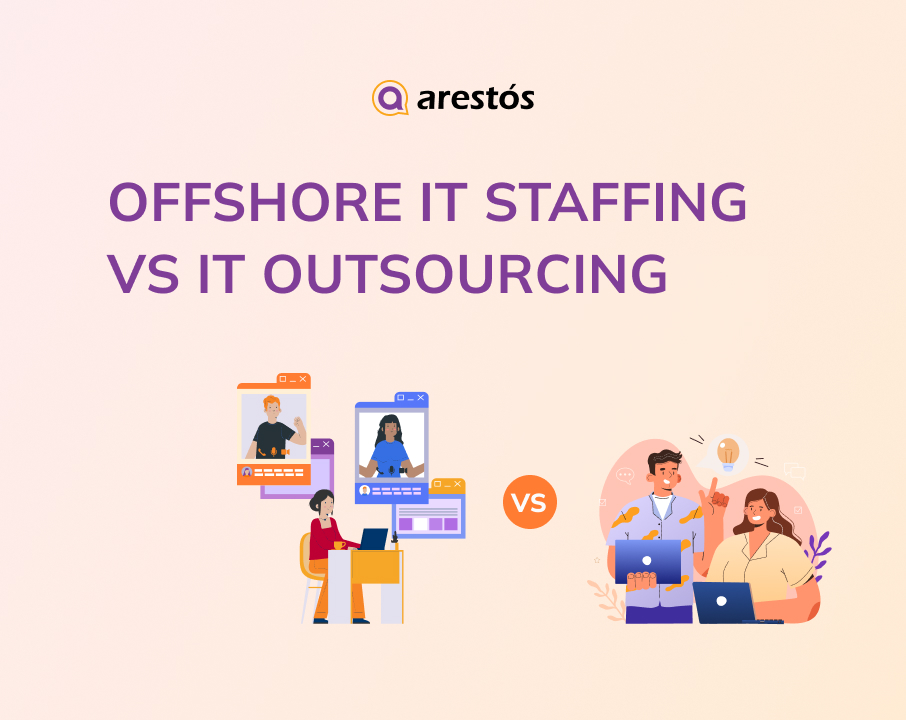

Table of Content
Share
Offshore IT Staffing vs IT Outsourcing is an important decision for Hong Kong businesses looking to access IT talent, control costs, and scale their technology teams. Each model offers different benefits in terms of flexibility, management, expertise, and cost efficiency.
This guide is for Hong Kong businesses considering offshore staffing, IT outsourcing, or a combination of both. In this guide, we’ll explain the key differences between Offshore IT Staffing and IT Outsourcing to help you choose the right model for your business needs.
Offshore IT Staffing vs IT Outsourcing: What’s the Difference?
What Is Offshore IT Staffing?
Offshore IT Staffing is a hiring model where a business partners with an external provider to access dedicated IT professionals located overseas. These professionals work as an extension of the company’s internal team and are assigned directly to its projects and daily tasks.
To better understand this model, see our guide Offshore IT Staffing: Benefits, Costs & Challenges for Hong Kong Companies.
Pros and Cons of Offshore IT Staffing
Offshore IT Staffing offers businesses greater flexibility and access to skilled IT talent, but it also requires effective communication and team management. Understanding both the advantages and limitations can help businesses decide whether this model fits their needs.
Pros:
- Access to a wider talent pool: Connect with skilled IT professionals beyond the local market.
- Cost efficiency: Reduce recruitment and workforce costs compared with building a larger local IT team.
- Greater control: Manage offshore professionals directly and align them with your internal workflows.
- Flexible scaling: Easily add or reduce team members as project and business needs change.
- Long-term team integration: Offshore professionals can work as an extension of your existing team.
Cons:
- Communication challenges: Differences in communication styles or working practices may require additional coordination.
- Management responsibility: Your internal team still needs to assign tasks, monitor performance, and manage the offshore team.
- Time-zone considerations: Working across different locations may require overlapping working hours and clear communication processes.
- Data security risks: Businesses need appropriate security policies and controls when giving external professionals access to systems and data.
Offshore IT Staffing: How Does It Work?
Offshore IT Staffing is a hiring model where a business partners with an external provider to access dedicated IT professionals located overseas. These professionals work as an extension of the company’s internal team and are assigned directly to its projects and daily tasks.
The process typically works as follows:
- Define your staffing needs — The business identifies the required roles, skills, experience, project scope, and team size.
- Choose an offshore staffing provider — The provider sources and screens IT professionals based on the company’s requirements.
- Select the right candidates — The business reviews candidates and chooses the professionals who best fit its project.
- Build the dedicated team — Selected developers, designers, QA engineers, or other IT specialists join the project team.
- Manage the team directly — The business assigns tasks, sets priorities, communicates with team members, and monitors project progress, while the provider generally handles payroll and employment-related administration.
- Scale the team when needed — The business can add or reduce team members as project requirements change.
For example, a Hong Kong e-commerce company developing a new website could hire a dedicated offshore team of web developers, UI/UX designers, and QA engineers. The company manages the team’s daily work and project direction, while the staffing provider handles employment-related responsibilities.
This model gives Hong Kong businesses more control over their IT team than traditional outsourcing, while making it easier to access skilled IT professionals and scale the team as needed.
For businesses looking for a reliable provider, explore the top 10 offshore IT staffing companies in Hong Kong to find the right partner.
What Is IT Outsourcing?
IT Outsourcing is a business model where a company hires an external IT provider to handle specific technology services, projects, or functions. Instead of hiring individual IT professionals, the business delegates the required work to the provider, who is typically responsible for managing the team, development process, and final deliverables.
For example, a Hong Kong business may outsource website development, software development, cloud services, cybersecurity, or IT support to an external provider. This allows the company to access specialised expertise without building and managing a large internal IT team.
Pros and Cons of IT Outsourcing
IT Outsourcing can help businesses access specialised expertise and reduce the need for internal IT resources. However, it may also mean less direct control over the team and development process.
Pros:
- Access to specialised expertise: Work with professionals experienced in specific technologies or projects.
- Lower internal workload: The provider handles much of the technical execution and project management.
- Cost efficiency: Avoid the costs of recruiting and maintaining a large in-house IT team.
- Faster project delivery: Experienced providers can often start projects with an established team and processes.
- Focus on core business: Internal teams can concentrate on business strategy while the provider handles technical work.
Cons:
- Less direct control: The business has less control over individual developers and daily operations.
- Communication challenges: Misunderstandings can occur between the client and external provider.
- Less flexibility: Changes to project scope may require additional discussions, time, or costs.
- Vendor dependency: Relying heavily on one provider can create challenges if the partnership ends.
- Quality and security concerns: Businesses need to carefully evaluate the provider’s technical capabilities, security practices, and delivery standards.
IT Outsourcing: How Does It Work?
IT Outsourcing is a business model where a company hires an external IT service provider to handle specific projects, functions, or the entire IT operation. Instead of managing individual external developers directly, the company delegates responsibility for delivering the agreed services or project outcomes to the provider.
The process typically works as follows:
- Define the project requirements — The company identifies its business goals, project scope, timeline, budget, and technical requirements.
- Choose an IT outsourcing provider — The company evaluates providers based on their technical expertise, experience, pricing, and track record.
- Agree on the scope and contract — Both parties define deliverables, timelines, responsibilities, communication methods, and pricing. Contracts may be fixed-price, time-and-materials, or based on other pricing models.
- The provider builds the team — The outsourcing company selects and manages the developers, designers, QA engineers, project managers, and other specialists required for the project.
- The provider delivers the project or service — The external team handles development and day-to-day execution based on the agreed requirements, while the client monitors overall progress and results.
- Review and ongoing support — After delivery, the provider may provide maintenance, technical support, updates, or further development depending on the contract.
For example, a Hong Kong company may outsource the development of a corporate website to an IT outsourcing provider. The provider manages the development team, technical execution, testing, and delivery, while the Hong Kong company mainly focuses on business requirements and reviewing the final results.
Offshore IT Staffing vs IT Outsourcing at a Glance
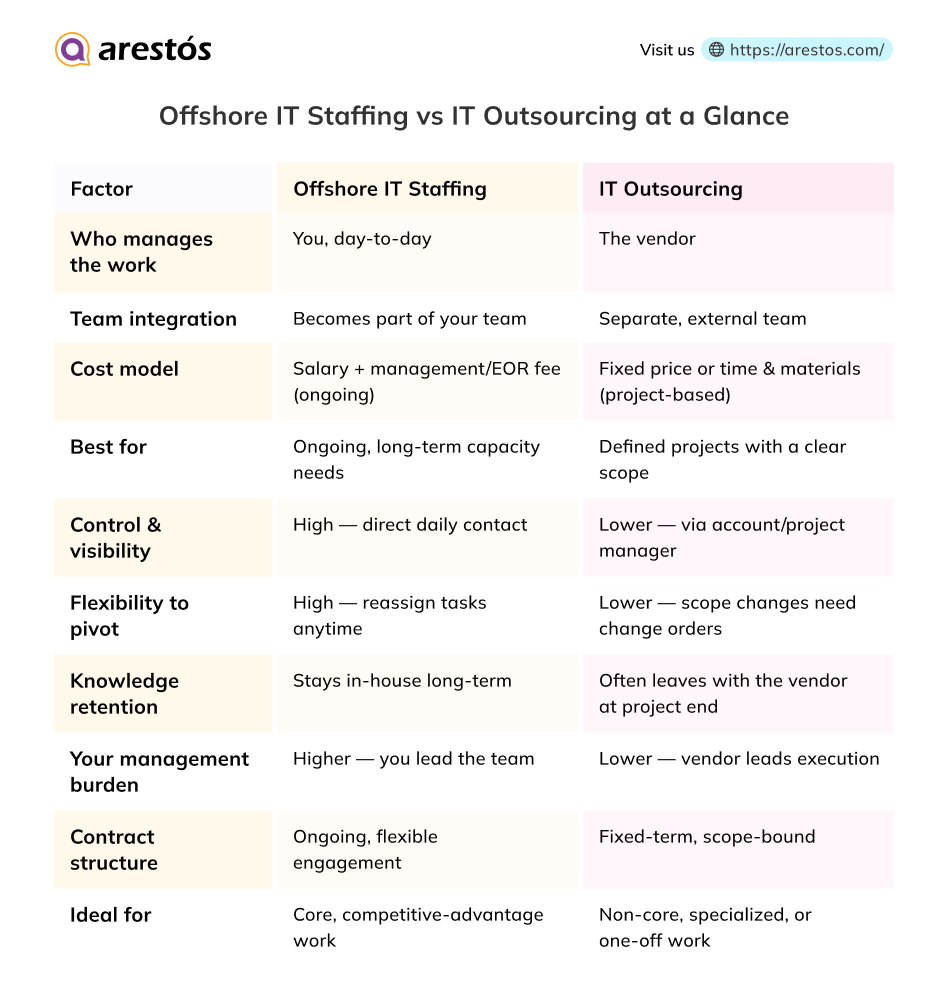
The main difference between Offshore IT Staffing and IT Outsourcing is who controls the work. With offshore staffing, you manage dedicated IT professionals as part of your team. With outsourcing, the vendor manages the team and takes responsibility for delivering the agreed project or service.
Outsourcing vs Offshoring: Cost, Control, and Risk
The right choice between outsourcing and offshoring depends on overall costs, desired level of control, implementation speed, and potential risks, not simply on the model’s name.
Cost Structure
The cost of Offshore IT Staffing and IT Outsourcing depends on more than the initial quoted price. Businesses should consider the pricing model, engagement period, management responsibilities, and potential additional costs before deciding which option offers better value.
Offshore IT Staffing Costs
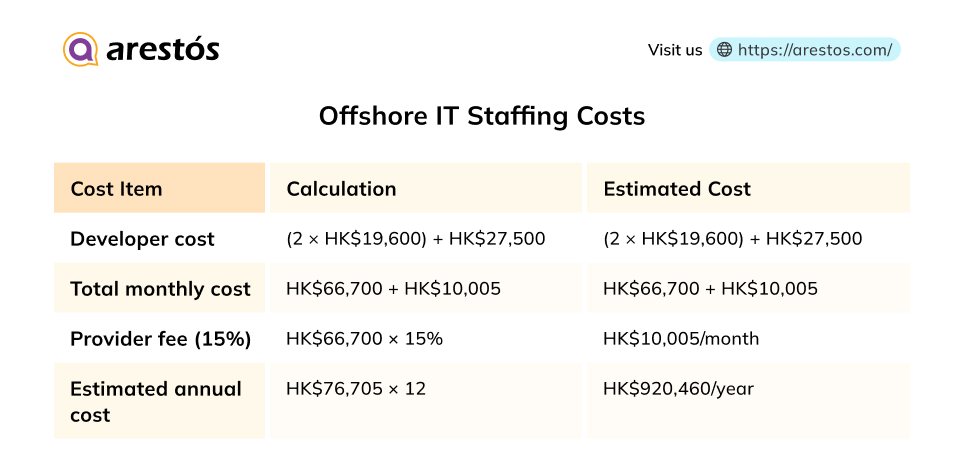
With Offshore IT Staffing, businesses typically pay for dedicated IT professionals on a monthly basis. The total cost depends on the number of professionals, their experience, technical skills, and any staffing or management fees charged by the provider.
Basic formula: Total Staffing Cost = (Number of IT Professionals × Monthly Rate × Engagement Period) + Provider Fees
For example, assume a Hong Kong business needs 2 mid-level developers at approximately HK$19,600/month each and 1 senior developer at approximately HK$27,500/month, with a 15% provider fee for a 12-month engagement.
For a more detailed of offshore staffing costs, see our guide to Offshore IT Staffing vs Local Hiring
IT Outsourcing Costs
IT Outsourcing typically uses a project- or service-based pricing model. Instead of paying for dedicated professionals, the business pays a provider to deliver a specific project, service, or agreed outcome.
For example, suppose a Hong Kong business receives a fixed-price quote of HK$392,500 for an e-commerce development project. The project is expected to take six months.
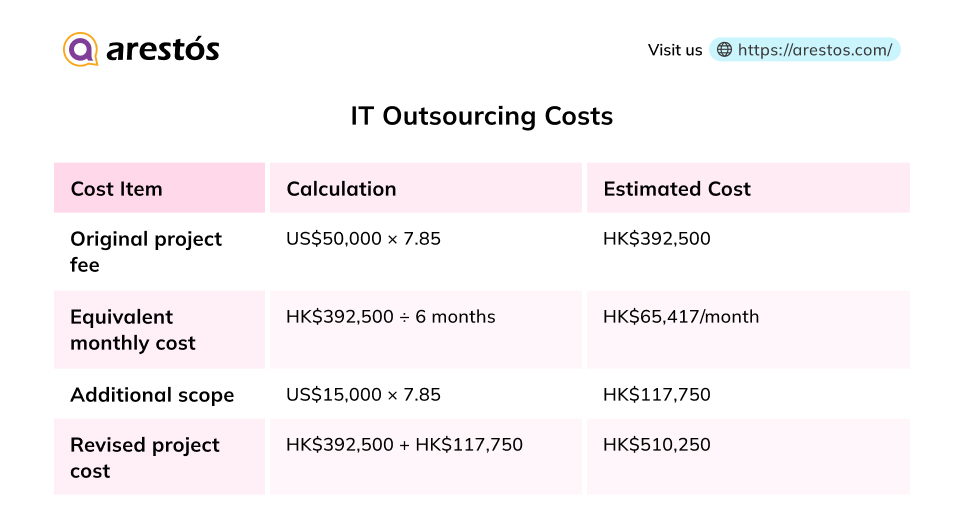
This example shows that the initial outsourcing quote may not always be the final cost. Additional features, scope changes, or extended timelines can increase the total project price.
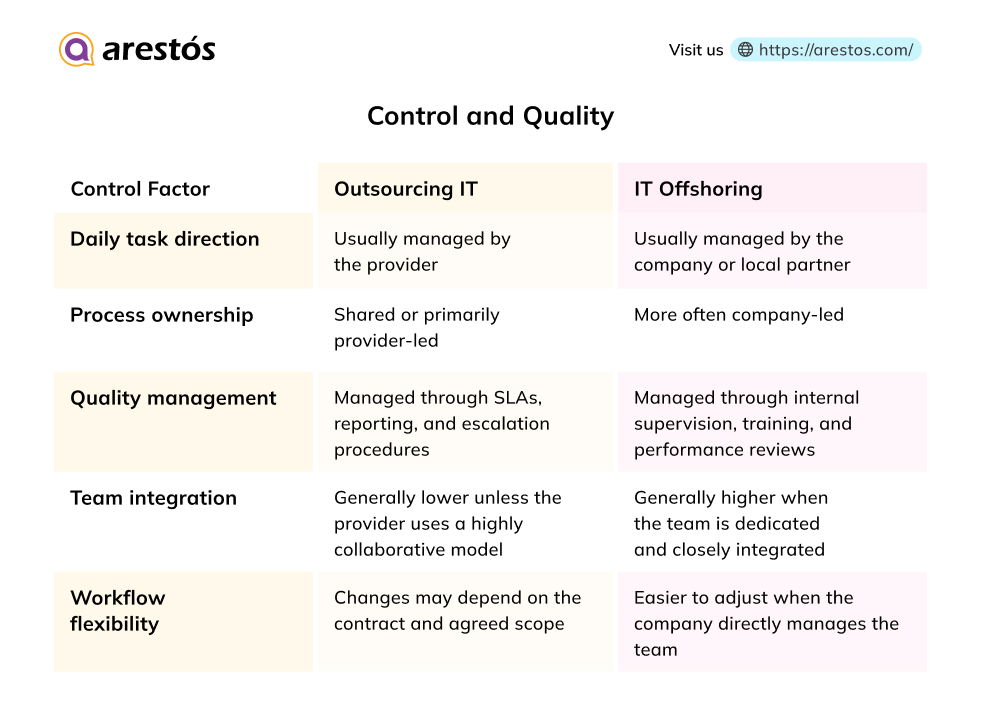
Control and Quality
Outsourcing can reduce the internal management burden by allowing the provider to handle most of the project delivery and team coordination.
Offshoring can provide greater control when working with a dedicated or directly managed team, but it also requires stronger internal processes for communication, coordination, and performance management.
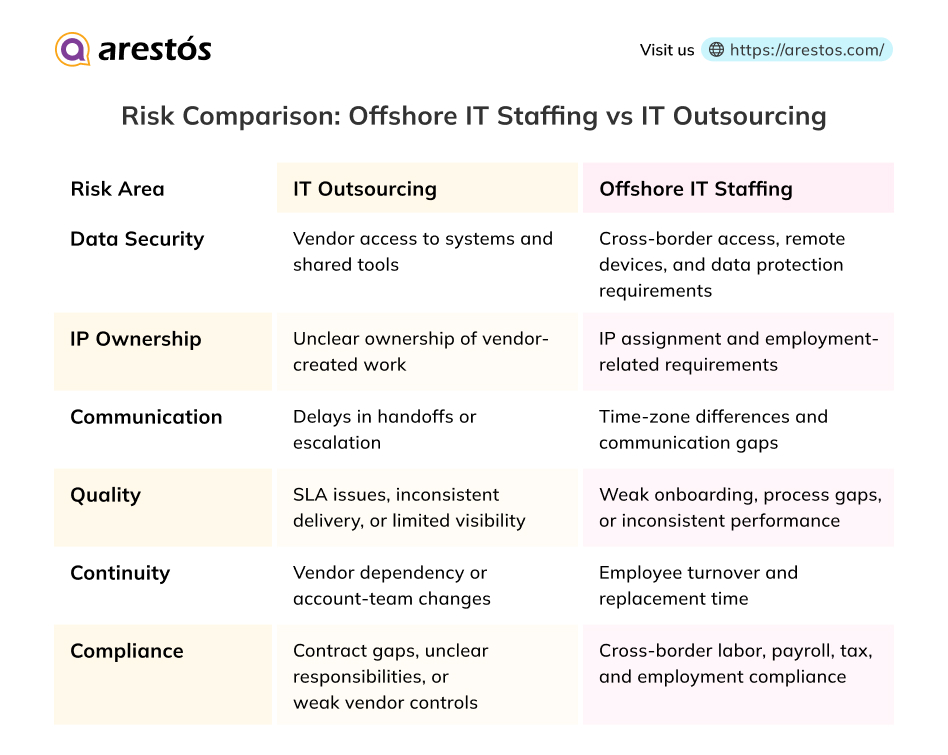
Risk Comparison: Offshore IT Staffing vs IT Outsourcing
Both models involve risks, but the nature of those risks differs. IT Outsourcing mainly involves vendor performance, communication, and delivery risks, while Offshore IT Staffing can involve cross-border employment, compliance, and workforce management risks.
When both models are combined, businesses may need to manage both types of exposure.
Which Model Fits Your Business? A Decision Framework
The right model depends on the nature of the work, level of control required, and internal management capacity.
Choose Offshore IT Staffing if:
- There is an ongoing, long-term need for IT capacity, rather than a one-off project.
- The business has, or plans to build, in-house technical leadership to direct daily work.
- The work is core to the product, operations, or competitive advantage.
- Direct control, visibility, and communication with IT professionals are important.
- Building and retaining long-term technical knowledge within the business is a priority.
Choose IT Outsourcing if:
- The project has a clear scope, defined deliverables, and timeline.
- There is limited internal capacity to manage an IT team day-to-day.
- The work is non-core, one-off, or highly specialised, such as a security audit, system migration, or compliance project.
- The business wants the vendor to be responsible for the agreed outcome.
- Budget certainty matters more than flexibility.
Hybrid Models — Why Not Both?
Businesses do not always need to choose between the two. Hybrid models combine dedicated offshore talent for ongoing work with outsourcing for specialised or one-off projects.
For example, a Hong Kong bank could maintain an offshore development team managed by its internal technology department for daily platform maintenance, while outsourcing a mobile app redesign to a specialist agency.
This approach keeps core capabilities under direct control while bringing in external expertise when needed, creating a balance between control, flexibility, expertise, and cost efficiency.
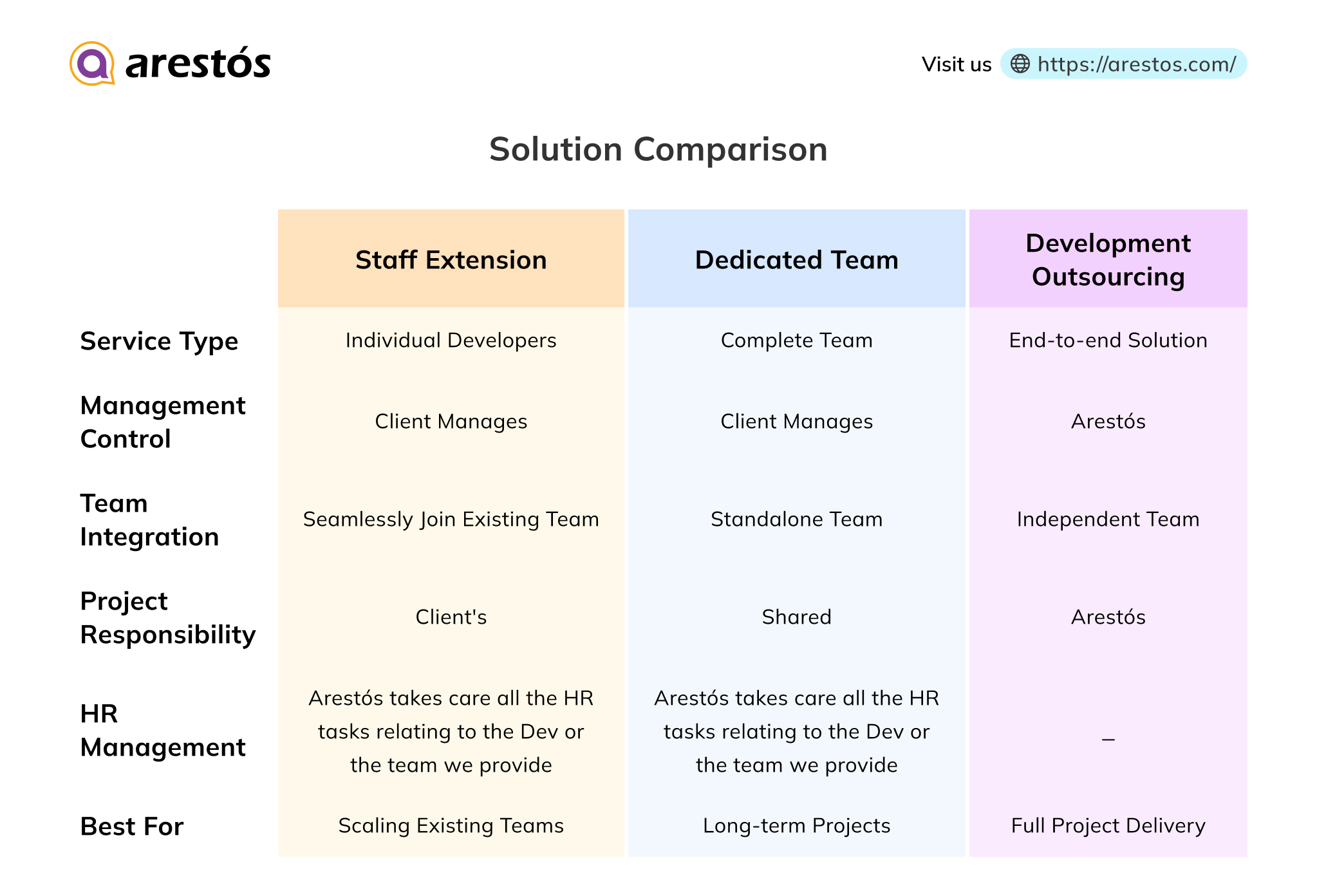
Arestós Consultant can help you find out the best option based on your project requirements. Whether you need dedicated offshore IT professionals to support your internal team or IT Outsourcing for a specific project, Arestós can help you choose the right approach for your business.
Solution Comparison
Frequently Asked Questions
1. Is Offshore IT Staffing cheaper than IT Outsourcing?
Not always. Offshore IT Staffing can be more cost-effective for long-term projects, while IT Outsourcing may offer better value for short-term or project-based work.
2. Which model gives businesses more control?
Offshore IT Staffing generally gives businesses more control because they directly manage the offshore team, tasks, and daily workflow.
3. Can Offshore IT Staffing and IT Outsourcing be used together?
Yes. Businesses can use Offshore IT Staffing for ongoing work and IT Outsourcing for specialised or one-off projects.
4. Is Offshore IT Staffing suitable for long-term projects?
Yes. It is well suited to long-term projects because businesses can build a dedicated offshore team and manage it as an extension of their internal team.
5. Which model offers better flexibility?
It depends on the business needs. Offshore IT Staffing offers more flexibility in managing people and tasks, while IT Outsourcing offers flexibility by allowing businesses to hand over specific projects or functions to an external provider.
Conclusion
Offshore IT Staffing vs IT Outsourcing ultimately comes down to how much control, flexibility, and responsibility your business needs. Offshore IT Staffing gives businesses more direct control over dedicated IT professionals, while IT Outsourcing allows companies to hand over specific projects or functions to an external provider. For some businesses, a hybrid approach can offer the best balance of control, expertise, flexibility, and cost efficiency.
Arestós provides both Offshore IT Staffing and IT Outsourcing services, helping Hong Kong businesses find the right IT solution based on their project requirements. Whether you need dedicated offshore IT professionals to support your internal team or a complete IT solution for a specific project, Arestós can help you find the most suitable option.
Ready to find the right IT model for your business? Contact us today.
Subscribe to our newsletter!
Get updated to
the lastest IT trends
Related Posts
Update the latest technology trends for your business