Back to featured insights
Who Owns Your Code? IP Risks of Hiring Offshore Developers in Hong Kong
Hiring offshore developers can raise important questions about intellectual property ownership and control. This guide explains the key IP risks, legal considerations, and practical steps Hong Kong businesses can take to protect their software and technology assets.
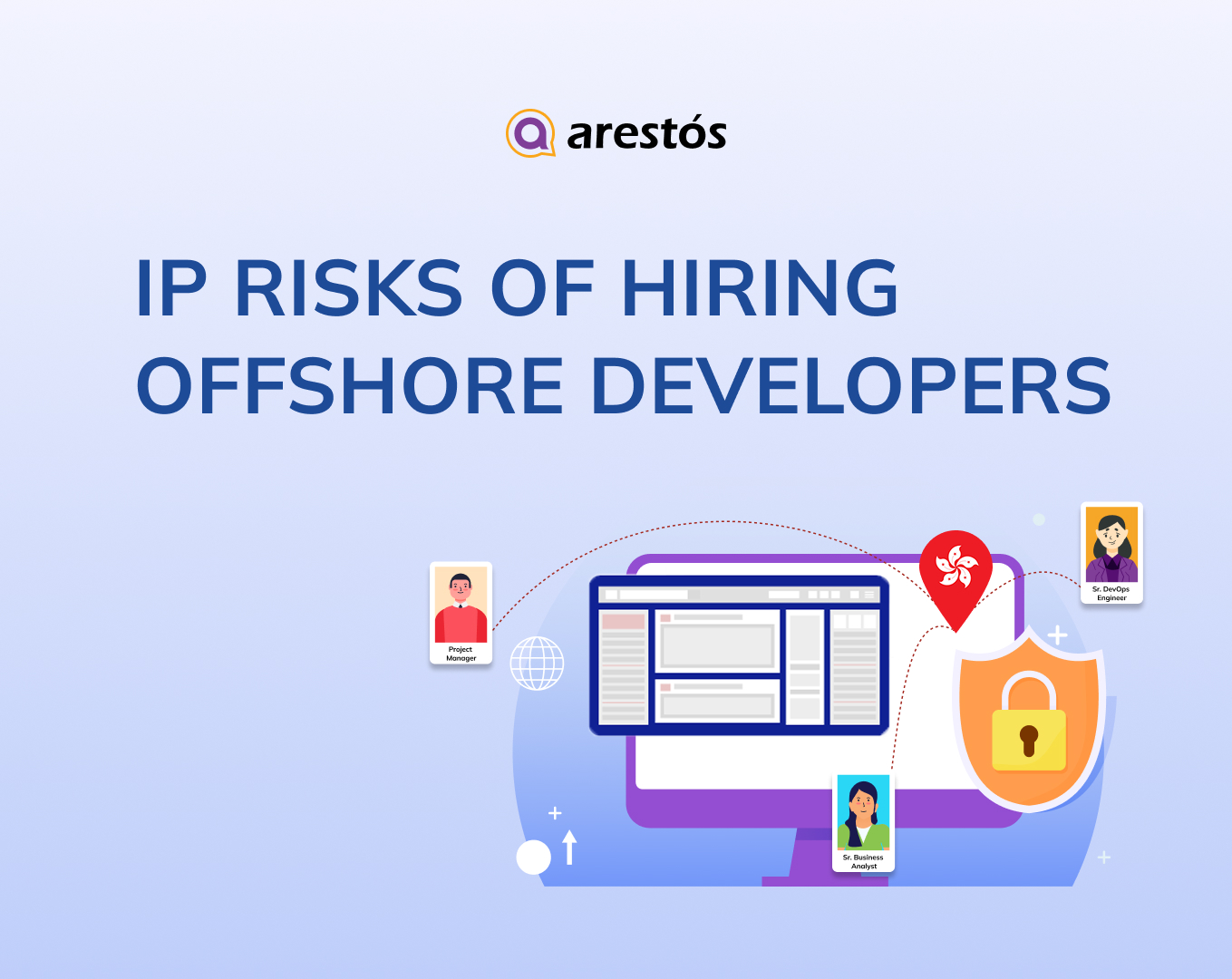

Table of Content
Share
Understanding the IP Risks of Hiring Offshore Developers is essential when your software, source code, and proprietary assets are developed by an external team. This guide explains how to protect ownership, reduce IP disputes, and maintain control over your technology assets.
It is useful for businesses considering or currently working with offshore development teams. In this guide, we explore key IP risks, ownership considerations, and practical ways to protect your intellectual property.

Does Paying an Offshore Developer Mean You Own the Code?
Not necessarily. Paying an offshore developer does not automatically mean your company owns all intellectual property in the software. In Hong Kong, copyright ownership can depend on the nature of the work, the parties’ relationship and the terms of the agreement.
Therefore, source-code ownership should be clearly established in the contract. The agreement should define the project deliverables, newly created IP, pre-existing IP, third-party components and the rights transferred to the client.
Ownership Is Different from Possession
A common mistake is to treat having the code as equivalent to owning the code. These are different concepts.
A company may have a copy of the source code, access to the Git repository or permission to use the software without actually owning the underlying copyright.
For example:
- Having a copy of the source code means your company possesses the code, but possession does not necessarily transfer copyright ownership.
- Having access to a Git repository gives your team technical access to the code and its history, but repository access does not determine who legally owns the copyright.
- Having a perpetual licence may give your company ongoing rights to use, modify or distribute the software, depending on its terms, while the developer or vendor may retain ownership.
- Owning copyright gives the copyright owner the relevant exclusive rights provided by law, subject to the applicable statutory provisions and any contractual arrangements.
Under Hong Kong’s Copyright Ordinance, the general rule is that the author is the first owner of copyright, subject to specific exceptions. Employee works and commissioned works are treated differently, which is particularly relevant when an enterprise engages an offshore development company rather than directly employing the individual developers.
Therefore, an enterprise should ask “What rights do we have?”, not simply “Do we have the code?”
Source Code Can Involve Multiple Layers of IP
A software project is rarely just a collection of custom source-code files. It may contain multiple types of intellectual property, some of which may belong to the development vendor, individual developers or third parties.
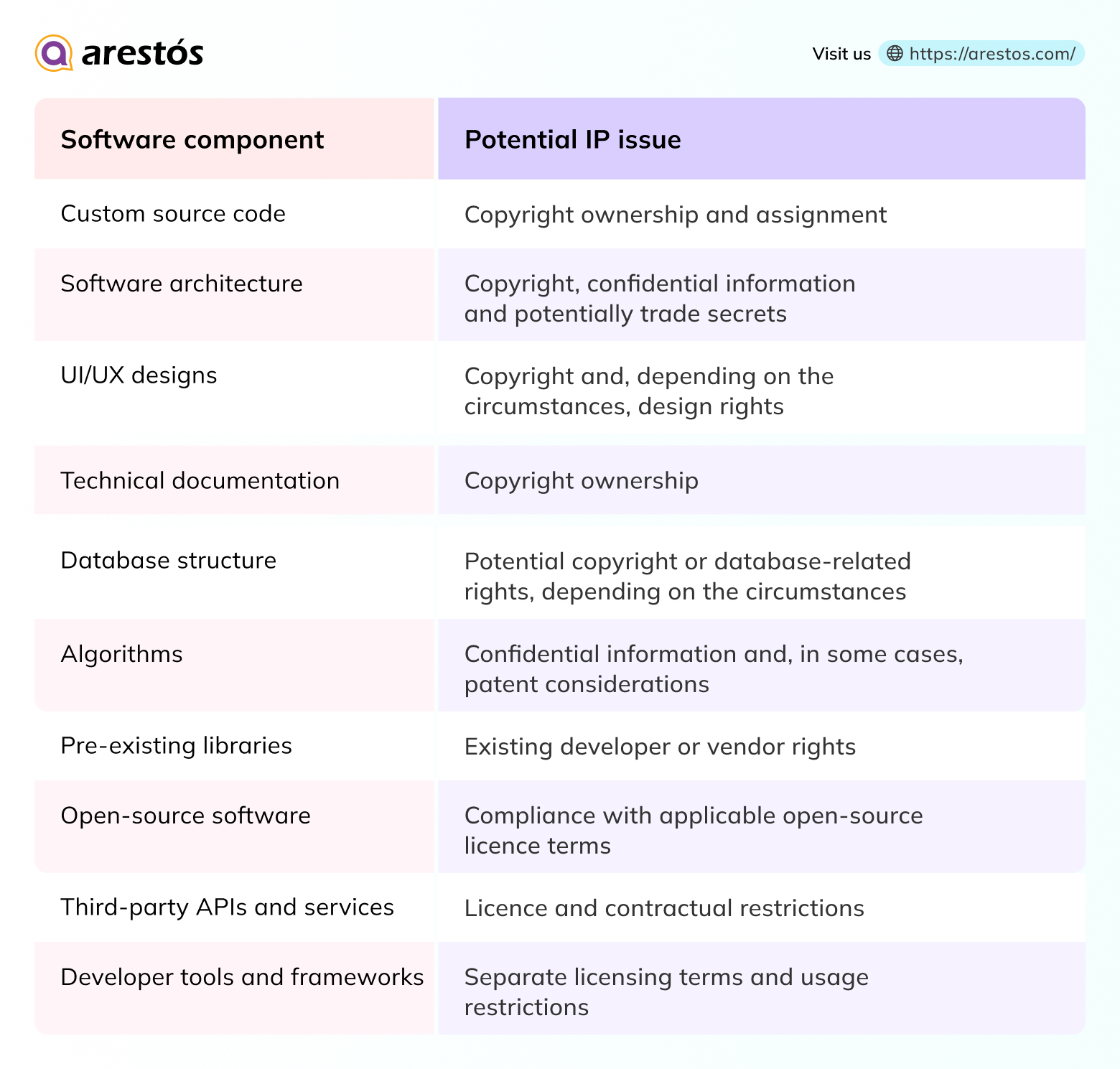
What Hong Kong Enterprises Should Clarify
Before development begins, the contract should clearly separate:
- Project IP: Code, documentation, designs and other deliverables created specifically for the client’s project.
- Background IP: Pre-existing technology, libraries, frameworks, tools or other materials owned by the developer or vendor before the project.
- Third-Party IP: Software, APIs, libraries, datasets or other materials owned or licensed by parties outside the client-vendor relationship.
- The agreement should then specify who owns each category and what rights the client receives.
This is particularly important for offshore development because the contracting company may not be the same entity as the individual developers who actually create the software. The client should therefore verify that the offshore vendor has obtained the necessary rights from its employees, contractors and subcontractors and can validly provide the ownership or licences promised in the client agreement.
For Hong Kong enterprises, the Intellectual Property Department also recommends considering IP ownership, management and due diligence as part of broader IP asset management.
How Does Copyright Ownership Work for Software in Hong Kong?
In Hong Kong, computer software is protected by copyright under the Copyright Ordinance. However, who owns the copyright can depend on the parties’ relationship and the terms of their agreement. For offshore development, clearly defining ownership and licensing rights in the contract is essential.
Who Is the First Copyright Owner?
The answer depends partly on who created the software and under what relationship.
- Employee: Copyright ownership can follow the statutory rules applicable to works created by employees in the course of employment.
- Independent contractor: The contractor relationship should not be treated the same as employment; contractual terms become particularly important.
- Development company: Where a company is engaged to develop software, the client should not simply assume that payment makes it the copyright owner.
- Client: The client can obtain ownership or specific usage rights through an appropriate contractual arrangement.
For commissioned works, the Hong Kong IPD states that copyright ownership depends on the agreement between the parties. Therefore, an enterprise should not rely on the assumption that commissioning and paying for software automatically transfers all copyright to the client.
For offshore development, this becomes even more important because the individual developer writing the code may be an employee or contractor of the offshore vendor rather than an employee of the Hong Kong client.
Assignment vs Licence
A development agreement should clearly state whether copyright is assigned to the client or whether the client receives a licence to use the software. Hong Kong’s copyright framework recognises transactions that affect copyright ownership and interests, including assignments and licences.
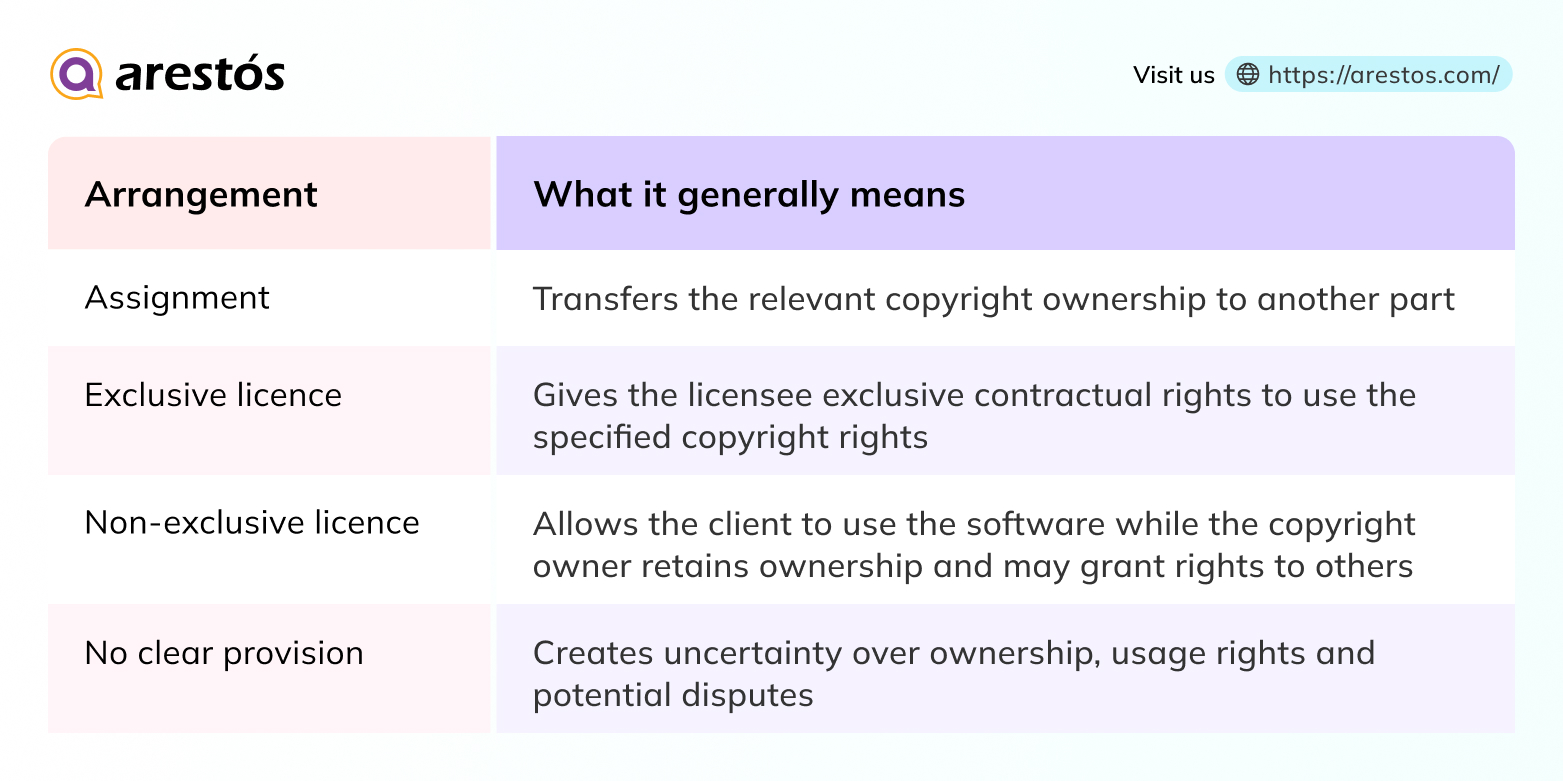
For Hong Kong enterprises, an IP assignment clause should be considered where the business expects to own the custom software it is commissioning. If the vendor retains ownership of certain pre-existing components, the agreement should instead specify the scope of the licence the client receives.
The 7 Biggest IP Risks When Hiring Offshore Developers
Offshore development can involve various intellectual property risks that businesses should consider before and during a project.
Unclear Copyright Ownership
Risk: A contract may state that the client “owns the software” without clearly defining which intellectual property rights are actually transferred. This can create uncertainty over who owns and controls the source code after development is completed.
What Should the Agreement Cover?
The contract should clearly identify the specific deliverables and intellectual property involved, including:
- Source code: The human-readable code developed for the project.
- Object code: The compiled version of the software.
- Documentation: Technical, system, and user documentation created for the project.
- Architecture: System architecture, designs, and technical specifications.
- Databases: Custom database structures, schemas, and related materials.
- UI assets: Custom interfaces, graphics, designs, and other project-specific assets.
- Custom libraries: Libraries or reusable components developed specifically for the client.
- Technical materials: Development documentation, configurations, scripts, and technical specifications.
- Future developments: Modifications, updates, or enhancements created under the agreement.
Simply paying for development does not by itself provide sufficient contractual certainty about ownership. The agreement should state what IP is transferred, when the transfer takes effect, and what rights the client receives.
Pre-Existing Code
Risk: Offshore developers may use pre-existing frameworks, modules, libraries, templates, utilities, development tools, or reusable components when building the software. These materials may not automatically become the client’s property.
The Problem: The client may own the newly created project code but not the developer’s pre-existing IP. Without clear contractual terms, this can create uncertainty over what the client can use, modify, or transfer after the project ends.
Contract Solution
The agreement should clearly distinguish between:
- Background IP: Pre-existing IP owned or controlled by the developer or other third parties.
- Foreground / Project IP: IP newly created specifically for the client’s project.
The contract should then specify:
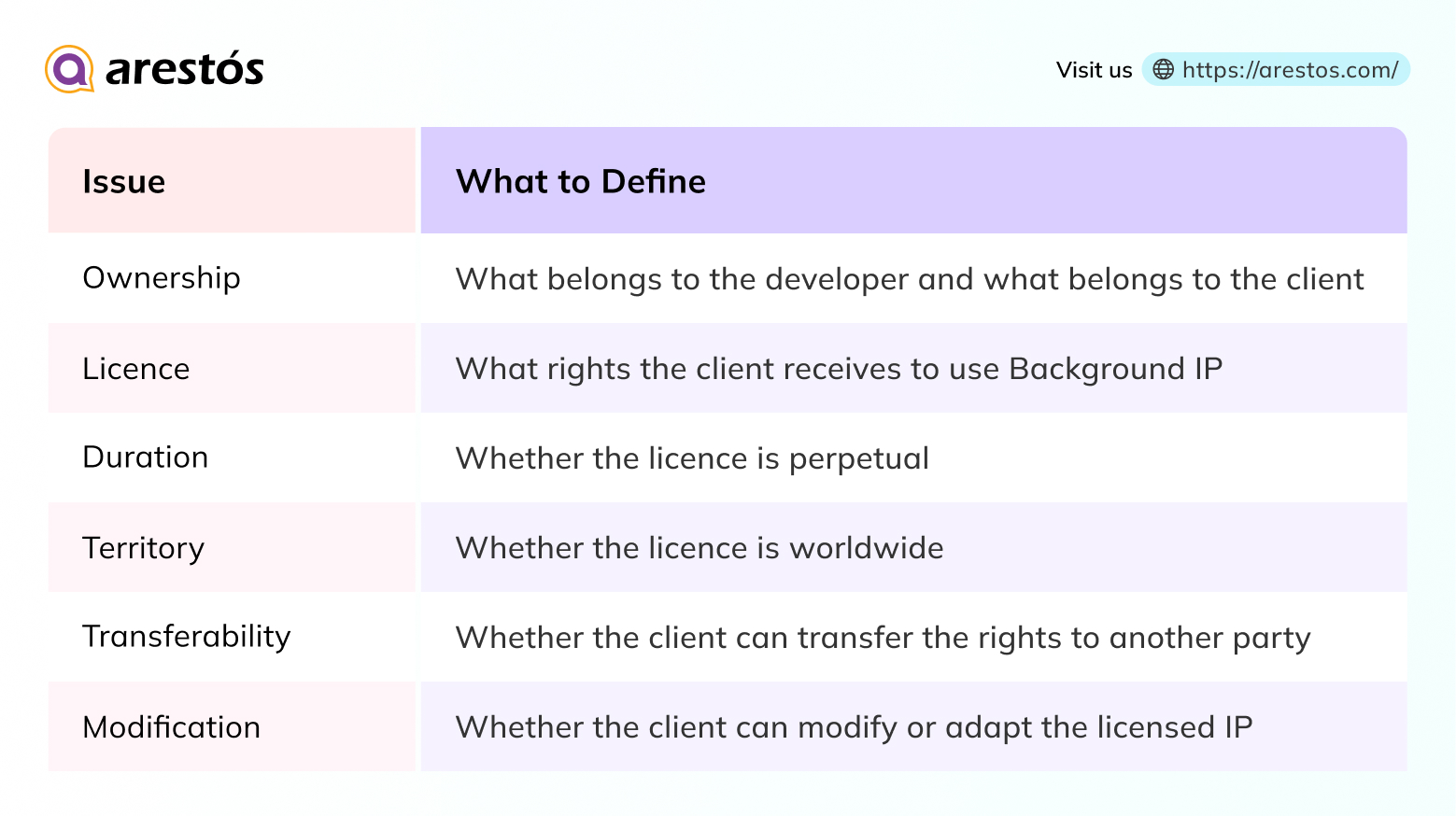
Key point: A client does not necessarily need to own every component of the software, but it should have sufficient rights to use, maintain, modify, and operate the finished solution without unnecessary restrictions.
Open-Source and Third-Party Components
Risk: “We own the source code” does not mean the company owns every component within the software. Offshore developers may use open-source software, proprietary libraries, or commercial APIs that are subject to separate licensing terms.
Common examples include:
- MIT: Permits broad use, modification, and distribution.
- Apache 2.0: Permits commercial use and modification, subject to licence requirements.
- GPL: Copyleft requirements may affect how software can be distributed.
- LGPL: Offers more flexibility for use with proprietary software, subject to its conditions.
- Proprietary libraries: Remain subject to the owner’s licensing restrictions.
- Commercial APIs: May impose contractual limits on usage, data, or redistribution.
Can an offshore developer include open-source code in proprietary enterprise software? Potentially yes, but the applicable licence terms must be reviewed and complied with, particularly for copyleft components.
To control this risk, enterprises should require:
- Software Bill of Materials (SBOM)
- Open-source disclosure
- Licence inventory
- Prior approval for copyleft components
- Ongoing vulnerability monitoring
Key point: Ownership of custom code does not automatically extend to third-party or open-source components.
Confidential Information and Trade Secrets
Risk: IP ownership does not automatically protect confidential information. During offshore development, developers may gain access to sensitive assets such as source code, system architecture, algorithms, credentials, customer information, business logic, product roadmaps, and proprietary processes. Unauthorised access, disclosure, or reuse can expose the company to commercial and security risks.
For Hong Kong enterprises, confidentiality should be addressed through NDAs, clear contractual confidentiality obligations, access controls, employee obligations, subcontractor obligations, and appropriate post-termination restrictions. Contracts should also require the return or secure deletion of confidential information when the engagement ends.
How do you protect source code from an offshore developer?
- NDA: Establish confidentiality obligations before access is granted.
- Contractual confidentiality: Define protected information and permitted use.
- Least-privilege access: Give developers only the access they need.
- Repository controls: Restrict and manage access to source-code repositories.
- Audit logs: Monitor access, changes, and downloads.
- Subcontractor restrictions: Require approval and equivalent obligations for subcontractors.
- Return/deletion obligations: Require confidential information to be returned or securely deleted after termination.
Employee vs Contractor IP Ownership
Risk: An enterprise may assume that signing a contract with an offshore vendor automatically gives it rights over work created by every developer involved. However, the vendor may rely on employees, independent contractors, or subcontractors whose rights and obligations need to be properly addressed.
The ownership chain may involve:
Hong Kong Client ->Offshore Vendor -> Employees / Contractors -> Code Contributors
The offshore vendor should have the necessary rights from the individuals who create the work and be able to pass the promised IP rights to the client.
The agreement should require the offshore partner to warrant that:
- Necessary rights are obtained: It has secured the required IP rights from all relevant personnel.
- Confidentiality is binding: Employees and contractors are subject to appropriate confidentiality obligations.
- Subcontractors are covered: Subcontractors are contractually bound by equivalent IP and confidentiality requirements.
- Client rights are secured: The client receives the IP ownership or licence rights promised under the agreement.
Key point: The client should not rely solely on its contract with the vendor. The vendor must also ensure that the people creating the work are properly bound.
Subcontracting and Hidden Contributors
Risk: An offshore vendor may involve subcontractors or other contributors without the client’s knowledge. This can give unknown third parties access to source code, confidential information, and other project IP, while creating uncertainty over security, ownership, and accountability.
The contract should clearly define:
- Subcontracting: Whether the vendor is permitted to subcontract any part of the work.
- Prior approval: Whether the client’s written approval is required before appointing subcontractors.
- Disclosure: The vendor must identify relevant subcontractors and their roles.
- Geographic location: Where subcontractors and project data may be located.
- Security requirements: Security standards and access controls that subcontractors must follow.
- IP assignment: Subcontractors must assign the necessary IP rights to the vendor or client.
- Confidentiality: Subcontractors must be bound by appropriate confidentiality obligations.
- Liability: The vendor remains responsible for the acts and omissions of its subcontractors.
Key point: Enterprises should know who can access their code and ensure that every contributor is subject to equivalent IP, confidentiality, and security obligations.
Losing Control When the Contract Ends
Risk: A company may legally own its software but still depend on the offshore vendor to access, maintain, or deploy it. If the relationship ends unexpectedly, this dependency can create operational disruption and vendor lock-in.
What happens if the offshore vendor relationship ends tomorrow?
The enterprise should retain control of:
- Complete source code
- Git history
- Technical documentation
- Deployment scripts
- Infrastructure configuration
- Credentials under company control
- Third-party licence information
- Software Bill of Materials (SBOM)
These assets should be maintained in repositories and systems that the client can access and control independently of the vendor.
Key point: IP ownership without operational control can still create vendor lock-in. Enterprises should ensure they can transition development, maintenance, and deployment to another provider if the offshore relationship ends.
Beyond IP ownership, enterprises should also consider Offshore Software Development Security in Hong Kong when working with external development teams.
Who Is Responsible for IP Infringement in Offshore Development?
IP infringement in offshore development is not always the sole responsibility of the client or the offshore partner. Responsibility can depend on the source of the infringement, the parties’ contractual obligations, and the applicable law. A practical responsibility framework is:
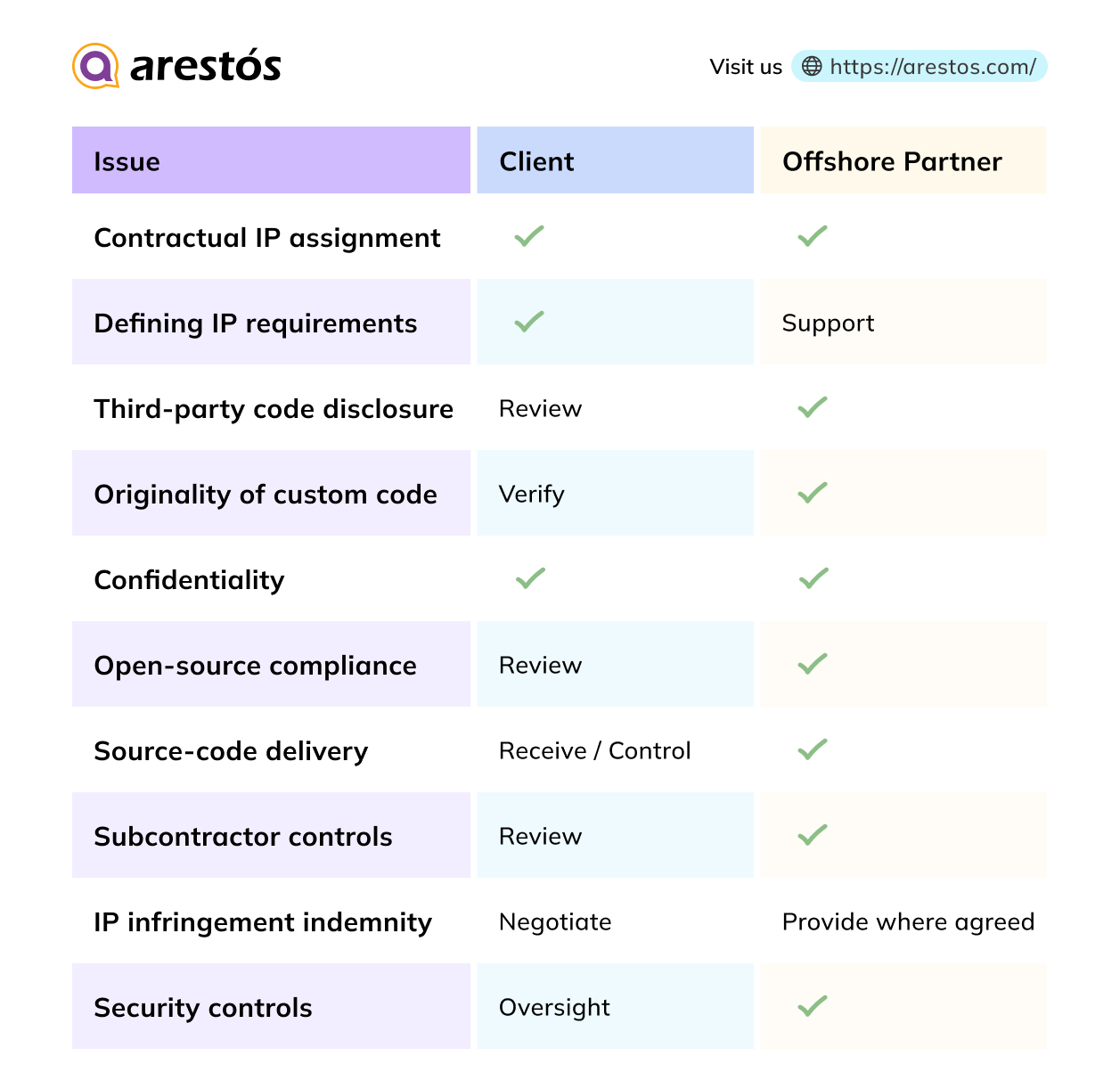
The client should establish clear IP requirements and review the relevant deliverables, while the offshore partner should be responsible for meeting its contractual obligations and controlling the work performed by its developers and subcontractors.
Important: This matrix is a practical allocation of responsibilities, not a legal determination. Liability ultimately depends on the applicable law and the contract between the parties.
How to Choose an Offshore Development Partner Without Losing IP Control
Choosing an offshore development partner should involve more than comparing technical skills and pricing. Enterprises should evaluate whether a partner can demonstrate strong IP protection, transparency, security, and control throughout the engagement.
- Check IP ownership practices: Ask how the partner handles ownership and assignment of client-developed code.
- Review its developer agreements: Confirm that employees, contractors, and subcontractors are contractually bound to transfer relevant IP rights to the partner.
- Ask about pre-existing and open-source code: A reliable partner should clearly disclose Background IP, third-party components, and applicable licences.
- Assess security and access controls: Check how source code, credentials, and confidential information are protected and who can access them.
- Verify subcontractor transparency: Choose a partner that discloses who will work on the project and does not use undisclosed third parties.
- Test its documentation and handover process: Ask how source code, Git history, documentation, deployment materials, and other assets are maintained and transferred.
- Review exit arrangements: Ensure the partner can support a smooth transition if the enterprise changes vendors or brings development in-house.
- Evaluate contractual protection: Review warranties, indemnities, confidentiality obligations, and IP infringement provisions before signing.
- Look for proven enterprise experience: Prior experience handling complex projects, sensitive data, and strict IP requirements is a useful indicator of operational maturity.
For a broader comparison of potential providers, see Top 10 Offshore IT Staffing Companies in Hong Kong.
Why Choose Arestós for Offshore Software Development in Hong Kong?
When you hire offshore developers, who owns the code and who controls it after development ends? Arestós helps Hong Kong enterprises address these concerns through clear IP arrangements, controlled development access, transparent delivery, and structured project handover.
- Clear IP ownership: Establish clear ownership and usage rights for project-specific code and deliverables.
- Controlled source-code access: Keep repositories, credentials, and key technical assets under appropriate client control.
- Transparent development: Maintain visibility over who contributes to the project and how the software is developed.
- IP-aware delivery: Address pre-existing code, open-source components, third-party software, and related licensing requirements.
- Complete handover: Provide access to source code, documentation, and technical materials needed for ongoing maintenance or transition.
- Hong Kong-focused support: Work with a partner that understands the needs of Hong Kong businesses seeking offshore development capabilities.
Learn more about how Arestós helps Hong Kong enterprises extend their development capabilities through Offshore Software Development Services.
Frequently Asked Questions
1. Who owns the source code developed by an offshore developer?
The client does not automatically own the source code. Ownership depends on the contractual terms and applicable copyright rules.
2. Does paying an offshore developer give me ownership of the code?
No. Payment alone does not automatically transfer copyright ownership. The contract should clearly state how ownership or usage rights are transferred.
3. How can I protect my intellectual property when hiring offshore developers?
Use a clear contract covering IP ownership, confidentiality, pre-existing code, open-source components, subcontractors, and source-code handover.
4. Can an offshore developer use pre-existing or open-source code?
Yes, but the developer should disclose these components and their licence terms. The contract should define the client’s rights to use them.
5. What should an offshore software development contract include?
It should cover IP ownership, confidentiality, third-party and open-source code, subcontracting, source-code delivery, security, warranties, and exit arrangements.
Conclusion
Hiring offshore developers can offer valuable development capabilities, but it also creates IP considerations around source-code ownership, pre-existing code, open-source components, confidentiality, subcontractors, and project handover. Clear agreements and proper partner selection can help enterprises protect their intellectual property while maintaining control over their software assets.
Arestós offers Offshore Software Development Services to help Hong Kong enterprises extend their development capabilities with structured project delivery, transparent development processes, and appropriate IP and security considerations. Our support covers software development while helping clients maintain access and control over their key technology assets.
Contact us to discuss your offshore software development needs.
Subscribe to our newsletter!
Get updated to
the lastest IT trends
Related Posts
Update the latest technology trends for your business