Back to featured insights
How to Manage Multiple E-Commerce Stores in Hong Kong
Discover how Hong Kong businesses can manage multiple e-commerce stores more effectively, overcome operational challenges, and build a scalable strategy for sustainable growth across markets.
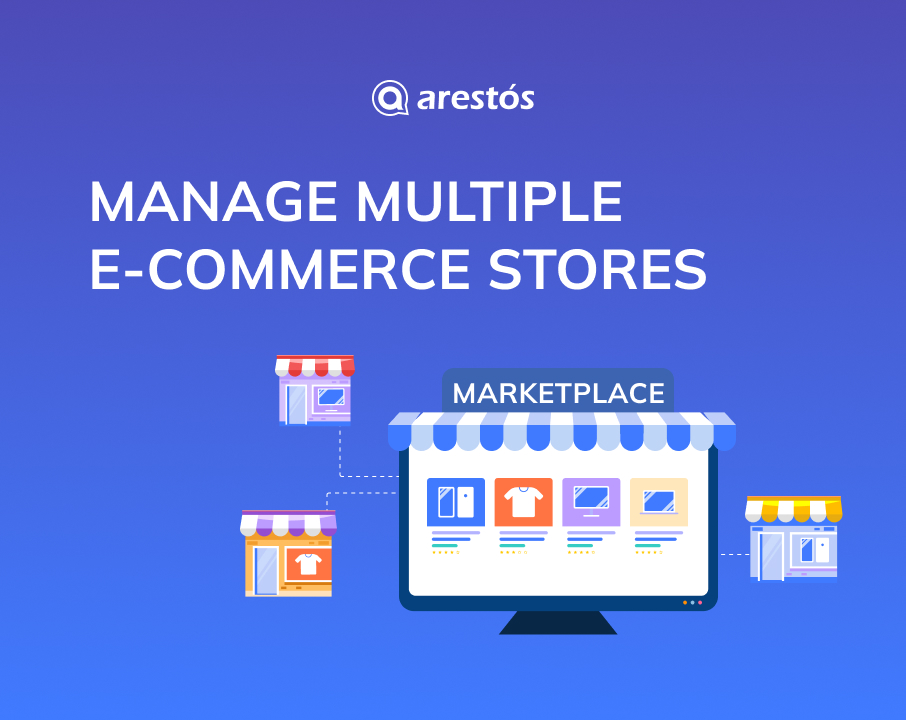
Table of Content
Share
How can Hong Kong businesses expand across markets without making e-commerce operations more costly and complex? Learning how to manage multiple e-commerce stores effectively helps businesses streamline operations, control costs, and scale sustainably as they grow.
What Are the Biggest Challenges of Managing Multiple E-Commerce Stores?
As Hong Kong businesses expand across e-commerce channels and markets, maintaining efficient and consistent operations becomes increasingly challenging.
| Challenge | Business Impact |
|---|---|
| 📦 Disconnected inventory data | Overselling, frequent stockouts, and poor real-time availability syncs |
| 🧾 Fragmented order processing | Delayed fulfillment pipelines and labor-intensive manual reconciliations |
| 🏷️ Inconsistent product information | Costly pricing errors, mismatching product descriptions, and outdated listings |
| 🌐 Cross-market differences | Friction in localized language translation, currency, localized shipping, and cross-border returns |
| ⚙️ Repetitive administrative work | Inflated domestic labor costs, human input errors, and diminished employee productivity |
| 📊 Limited consolidated reporting | Complete lack of unified visibility into exact multi-channel profit margins |
In Hong Kong, businesses may combine their own online stores, built on platforms such as SHOPLINE, with third-party marketplaces such as HKTVmall to reach customers through multiple sales channels.
However, managing these channels requires coordination across product listings, inventory, order processing, and sales reporting. For example, retailers selling the same products through both channels need a reliable process for keeping stock availability and product information consistent.
One Multi-Market Store or Separate Stores: Which Setup Fits?
Businesses expanding into multiple markets can manage localized experiences through one store or operate separate storefronts. The right setup depends on differences in products, pricing, fulfillment, and local customer needs.
| Factor | One Multi-Market Store | Separate Stores |
|---|---|---|
| Store management | Centralized operations and fewer duplicated tasks. | More coordination across stores. |
| Localization | Shared storefront with localized language and content. | More control over local branding and promotions. |
| Inventory & orders | Easier to manage shared inventory and fulfillment. | Better for market-specific stock and delivery needs. |
| Pricing & promotions | Simpler to maintain consistent pricing rules. | More flexibility for local pricing and campaigns. |
| Customer experience | More consistent shopping experience across markets. | Tailored experience for each market. |
| Reporting & analytics | Consolidated performance data. | More market-specific insights, but reporting may be fragmented. |
| Operating costs | Generally lower management and maintenance overhead. | Potentially higher staffing and maintenance costs. |
| Best suited for | Businesses seeking operational efficiency and centralized control. | Businesses with distinct market needs or independent brand strategies. |
When Should You Choose One Multi-Market Store?
A single multi-market store is often suitable when a business:
- Sells similar products across markets: Product catalogs and core business processes are largely the same.
- Shares inventory and fulfillment: Stock management, order processing, and shipping can follow common workflows.
- Wants to reduce operating costs: A centralized setup helps limit duplicated administrative and maintenance work.
- Needs basic localization: Language, currency, shipping options, and local content can be managed within one platform.
For example, a Hong Kong retailer expanding into another market may use one storefront if its products and operations remain similar and the platform supports localization.
When Do Separate Stores Make More Sense?
Separate stores may be a better fit when a business:
- Has different product ranges: Each market requires distinct catalogs or product listings.
- Uses market-specific pricing and promotions: Local pricing strategies and campaign calendars need greater flexibility.
- Needs different operational processes: Customer service, shipping, returns, or fulfillment vary significantly by market.
- Requires greater local control: Regional teams need more independence over storefront content and daily operations.
For example, a business operating in Hong Kong and another regional market may need separate stores for different products, promotions, or return policies. However, this increases the work required to keep inventory and reports consistent.
What Should You Consider Before Deciding?
Before choosing a setup, assess three factors:
- Market differences: How much do product selection, pricing, language, shipping, and customer expectations vary?
- Platform capabilities: Can your platform support the required localization, pricing rules, inventory management, and integrations?
- Management capacity: Does your team have the resources to maintain separate storefronts without creating unnecessary administrative work?
The goal is to meet local market needs without adding unnecessary complexity. Businesses can start with one multi-market store and introduce separate storefronts when needed.
How to Manage Multiple E-Commerce Stores Efficiently
Managing multiple e-commerce stores efficiently requires consistent processes, accurate data, and clear oversight across channels. Hong Kong businesses can simplify daily operations by centralizing key tasks, standardizing workflows, and using the right tools to support growth.
Centralize Inventory Across All Stores
- Keep stock information consistent: Maintain accurate stock records for every SKU across stores and warehouses.
- Sync stock updates: Adjust inventory when orders are placed, canceled, or returned to prevent overselling.
- Set stock rules: Define minimum stock levels and how inventory is allocated across channels.
- Choose the right setup: Use platform features or integrations to synchronize inventory across separate systems.
Standardize Order Processing and Fulfillment
- Track orders in one place: Use an order management system or shared workflow to monitor orders across stores.
- Follow consistent procedures: Standardize order confirmation, packing, shipping, cancellations, and returns.
- Prepare for common problems: Establish procedures for payment failures, stock shortages, and delivery delays.
Keep Product Listings and Pricing Consistent
- Maintain a central product catalog: Store product descriptions, images, specifications, and SKU details in one reliable source.
- Adapt listings for each platform: Adjust language, content, and images to meet platform requirements.
- Manage prices and promotions: Account for platform fees, currency differences, local pricing, and campaign schedules.
Businesses that need custom functionality or more complex multi-store websites can explore Arestós Web & E-Commerce Development Solutions.
Coordinate Customer Service Across Stores and Markets
- Bring customer inquiries together: Consolidate messages from websites, marketplaces, and support inboxes where possible.
- Use consistent service procedures: Set shared guidelines for response times, refunds, complaints, and escalations.
- Provide multilingual support: Support customers in Traditional Chinese, English, and other relevant languages based on target markets.
Monitor Performance Across All Stores
- Use consistent performance metrics: Compare revenue, conversion rates, average order value, returns, and delivery performance.
- Track costs by channel: Include marketplace fees, payment processing, advertising, shipping, and returns when assessing profitability.
- Use reports to improve decisions: Identify underperforming stores, rising costs, and opportunities to allocate resources more effectively.
Businesses that need to consolidate data across systems or develop advanced reporting and forecasting can explore Arestós AI & Business Intelligence Solutions.
How to Manage Stores Across Different Markets
Managing e-commerce stores across markets requires businesses to adapt local operations while maintaining consistent processes and control.
Adapt Storefronts to Local Market Requirements
- Localize the shopping experience: Adapt language, currency, payment methods, and promotions to local customer preferences.
- Align with local shopping habits: Adjust campaigns for regional holidays, peak shopping periods, and market-specific expectations.
Coordinate Cross-Border Logistics and Returns
- Choose suitable fulfillment options: Compare local warehousing with cross-border shipping based on delivery times, costs, and demand.
- Manage duties and returns: Clarify import duties and taxes, communicate delivery costs, and establish clear cross-border return procedures.
Maintain Data Security and Operational Compliance
- Follow Hong Kong’s PDPO requirements: Apply appropriate controls to customer data collection, storage, access, and use.
- Secure cross-border data access: Use role-based permissions, data minimization, and secure remote access when overseas teams handle business or customer data.
What Tools Help Manage Multiple E-Commerce stores?
The right tools help businesses manage multiple e-commerce stores more efficiently, reduce manual work, and keep operations aligned across channels.
| Software Layer | Primary Function | Examples |
|---|---|---|
| E-Commerce Frameworks | Storefront customer portals and front-end management | Shopify PlusWooCommerceSHOPLINE |
| Inventory & OMS Engines | Multi-channel stock syncing and order coordination | Cin7LinnworksBrightpearl |
| Enterprise ERP Hubs | Financial consolidation, global procurement, core ledger | OdooNetSuite |
| PIM Solutions | Centralized product master data management | AkeneoPimcore |
| Customer Support Helpdesks | Cross-channel customer communication ticket systems | GorgiasZendesk |
| Middleware & Workflow Automation | Connecting platform APIs and building data flows | MakeZapiern8n |
Examples are illustrative, not a ranking or confirmation that every tool supports every combination of platforms.
How to Reduce Multi-Store Operating Costs
Managing multiple e-commerce stores can increase staffing, software, and administrative expenses. Businesses can control these costs by reducing duplicated work, allocating tasks efficiently, and tracking total operating expenses.
Reduce Duplicate Work Through Centralization and Automation
- Centralize product information: Maintain a master product catalog to reduce repeated data entry across stores.
- Automate routine updates: Use platform features or integrations to synchronize product details, stock levels, and pricing where supported.
- Standardize workflows: Apply consistent procedures across stores to reduce manual work and errors.
Optimize E-Commerce Staffing and Workload Allocation
- Prioritize high-value tasks: Let internal teams focus on strategy, marketing, and market-specific decisions rather than repetitive administration.
- Allocate work by location and skill: Keep roles requiring local market knowledge in-house while considering remote support for routine store maintenance.
- Scale support with demand: Adjust staffing for product uploads, listing updates, and seasonal workload peaks.
Businesses that need ongoing support with product data, bulk uploads, and listing maintenance can consider an Arestós Offshore E-Commerce Website Administrator.
Evaluate the Total Cost of Multi-Store Operations
- Track cost per order: Measure administrative and operating expenses against the number of orders processed.
- Compare cost per storefront: Monitor the recurring costs of maintaining each active store.
- Assess the full cost of changes: Include implementation, integration, staffing, and ongoing maintenance expenses.
- Monitor service quality: Ensure cost reductions do not compromise order accuracy, delivery performance, or customer support.
The OPEX Formula Framework:
This formula helps businesses estimate the total cost of running multiple e-commerce stores. Compare costs before and after operational improvements to assess savings and identify the main cost drivers.
The goal is to reduce unnecessary expenses while maintaining service quality and supporting business growth.
When Should Consider Offshore E-Commerce Store Administration?
Offshore e-commerce administration can help businesses manage growing workloads without expanding their local teams for every operational task. However, it works best when responsibilities are clearly defined and routine tasks can be handled remotely.
Signs Your Multi-Store Operations Need Additional Support
Consider additional administrative support when:
- Routine tasks consume too much time: Store administrators spend hours updating listings, prices, and product data.
- Expansion increases workloads: New stores and markets stretch existing team capacity.
- Store information becomes outdated: Product listings, inventory records, or promotional details are not updated consistently.
- Local staffing costs keep rising: Hiring additional local staff makes expansion more expensive.
- Internal teams lack maintenance capacity: Core employees have less time for strategic work because of daily store administration.
What Can an Offshore E-Commerce Website Administrator Handle?
Depending on the agreed scope, an offshore administrator can support tasks such as:
- Product catalog maintenance: Upload products and update descriptions, images, specifications, and SKU information.
- Pricing and content updates: Apply approved price changes, promotions, and website content updates.
- Routine order administration: Monitor order statuses and maintain order records.
- Inventory data checks: Review stock information and flag discrepancies for follow-up.
- Website maintenance and reporting: Update routine website content and prepare operational reports.
The exact responsibilities depend on the administrator’s skills, platform access, and agreed scope. This role does not automatically replace logistics specialists, integration engineers, or customer service teams.
How to Integrate Offshore Administrators into Existing Operations
- Retain internal decision-making: Keep strategy, pricing policies, and final approvals with the relevant internal owners.
- Define clear procedures: Document workflows, task ownership, quality standards, and expected deliverables.
- Set access and communication rules: Provide role-appropriate system permissions, communication channels, and escalation paths.
- Monitor performance: Track task accuracy, turnaround time, and continuity of daily operations.
Manage Your E-Commerce Operations More Efficiently with Arestós
Managing multiple e-commerce stores requires ongoing product updates, catalog maintenance, and daily administration. Arestós provides offshore IT staffing and e-commerce technology services to help businesses manage these workloads and support multi-store operations.
Through its Offshore E-Commerce Website Administrator service, businesses can access dedicated support for product uploads, listing updates, and routine website maintenance. Responsibilities are clearly defined to fit existing workflows, allowing offshore administrators to work alongside your internal team.
Your team retains control over store strategy, pricing, promotions, and business decisions while reducing the burden of repetitive operational tasks.
Discuss Your Multi-Store E-Commerce Staffing Needs with Arestós to explore a staffing arrangement suited to your business.
Frequently Asked Questions
1. How can I manage multiple e-commerce stores from one dashboard?
Use a centralized management platform to oversee inventory, orders, product listings, and sales across stores.
2. What is the best way to manage inventory across multiple online stores?
Synchronize stock levels across all sales channels and update inventory whenever orders or returns occur.
3. Can I manage Shopify and WooCommerce stores together?
Yes. Use compatible third-party tools, APIs, or custom integrations to connect inventory, orders, and product data.
4. How can businesses reduce the cost of managing multiple e-commerce stores?
Automate repetitive tasks, centralize data, standardize workflows, and outsource routine administration when appropriate.
5. When should I hire an e-commerce website administrator?
When daily store maintenance and product updates overwhelm your existing team or limit business growth.
Conclusion
Managing multiple e-commerce stores across markets requires an efficient approach to scaling operations while keeping costs under control. By streamlining workflows and allocating resources effectively, Hong Kong businesses can manage growth without adding unnecessary operational complexity.
Arestós provides offshore e-commerce staffing solutions to help businesses manage growing operational demands while maintaining efficient, scalable workflows.
Ready to simplify your multi-store operations? Contact us to explore a staffing solution tailored to your business needs.
Subscribe to our newsletter!
Get updated to
the lastest IT trends
Related Posts
Update the latest technology trends for your business