Back to featured insights
In-House vs Offshore E-Commerce Management: Which Model Is More Cost-Effective
As e-commerce operations expand, Hong Kong businesses need a cost-effective way to manage growing demands. Discover how in-house and offshore staffing models differ and which approach best supports your business growth.
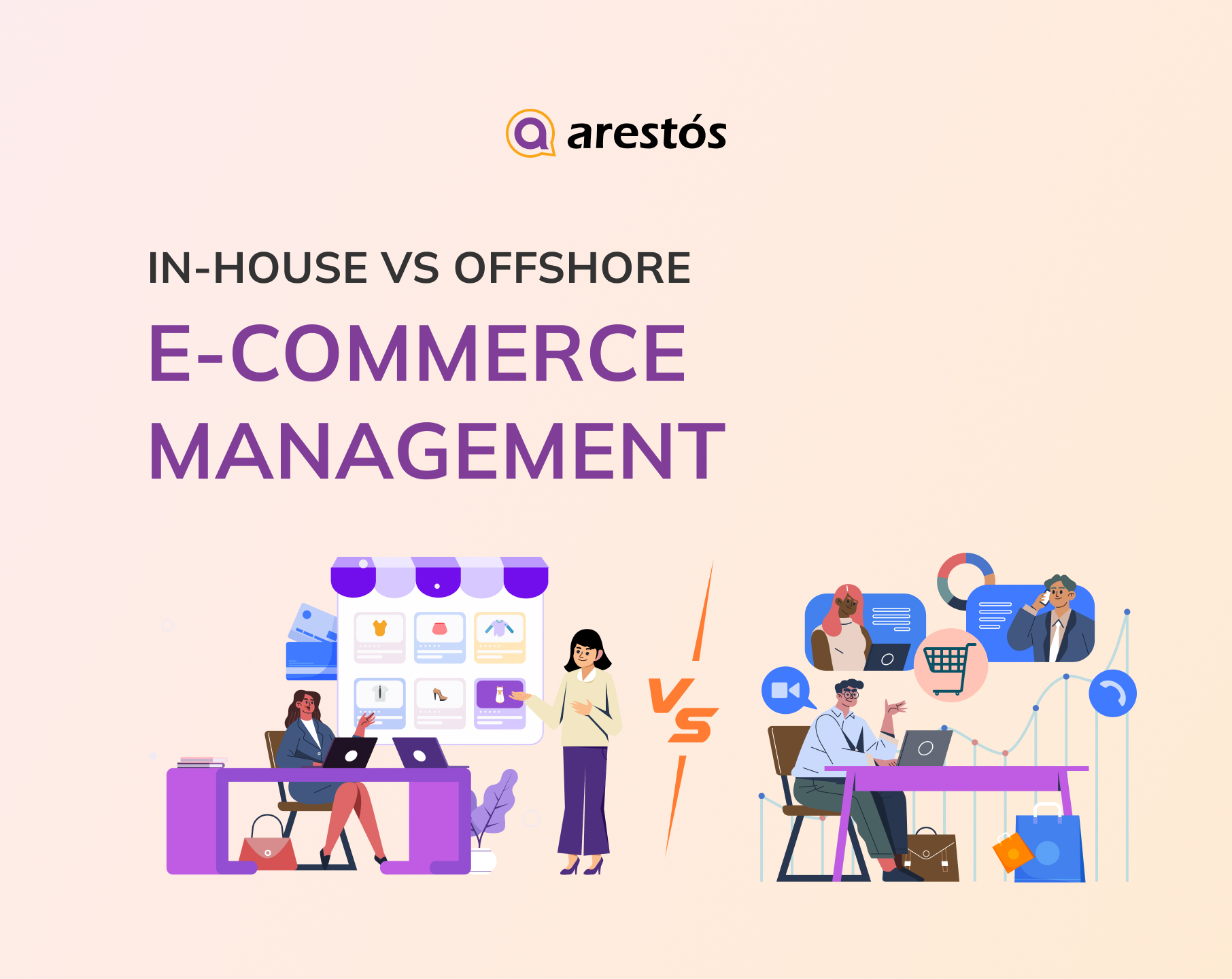
Table of Content
Share
As Hong Kong businesses expand their online sales, choosing how to manage e-commerce operations can have a significant impact on long-term costs. In-House vs Offshore E-Commerce Management explores how each model affects staffing expenses, operational efficiency, and the ability to scale as business needs change.
Why this is a workforce-planning decision, not just a vendor decision
E-commerce management is a business capability, not simply a headcount or vendor decision. Hong Kong enterprises need to balance staffing costs, operational control, and the ability to respond to changing demand.
According to the HKSAR Government, Hong Kong’s online retail sales grew 23.0% year-on-year from January to August 2026, reinforcing the need for effective e-commerce operations alongside physical retail.
Enterprises should evaluate three factors when choosing a workforce model:
- Cost: Compare total staffing and operational costs, not just salaries or service fees.
- Control: Keep strategic decisions in-house while delegating suitable operational tasks.
- Continuity: Ensure consistent support during peak seasons and changes in workload.
An in-house, offshore, or hybrid model should be selected based on these business needs rather than vendor pricing alone. For businesses also reviewing their technical infrastructure, Arestós Web & E-Commerce Development provides further information on e-commerce development support.
What is the difference between in-house and offshore staffing e-commerce management?
Each model offers a different approach to managing e-commerce operations and resources.
How Much Does an In-House E-Commerce Team Cost in Hong Kong?
Building an in-house e-commerce team in Hong Kong involves more than monthly salaries. Employers must also budget for statutory contributions, recruitment, employee benefits, software, and operational overheads.
According to the Morgan McKinley Hong Kong Salary Guide 2026, monthly base salaries for selected e-commerce and digital roles range from HK40,000 to HK100,000, depending on seniority and responsibilities.
Hong Kong E-Commerce Salary Benchmarks
What Makes Up the Total In-House Cost?
For an E-Commerce Manager earning HK$55,000 per month, the cost of maintaining an in-house employee exceeds the base salary once statutory contributions and other employment expenses are included.
Salary and employer MPF alone total up to HK$56,500 per month, or HK$678,000 per year, excluding bonuses, insurance, recruitment, equipment, and other operating expenses. These additional costs should be calculated separately because they vary by employer.
Hong Kong Employment Costs: What Employers Need to Know
Hong Kong employers should account for these statutory requirements when budgeting for an in-house team:
- MPF contributions: Employers generally contribute 5% of relevant income, capped at HK$1,500 per employee per month (MPFA).
- Statutory minimum wage: HK$43.10 per hour from 1 May 2026 (Labour Department).
- Statutory holidays: 15 days in 2026, increasing to 17 days in 2030.
- Paid annual leave: 7–14 days, depending on years of service.
- Continuous-contract rules: Revised requirements took effect on 18 January 2026 and may affect eligibility for statutory benefits.
Offshore Cost Baseline: What Offshore Really Costs
Offshore e-commerce management can reduce staffing expenses, but the actual cost depends on the service provider’s fee, the number of dedicated staff, transition requirements, and ongoing management. Businesses should estimate the total cost of ownership (TCO) rather than comparing monthly staffing fees alone.
Estimated Annual Cost for One Offshore E-Commerce Specialist
The following model illustrates how a business could calculate costs for one dedicated offshore specialist. The provider fee and operating expenses are budgeting assumptions, not verified market rates; replace them with supplier quotations and actual internal costs.
HK$353.13 per hour is an estimated internal labour cost derived from an E-Commerce Manager’s HK$55,000 monthly salary plus the employer’s maximum HK$1,500 monthly MPF contribution, divided by an assumed 160 working hours per month. The salary benchmark is from Morgan McKinley’s 2026 Hong Kong Salary Guide, and the MPF cap is confirmed by the MPFA.
How to Calculate the Total Cost
Use this formula:
For this example:
This estimate excludes any additional charges not included in the assumed provider fee, such as overtime, extra coverage, software licences beyond the allowance, currency conversion, or exit and handover costs. Confirm these items in the provider’s quotation before finalising the budget.
The key point is that the offshore service fee is only one part of the total cost. A reliable estimate should include the internal time needed to manage the provider, maintain quality, protect access to systems and data, and handle the initial transition.
In-House vs Offshore E-Commerce Management: Estimated Annual Cost
Based on the estimates above, one in-house E-Commerce Manager in Hong Kong costs at least HK$678,000 per year in salary and employer MPF alone. By comparison, the illustrative offshore model costs approximately HK$406,869 in Year 1, including the assumed service fee, setup, tools, quality assurance, Hong Kong oversight, and initial compliance review.
Under these assumptions, the offshore model costs approximately 40% less than the in-house salary-and-MPF baseline. The actual difference may change once recruitment fees, benefits, equipment, and other in-house expenses are included.
This is an indicative comparison, not a like-for-like cost benchmark. The in-house figure represents an E-Commerce Manager, while the offshore estimate assumes a specialist and uses an illustrative provider fee of HK$25,000 per month.
Businesses should compare quotations for equivalent responsibilities, workload, service levels, and coverage before drawing a final conclusion.
Hidden Costs: In-House vs Offshore E-Commerce Management
Comparing in-house and offshore e-commerce management requires looking beyond salaries and service fees. You should also consider these hidden costs, which can affect the total cost of ownership (TCO).
How Can Hong Kong Enterprises Optimise E-Commerce Management Costs?
Optimising e-commerce management costs requires Hong Kong enterprises to balance operational efficiency, service quality, and long-term business needs.
Practical Ways to Optimise E-Commerce Management Costs
- Combine in-house and offshore teams: Keep strategic decisions, brand direction, and commercial priorities in-house while assigning defined operational tasks to dedicated offshore staff.
- Standardise workflows: Create clear procedures for product listings, inventory updates, order processing, and campaign execution to reduce errors and rework.
- Automate repetitive tasks: Use platform integrations and automation tools to streamline inventory synchronisation, order notifications, and reporting.
- Combine in-house and offshore teams: Keep strategic decisions, brand direction, and commercial priorities in-house while assigning defined operational tasks to dedicated offshore staff.
- Scale staffing with demand: Adjust operational capacity to sales volume, store complexity, and seasonal peaks instead of maintaining excess capacity year-round.
- Calculate total cost of ownership (TCO): Account for recruitment, onboarding, software, quality assurance, management time, compliance, and transition costs—not just salaries or service fees.
Scale E-Commerce Operations with Arestós
For Hong Kong businesses that need additional operational capacity, Arestós’ Offshore E-Commerce Website Administrator service offers an option to explore dedicated offshore staffing for e-commerce management tasks.
Businesses can assess this model based on their workflows, staffing requirements, and management structure while retaining control over operational priorities and performance expectations. Before adopting a new arrangement, define responsibilities and performance measures, then compare the total cost with the existing operating model.
Frequently Asked Question
1. Does using offshore e-commerce staffing mean losing control over our customer data?
No. Dedicated offshore staffing keeps operational control completely in your hands. Remote team members work directly within your cloud ecosystem using strict role-based access limits and secure virtual connections, ensuring customer data remains secure.
Data protection governance also maps heavily into backend systems development. Review how we secure modern model pipelines under Arestós Offshore AI & ML Engineers Staffing Solutions frameworks.
2. Why is tracking Total Cost of Ownership (TCO) better than just comparing monthly salaries?
Comparing base fees ignores the real costs of software licensing, quality assurance updates, training, and the internal management hours required to guide remote resources. TCO outlines your true financial commitment.
3. Should Hong Kong businesses choose in-house, offshore, or a hybrid model?
Hong Kong businesses should choose based on their budget and operational needs. In-house offers greater direct control, offshore can reduce staffing costs, and a hybrid model balances cost efficiency with internal oversight.
4. How do we keep our product listings consistent across multiple global storefronts using a hybrid team?
Hybrid teams use structured Standard Operating Procedures (SOPs) and central tools like Product Information Management (PIM) systems. Your local team defines the master data rules, while remote coordinators handle formatting and distribution across platforms.
Managing localized listing deployments across regions requires advanced cross-platform orchestration. Access our complete playbook on How Hong Kong Businesses Manage Multiple E-Commerce Stores to optimize your inventory flow.
5. How long does it take to set up an offshore e-commerce team?
Setting up an offshore e-commerce team typically takes a few weeks, depending on staffing requirements, role complexity, and onboarding needs. Clear responsibilities and documented workflows can speed up the process.
Conclusion
Choosing between in-house and offshore e-commerce management depends on your budget, operational needs, and growth plans. Offshore staffing can help reduce costs and scale capacity, while a hybrid model balances flexibility with internal control.
Arestós helps Hong Kong businesses scale e-commerce operations through its Offshore E-Commerce Website Administrator service. By providing dedicated offshore professionals to support day-to-day website administration, Arestós helps businesses manage workloads while keeping internal teams focused on higher-value priorities.
Looking to optimise your e-commerce management costs? Contact us to discuss a staffing solution tailored to your business needs.
Related Posts
Update the latest technology trends for your business