Back to featured insights
How to Hire Offshore AI and ML Engineers in Hong Kong
Finding qualified AI talent in Hong Kong is becoming more challenging as demand continues to outpace supply. Discover how offshore hiring can help your business access specialized AI and ML expertise, scale faster, and stay competitive in an increasingly AI-driven market.

Table of Content
Share
Hire offshore AI and ML engineers to overcome Hong Kong’s AI talent shortage and accelerate AI development with specialized global talent. Offshore hiring enables businesses to scale AI teams faster while maintaining flexibility. This guide is designed for Hong Kong companies looking to build or expand their AI capabilities.
You’ll learn when offshore hiring is the right choice, how to choose the right hiring model, and the step-by-step process for hiring and managing offshore AI engineers successfully.
What is Offshore Staffing?
Offshore staffing is a hiring model in which a company recruits dedicated professionals from another country to work as an extension of its existing team. Unlike traditional outsourcing, offshore staff work exclusively for your business, follow your processes, and collaborate with your in-house employees while remaining employed through an offshore staffing provider or local entity.
For Hong Kong businesses, offshore staffing offers a practical way to access a larger talent pool, reduce recruitment costs, and fill specialized roles—such as AI and Machine Learning engineers, more quickly than hiring locally.
Why Hong Kong Companies Are Hiring Offshore AI & ML Engineers
Hong Kong businesses are investing heavily in AI, but hiring experienced AI and machine learning engineers locally has become increasingly difficult. A limited talent pool, intense competition, rising salaries, and a slow talent pipeline mean many companies struggle to build AI teams fast enough to keep pace with their digital transformation goals.
The Numbers Behind Hong Kong’s AI Talent Gap
The shortage is supported by market data. According to the Hays Asia Salary Guide 2025, 48% of Hong Kong employers reported moderate to extreme skills shortages, while 39% cited competition from other employers as the primary reason and 27% said fewer professionals are entering the industry. Globally, the IBM Global AI Adoption Index 2025 found that 33% of organizations identify limited AI skills as a major barrier to AI adoption, and 31% say they lack sufficient in-house AI expertise.
AI hiring is particularly challenging because machine learning engineers require expertise across software engineering, mathematics, statistics, data engineering, and cloud technologies. This narrow skill overlap exists worldwide, but is amplified in Hong Kong due to its relatively small workforce and limited supply of experienced AI professionals.
Who Else Is Bidding for the Same Talent
Competition extends far beyond traditional technology companies. Banks, insurers, and asset managers are rapidly expanding their AI capabilities in response to Hong Kong’s fintech and digital transformation initiatives. At the same time, Web3 startups, cryptocurrency firms, and multinational technology companies continue hiring AI specialists for regional operations.
Hong Kong employers also compete with organizations across the Greater Bay Area (GBA), where cross-border AI projects have increased demand for experienced engineers. Instead of hiring within a local market, businesses are effectively competing across the wider Asia-Pacific technology ecosystem.
What This Is Doing to Salaries and Timelines
The growing talent shortage has pushed AI specialists into one of Hong Kong’s highest-paid technology categories. According to the KOS International Salary Guide 2025, professionals specializing in AI, machine learning, and data science command significant salary premiums compared with general software developers.
Beyond higher salaries, recruitment has become considerably slower. Hiring qualified AI engineers often takes several months, delaying product development, AI implementation, and digital transformation initiatives. For businesses under pressure to launch AI projects quickly, prolonged hiring timelines can become a competitive disadvantage.
The Government Is Pouring Fuel on Demand (A Good Thing, but It Raises the Bar)
The talent gap is unlikely to disappear soon because government initiatives continue to stimulate AI adoption. Programs such as the Innovation and Technology Fund (ITF), Cyberport AI initiatives, and Hong Kong Science and Technology Parks (HKSTP) encourage businesses to invest in AI research and commercialization.
At the national level, China’s “AI+” initiative and the 15th Five-Year Plan position Hong Kong as an international innovation and technology hub. While these policies strengthen the city’s long-term competitiveness, they also increase demand for experienced AI professionals, making the local talent shortage a long-term structural challenge rather than a short-term hiring cycle.
At the national level, China’s “AI+” initiative and the 15th Five-Year Plan position Hong Kong as an international innovation and technology hub. While these policies strengthen the city’s long-term competitiveness, they also increase demand for experienced AI professionals, making the local talent shortage a long-term structural challenge rather than a short-term hiring cycle.
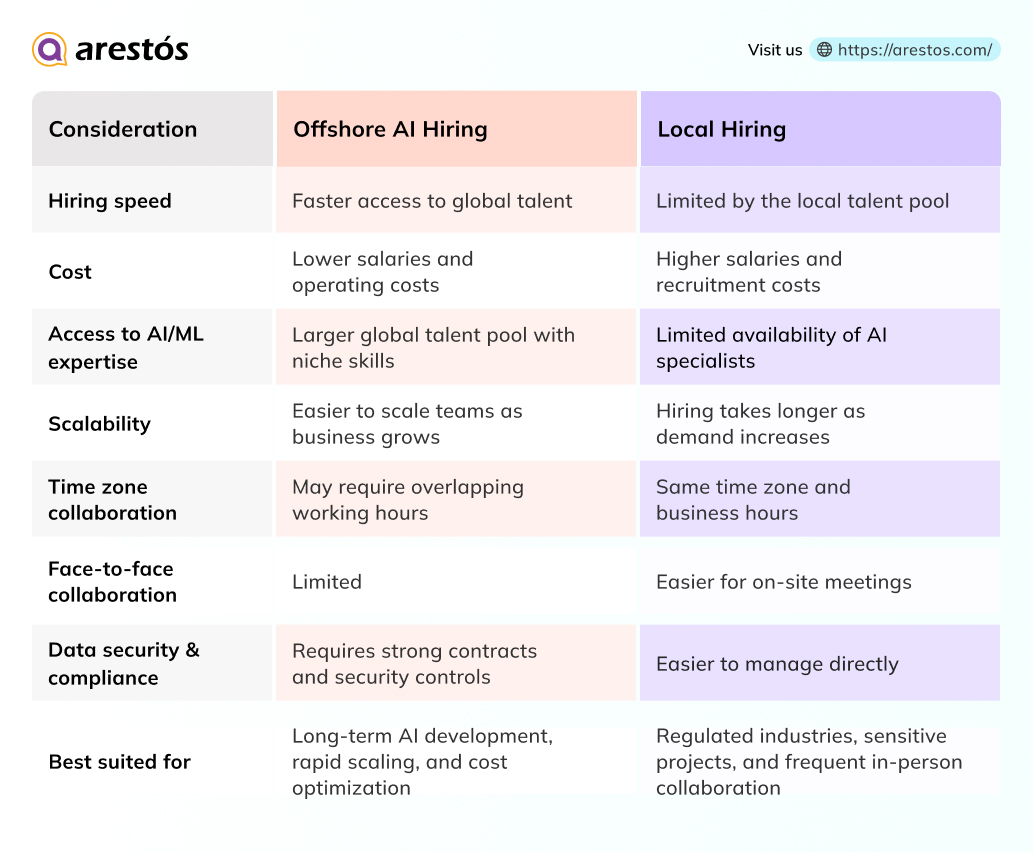
Offshore AI Hiring vs. Local Hiring
Offshore AI hiring offers faster access to specialized talent and lower hiring costs, but it isn’t the right solution for every business. The best approach depends on your project requirements, budget, collaboration needs, and compliance obligations.
Key Factors Hong Kong Businesses Should Evaluate
Choosing an offshore AI partner isn’t just about finding the lowest cost. Evaluating the right factors upfront helps Hong Kong businesses hire more effectively and build high-performing AI teams.
- Technical expertise: Ensure candidates have hands-on experience with the AI technologies your project requires, such as Python, PyTorch, TensorFlow, cloud AI services, MLOps, or LLM frameworks.
- Industry experience: Engineers with experience in your industry (e.g., finance, healthcare, retail, or logistics) can understand business requirements more quickly and deliver value sooner.
- Communication skills: Strong written and spoken English is essential for effective collaboration, documentation, and remote meetings with Hong Kong-based teams.
- Time zone overlap: Choose a location that provides enough overlapping working hours to support daily stand-ups, code reviews, and faster decision-making.
- Data security and compliance: Verify that your hiring partner follows security best practices and can support compliance with Hong Kong’s Personal Data (Privacy) Ordinance (PDPO) and other applicable regulations.
- Scalability: Consider whether your hiring partner can quickly scale the team as your AI initiatives grow without compromising quality.
- Cultural and team fit: Engineers who share similar work styles, communication habits, and agile development practices are more likely to integrate successfully with your existing team.
- Long-term support: Evaluate whether the provider can support ongoing maintenance, model improvements, and future hiring needs beyond the initial project.
The Step-by-Step Framework for Hiring Offshore AI & ML Engineers
A structured hiring process helps Hong Kong businesses find the right offshore AI and ML engineers faster while reducing hiring risks.
Step 1: Define the Role and Skill Requirements Precisely
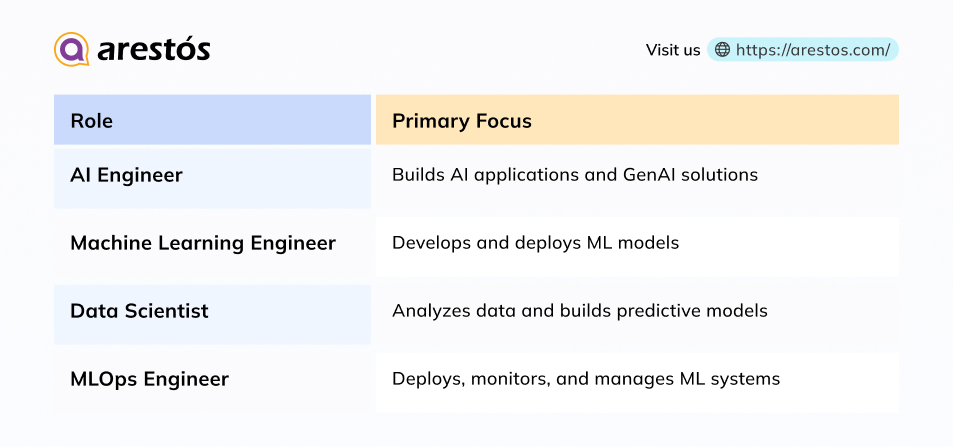
Before you begin recruiting, identify exactly what type of AI specialist your project needs. Many companies advertise for an “AI Engineer” when they actually require a Machine Learning Engineer, Data Scientist, or MLOps Engineer.
Defining the role based on your business objectives helps attract more qualified candidates, shortens the hiring process, and reduces the risk of hiring someone with the wrong skill set.
AI Role Comparison
Typical AI Tech Stack
- Python, SQL
- PyTorch, TensorFlow, Scikit-learn
- AWS, Azure, Google Cloud
- Docker, Kubernetes, MLflow
- LLMs, RAG, LangChain, LlamaIndex
Step 2: Choose Your Engagement Model and Sourcing Channel
Once you’ve defined the role, choose a hiring model that matches your business goals. Staff augmentation is ideal for extending an existing engineering team, while a Dedicated Team or ODC works best for long-term AI initiatives. If you’re validating an idea or building a proof of concept (PoC), project outsourcing can reduce both cost and management effort. Companies hiring full-time overseas employees without establishing a legal entity may also consider an Employer of Record (EOR).
Common Sourcing Channels
- Offshore staffing agencies
- AI recruitment firms
- Dedicated development partners
- LinkedIn Recruiter
- Employee and partner referrals
Step 3: Source and Shortlist Candidates
Finding AI engineers isn’t the difficult part—finding the right ones is. Beyond technical skills, look for candidates who have delivered AI solutions in real business environments rather than only academic or experimental projects. Review GitHub repositories, case studies, published research, or portfolios to understand how they solve problems, collaborate with teams, and deploy AI systems at scale.
If you’re working with an offshore staffing partner, ask how they assess machine learning expertise before presenting candidates. A provider that only tests general coding skills may not be able to identify engineers with practical AI experience.
What to look for when shortlisting candidates
- Experience building and deploying AI or ML applications
- Strong Python and machine learning framework skills (PyTorch, TensorFlow, Scikit-learn)
- Experience with cloud platforms (AWS, Azure, or Google Cloud)
- Familiarity with MLOps and model deployment
- GitHub portfolio or technical case studies
- Good communication and documentation skills
Step 4: Run a Real Technical Assessment
A technical interview should measure how candidates solve real AI problems rather than how well they memorize algorithms. Instead of relying solely on coding tests, combine portfolio reviews, practical case studies, and system design discussions to assess production-ready AI skills.
Avoid these common hiring mistakes
- Using only LeetCode-style coding tests.
- Ignoring previous production AI projects.
- Skipping questions about model deployment and monitoring.
- Focusing on model accuracy while overlooking business impact.
Step 5: Assess English Communication and Working-Style Fit
Successful offshore collaboration depends on communication as much as technical expertise. During interviews, evaluate whether candidates can work effectively in a distributed team and communicate clearly with stakeholders.
Interview checklist
- Can the candidate explain technical concepts in simple English?
- Do they document their work clearly?
- Have they worked remotely before?
- Are they comfortable with Agile ceremonies and code reviews?
- Can they collaborate across different time zones?
Step 6: Negotiate the Contract—IP, NDA, and Payment Terms
Before signing the agreement, make sure every critical business and legal issue has been addressed.
Your contract should define:
- Who owns the source code, AI models, and documentation.
- NDA and confidentiality obligations.
- Scope of work and acceptance criteria.
- Payment schedule and invoicing.
- Data security responsibilities.
- Exit terms and knowledge transfer requirements.
Step 7: Onboard and Integrate With Your Hong Kong Team
Hiring the right engineer is only half the job—the real value comes from how quickly they become a productive member of your team. A structured onboarding process helps offshore AI engineers understand your business goals, development practices, and communication expectations from day one.
A successful onboarding journey typically includes:
- Before joining: Prepare system access, development tools, cloud environments, security credentials, and project documentation.
- Getting started: Introduce the team, explain business objectives, coding standards, development workflows, and communication channels.
- Working together: Involve engineers in daily stand-ups, sprint planning, code reviews, and assign a mentor or Tech Lead to provide guidance during the first few weeks.
- Becoming fully integrated: Gradually increase ownership of features, provide regular feedback, and encourage knowledge sharing to help engineers become long-term contributors.
Step 8: Set KPIs and Manage Performance Long-Term
Hiring is only the beginning. Long-term success depends on measuring outcomes consistently and providing regular feedback to your offshore team.
Best practices
- Define measurable KPIs before the project starts.
- Review performance every 30, 60, and 90 days.
- Track both engineering quality and AI model performance.
- Encourage continuous learning and knowledge sharing.
- Adjust goals as the project evolves.
For businesses looking to overcome Hong Kong’s AI talent shortage, our Offshore IT Staffing for Hong Kong Companies service provides access to experienced AI and ML engineers who can integrate seamlessly with your existing team.
Frequently Asked Questions
1. How do I hire offshore AI and machine learning engineers?
Define your hiring needs, choose the right engagement model, source qualified candidates, assess technical and communication skills, and onboard them with a structured process.
2. Is it better to hire AI engineers offshore or locally in Hong Kong?
Offshore hiring is ideal for reducing costs and accessing global AI talent, while local hiring is better for projects requiring frequent in-person collaboration or strict regulatory compliance.
3. How much does it cost to hire an offshore AI engineer?
Offshore AI engineers typically cost 50–60% less than comparable hires in Hong Kong, depending on location, experience, and hiring model.
4. How long does it take to hire an offshore AI engineer?
Most companies can hire qualified offshore AI engineers within 2–6 weeks, depending on the role and recruitment process.
5. Is offshore AI hiring secure for projects involving sensitive data?
Yes, as long as you use strong contracts, NDAs, access controls, and comply with regulations such as Hong Kong’s PDPO.
Conclusion
Hiring offshore AI engineers can help Hong Kong businesses overcome local talent shortages, reduce hiring costs, and accelerate AI initiatives. By choosing the right hiring model, evaluating candidates thoroughly, and following a structured onboarding process, companies can build high-performing AI teams that support long-term business growth.
If you’re looking for a trusted hiring partner, Arestós provides Offshore IT Staffing for Hong Kong Companies, helping businesses hire dedicated AI and ML engineers who integrate seamlessly with existing teams. From talent sourcing and technical screening to onboarding and ongoing support, we simplify the entire hiring process so you can focus on delivering AI-driven innovation.
Contact us today to discover how we can help you hire top AI talent faster and scale your business with confidence.
Subscribe to our newsletter!
Get updated to
the lastest IT trends
Related Posts
Update the latest technology trends for your business