Back to featured insights
How to Get Featured Snippets: A Complete Guide
Want to learn how to get featured snippets on Google? Earning Position Zero can increase visibility, attract more qualified traffic, and strengthen your authority. This guide explains how Featured Snippets work and how to improve your chances of winning them.
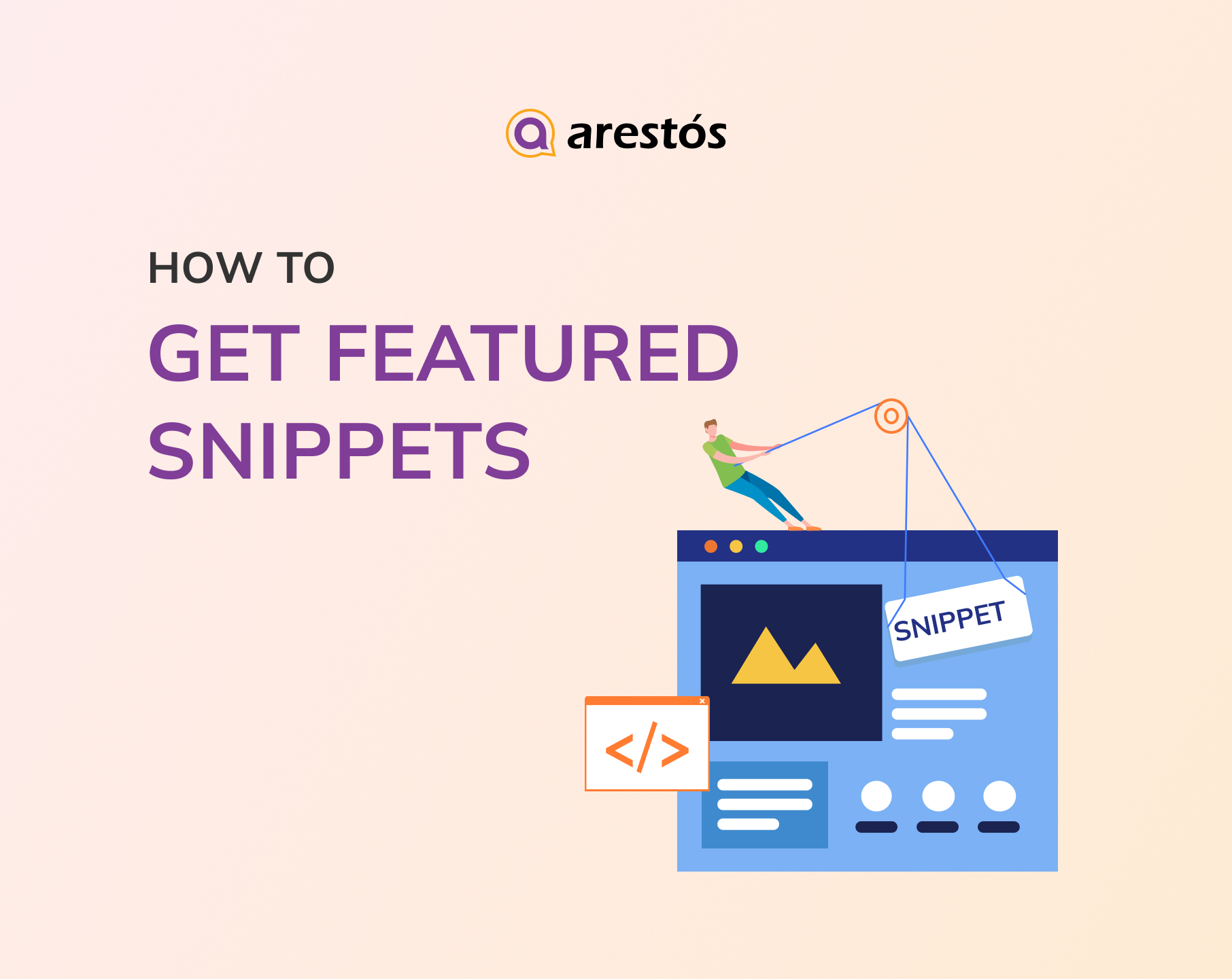

Table of Content
Share
Knowing how to get featured snippets can help your content earn Google’s highly visible Position Zero placement. Securing featured snippets can increase search visibility, attract more organic traffic, and strengthen your site’s authority.
Whether you’re a business owner, marketer, SEO professional, or content creator, understanding snippet optimization is becoming increasingly important. In this guide, you’ll learn what featured snippets are, why they matter, and how to optimize your content to earn them.
What Are Featured Snippets?
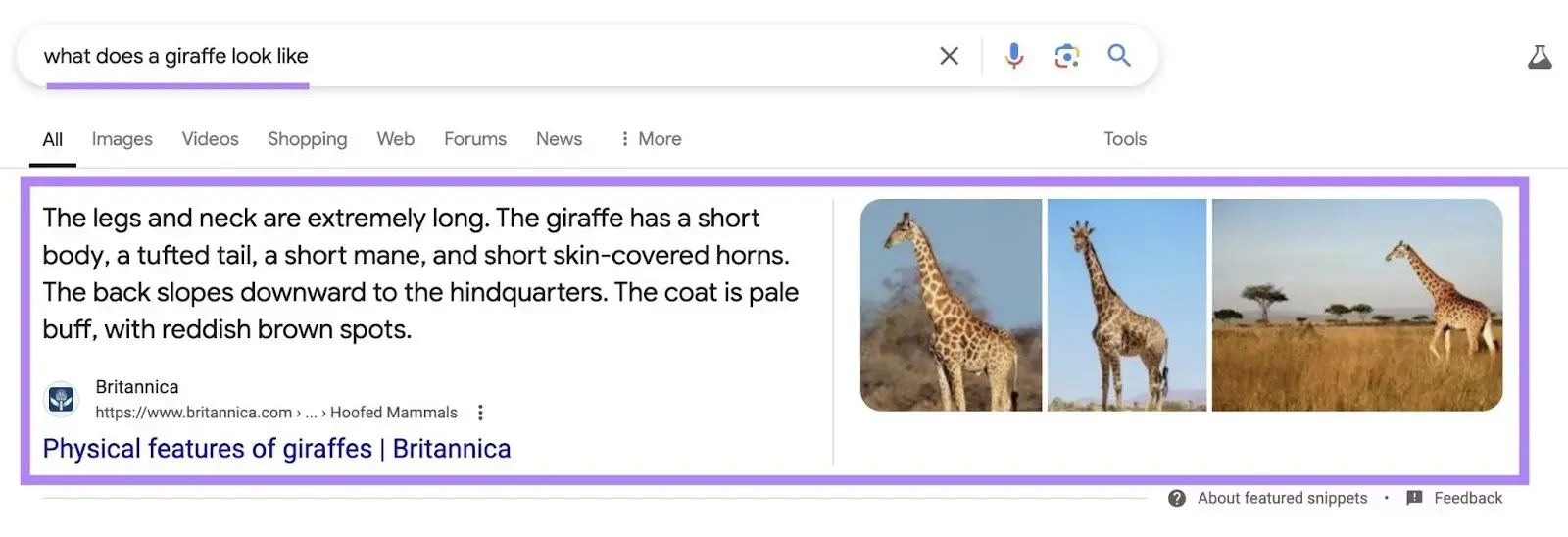
Featured Snippets are selected search results that appear at the top of Google’s search results, above the traditional organic listings. They provide concise answers to users’ questions by displaying content extracted directly from a webpage.
Because they occupy the highly visible “Position Zero,” Featured Snippets can significantly increase a page’s visibility, authority, and click-through rate.
Are AI Overviews Featured Snippets?
No, AI Overviews are not the same as Featured Snippets. Featured Snippets display a direct answer extracted from a single webpage, while AI Overviews generate a summarized response using information from multiple sources.
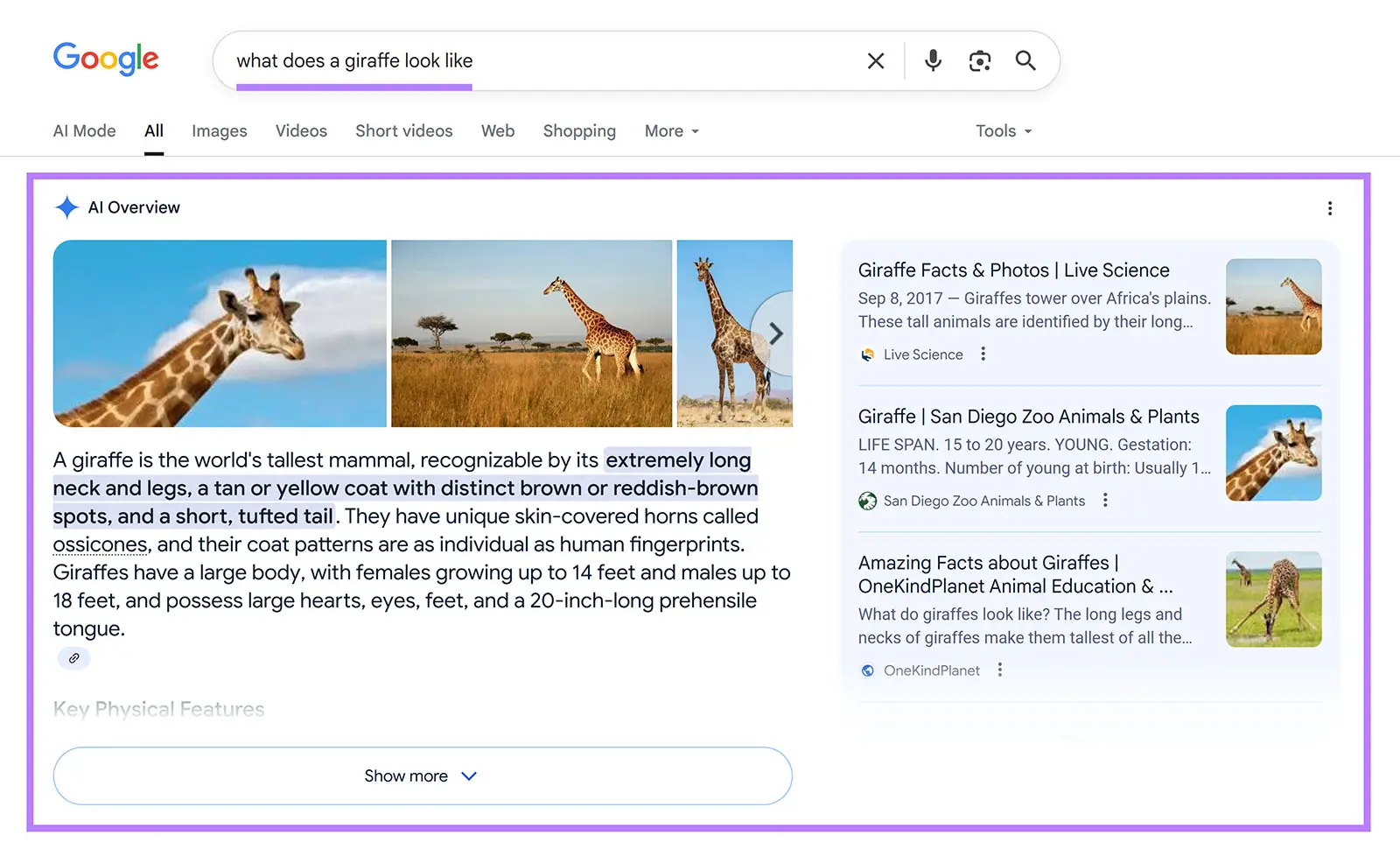
Although both appear prominently in Google search results and aim to answer user queries quickly, AI Overviews rely on generative AI to create a broader response and typically include links to several supporting sources.
Want to expand your visibility beyond Featured Snippets? Check out How to Rank in Google’s AI Overviews.
Why Getting Featured Snippets Is Good for SEO
Featured Snippets can deliver benefits beyond higher rankings. By securing Position Zero, your content gains greater visibility and credibility, helping attract more qualified traffic from search engines.
- Higher Visibility: Featured Snippets appear above traditional organic results, giving your content maximum exposure in search results.
- Improved Click-Through Rate (CTR): A prominent position can attract more clicks and increase organic traffic.
- Greater Authority: Being selected by Google can help establish your website as a trusted source of information.
- More Qualified Traffic: Users who click Featured Snippets are often looking for specific answers and have stronger intent.
- Voice Search Opportunities: Many voice assistants use Featured Snippets as the source for spoken answers.
- Increased Brand Awareness: Consistent visibility in Position Zero helps more users recognize your brand.
- Better AI Search Visibility: Answer-focused content optimized for Featured Snippets is also more likely to be referenced by AI-powered search experiences.
Types of Featured Snippets
The format of a featured snippet varies based on search intent. Below are the four most common types you’ll encounter in search results.
Paragraph Snippets
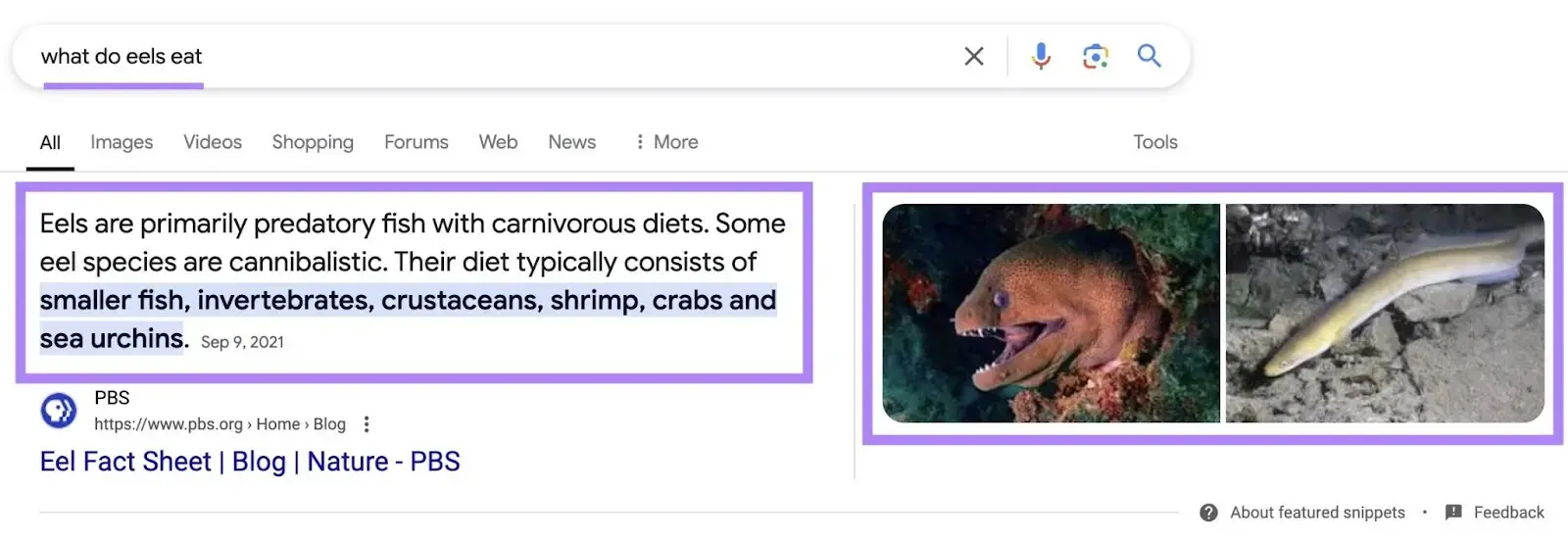
Paragraph snippets present a quick and direct answer to a search query in a short text excerpt. For some searches, Google may also display a relevant image alongside the snippet to provide additional context.
Example:
List Snippets
List snippets organize information into numbered or bulleted lists, making it easier for users to quickly scan key points. They are commonly used for step-by-step instructions, rankings, tips, or collections of related items.
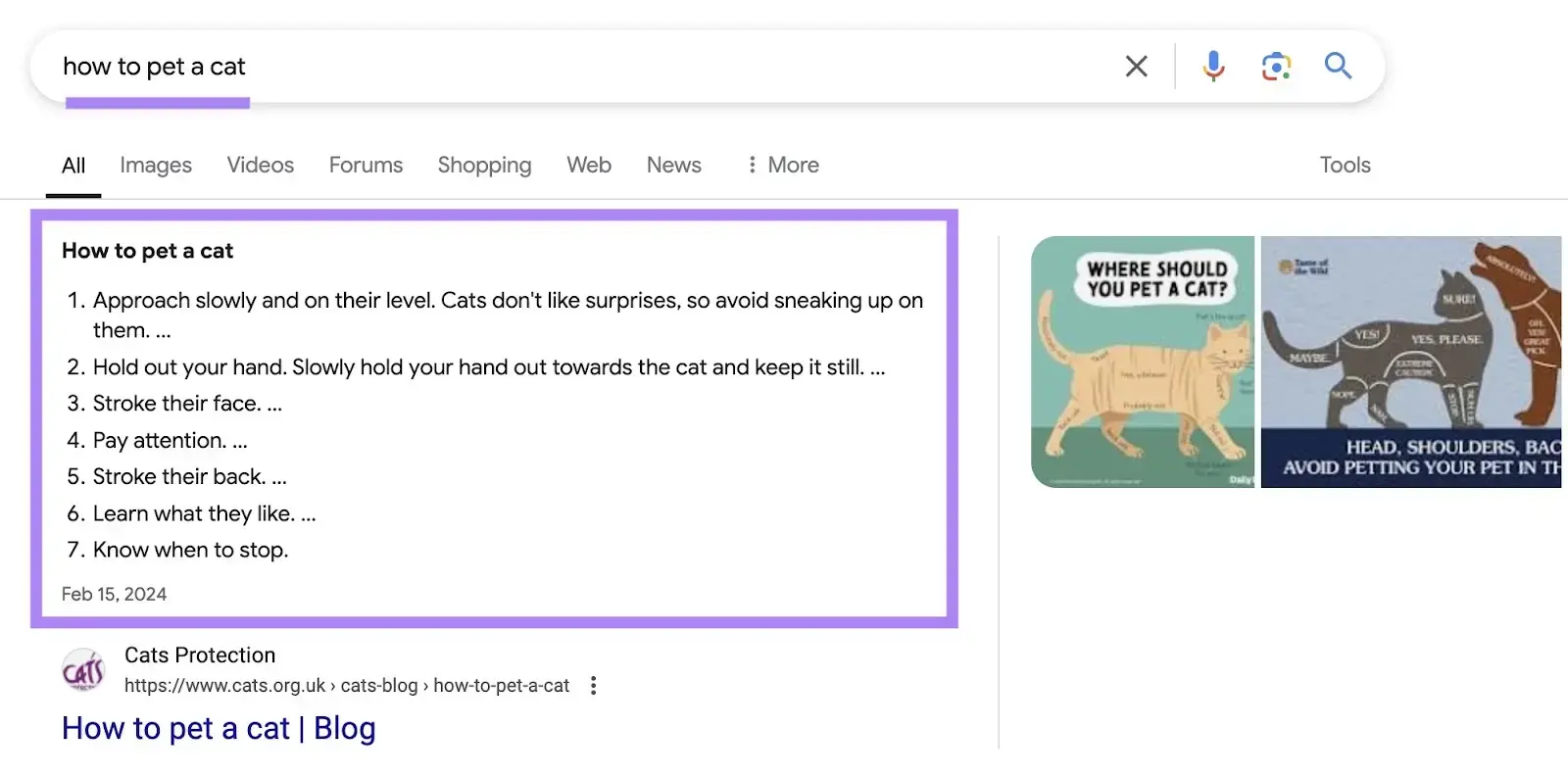
Unordered lists are typically used to display groups of related items where the sequence is not important, helping users quickly identify key points or categories at a glance.
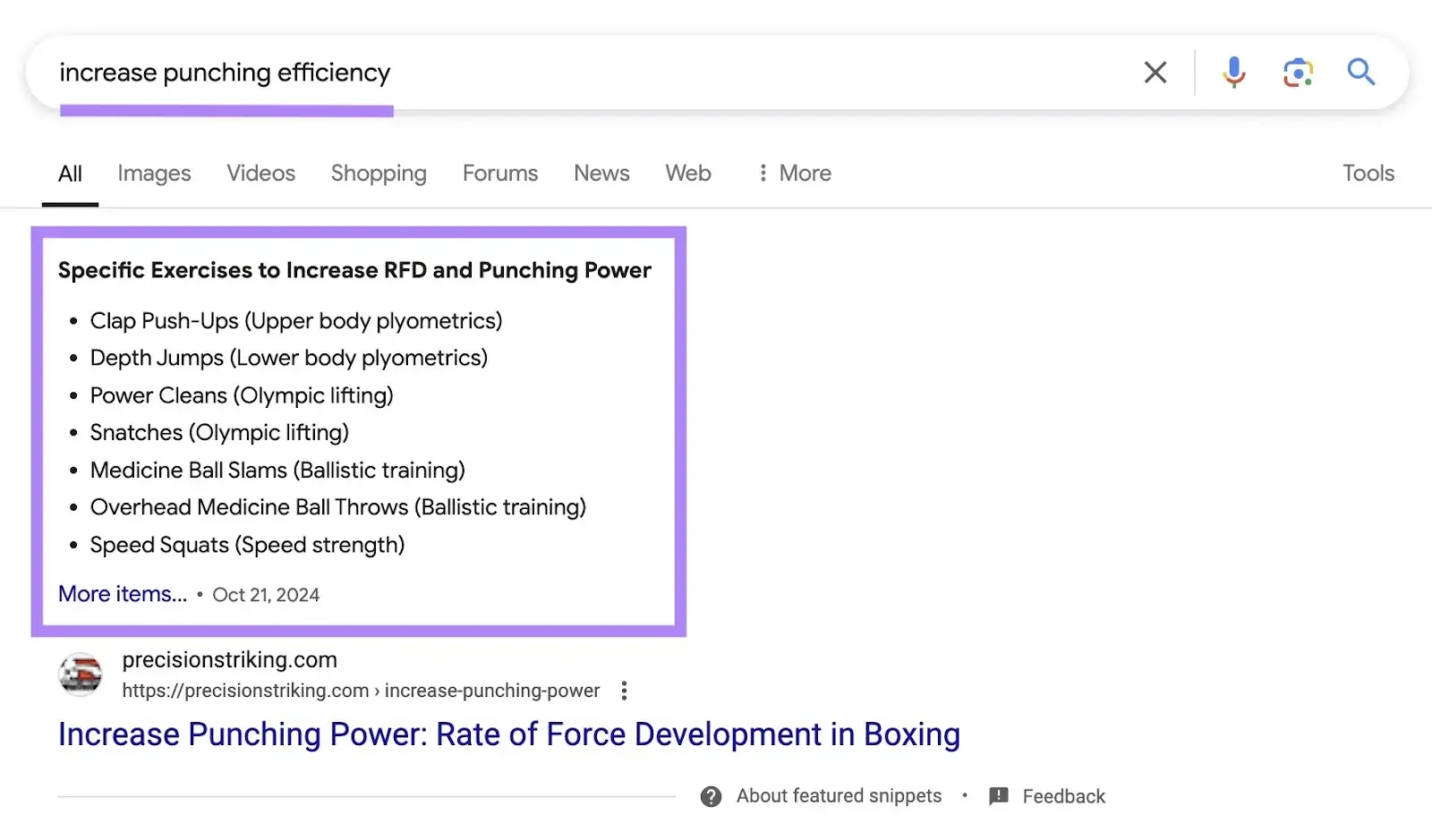
Table Snippets
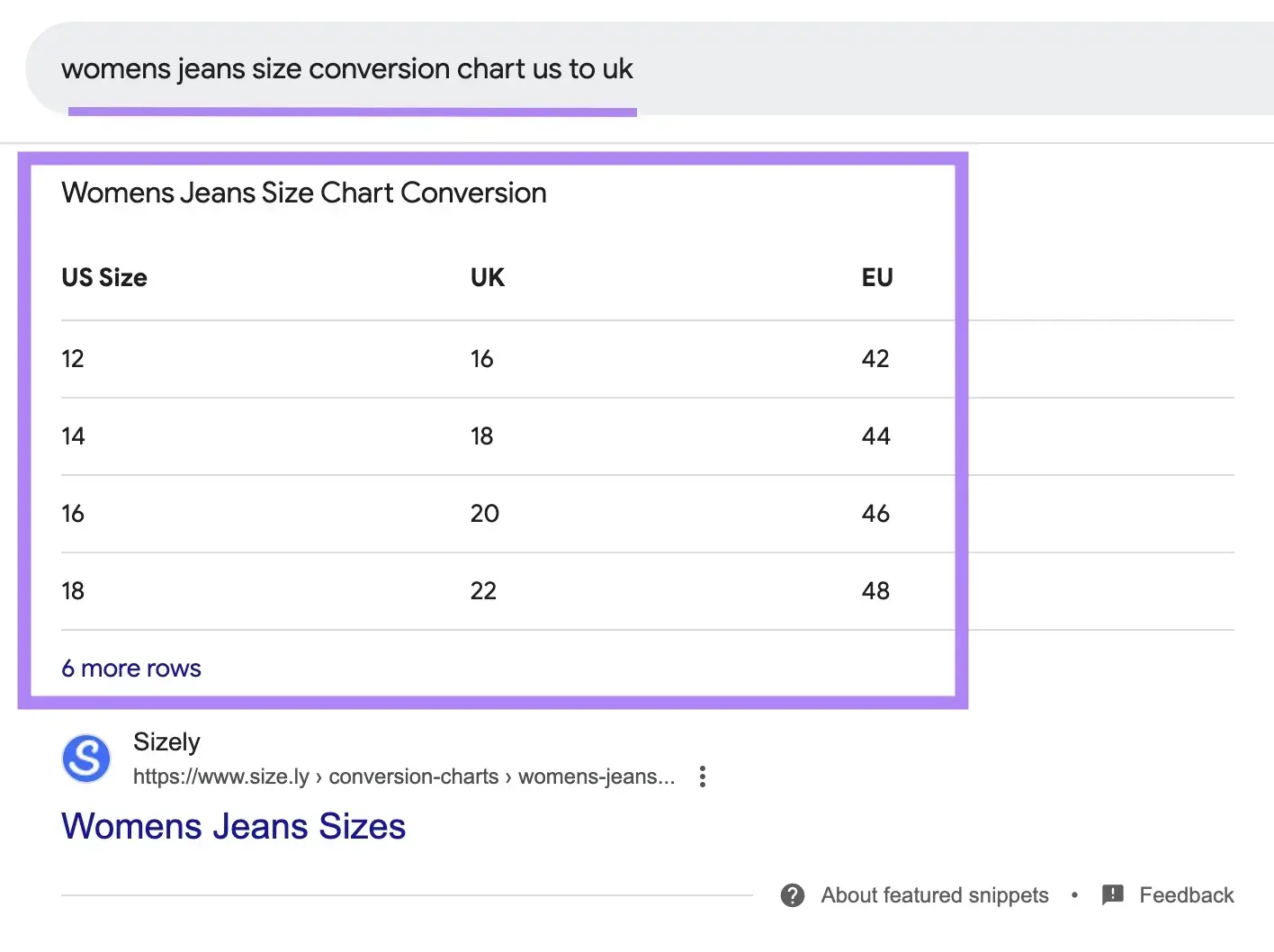
Table snippets present information in a structured table, allowing users to quickly compare data across multiple categories. They are commonly used for comparisons involving features, pricing, specifications, statistics, or other data-driven information.
Video Snippets
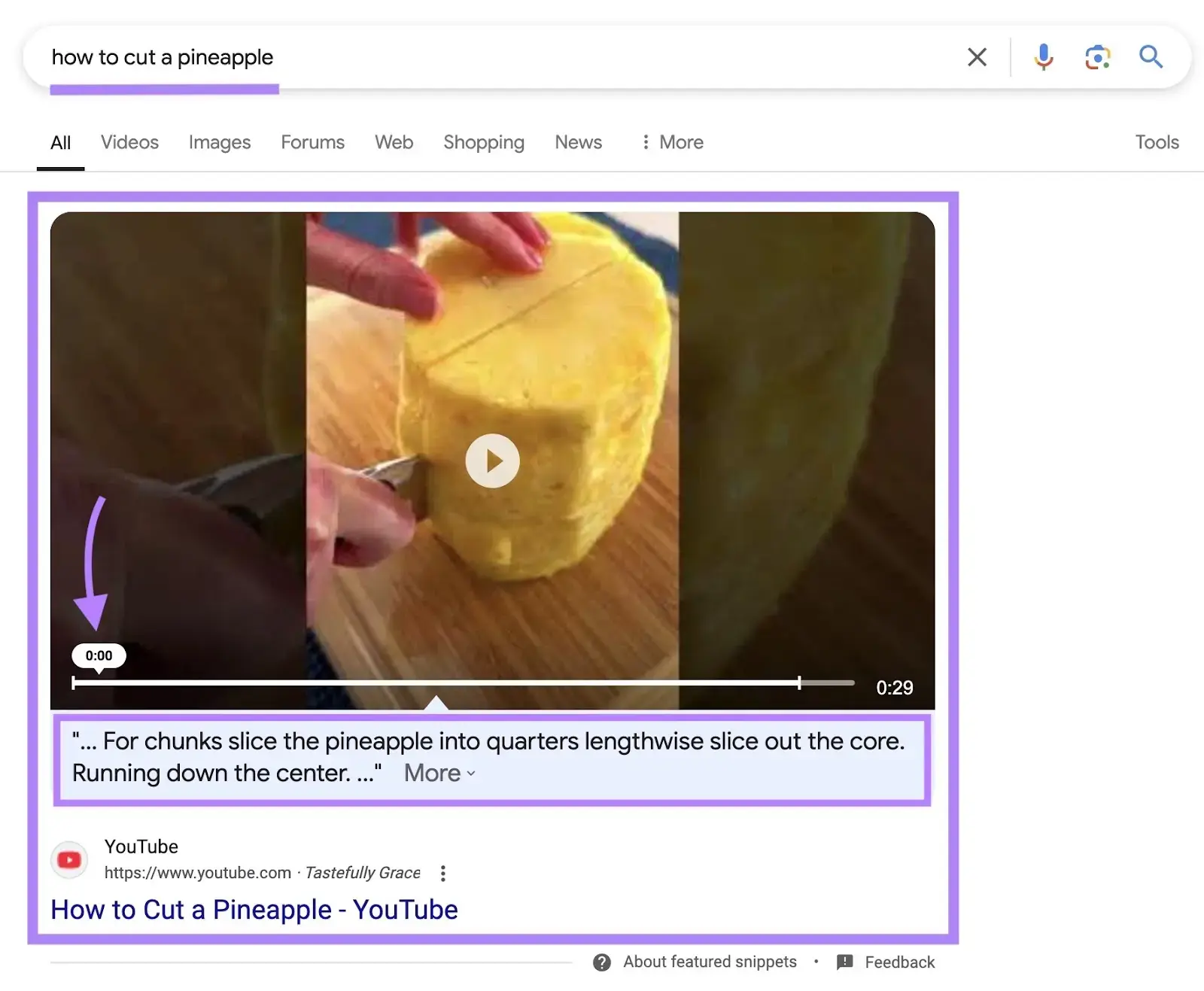
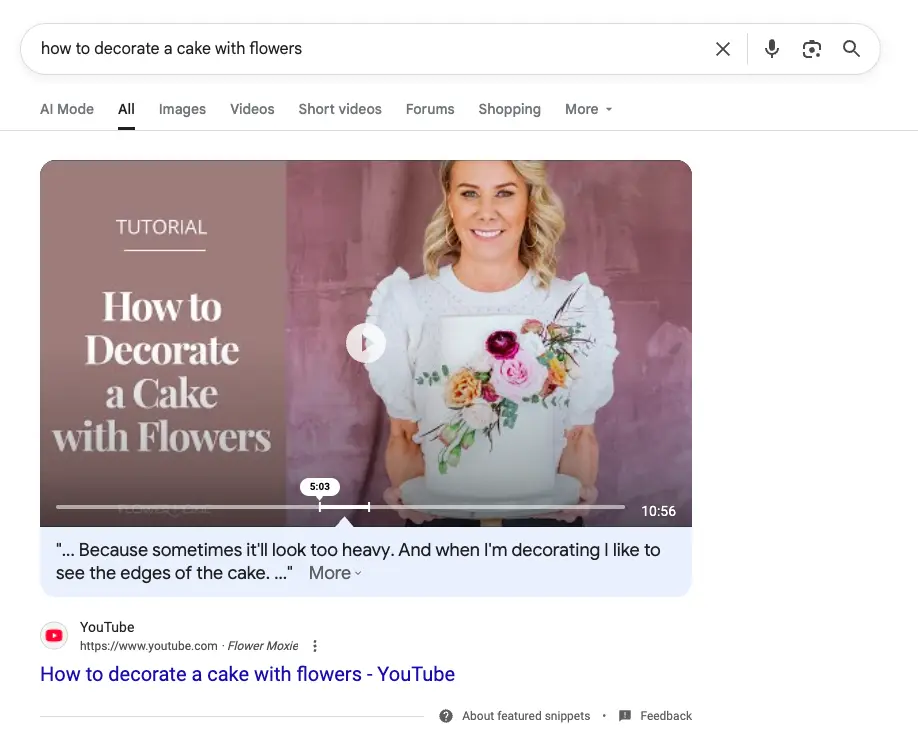
Video snippets showcase relevant video content for a search query, often appearing for tutorials, demonstrations, or other action-oriented searches. To help users find answers faster, Google may highlight a specific section of the video that directly addresses the query.
How to Find Featured Snippet Opportunities
Start by identifying keywords that already trigger Featured Snippets in Google. This helps you understand what type of snippet Google prefers for a query, whether it’s a paragraph, list, table, or video, so you can structure your content accordingly.
If you have target keywords in mind, search for them on Google and analyze the results. Pay attention to the Featured Snippet format and evaluate whether you can create content that provides a clearer, more complete answer.
For example, a baking website targeting the keyword “how to bake a cake step by step” may find that Google displays a numbered list snippet outlining the baking process.
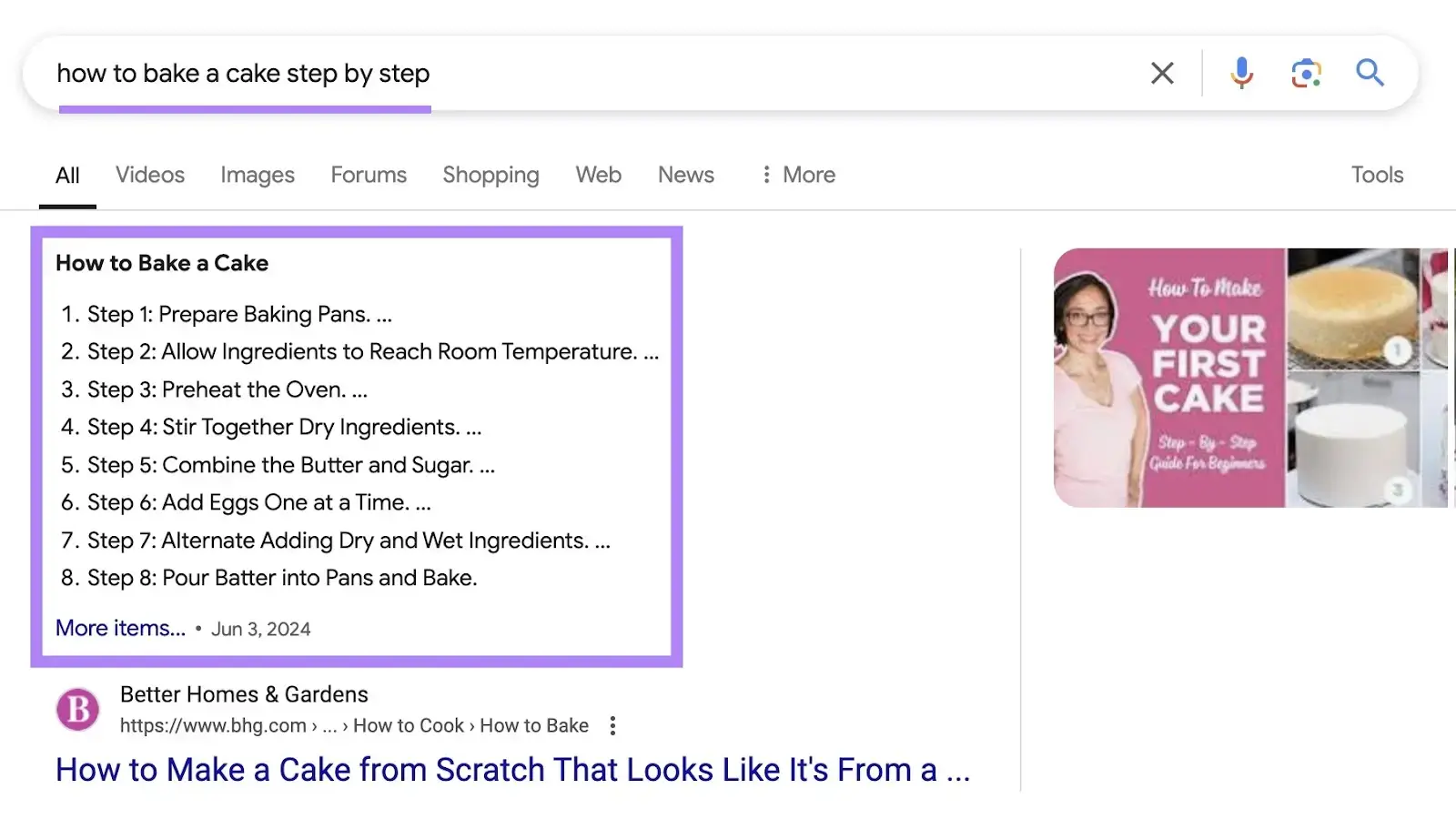
On the other hand, not every search query generates a Featured Snippet. For example, the query “how to decorate a cake” may not display a snippet, indicating that Google does not currently consider a Featured Snippet the best way to answer that search.
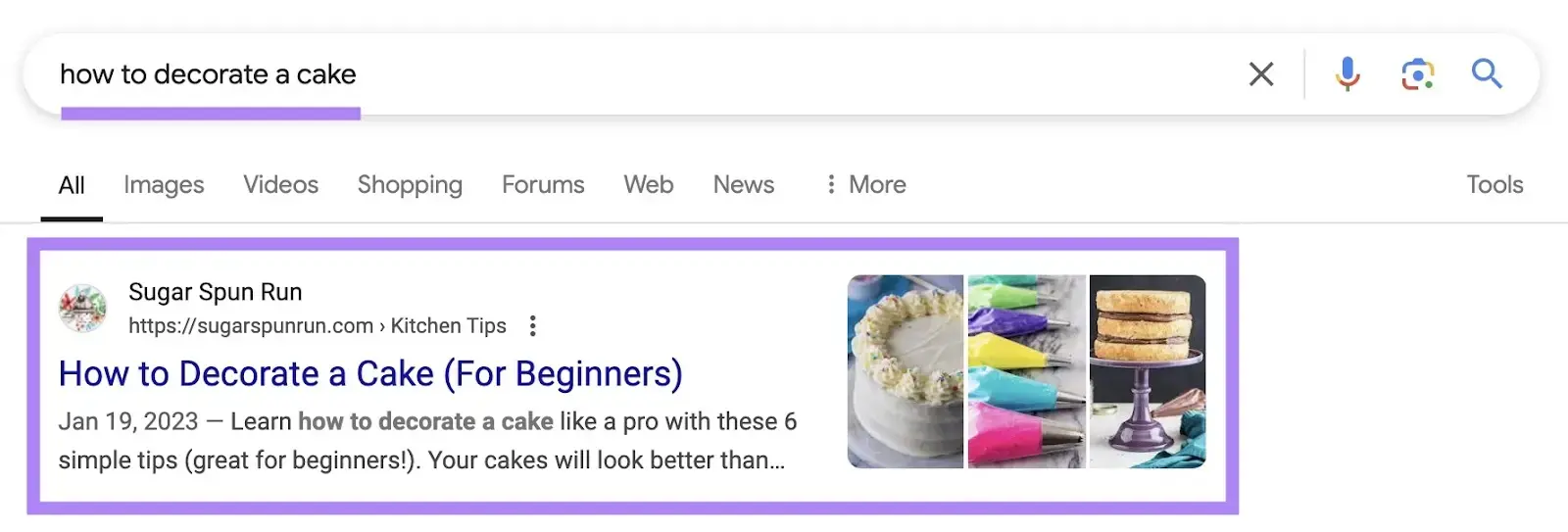
You can repeat this process to identify more keywords that trigger Featured Snippets. However, manually checking search results can be slow and only works if you already have a list of keywords to investigate.
It’s also important to remember that Featured Snippets do not always appear consistently. Factors such as location, personalization, and search settings can influence whether a snippet is shown for a particular query.
To streamline your research and discover new opportunities, use a keyword research tool such as Semrush’s Keyword Magic Tool. Enter a broad topic related to your niche to generate keyword ideas and identify queries that may be eligible for Featured Snippets.
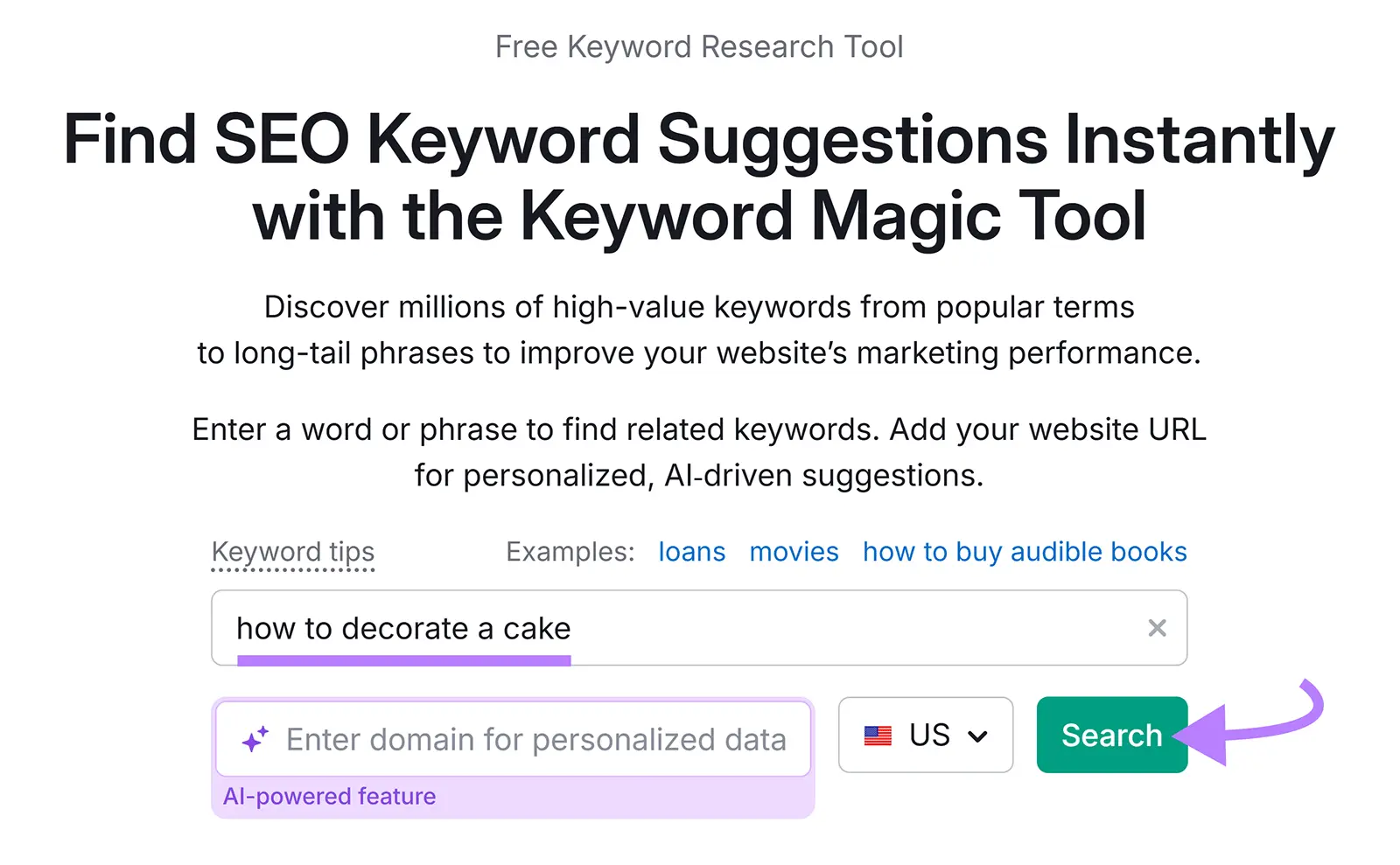
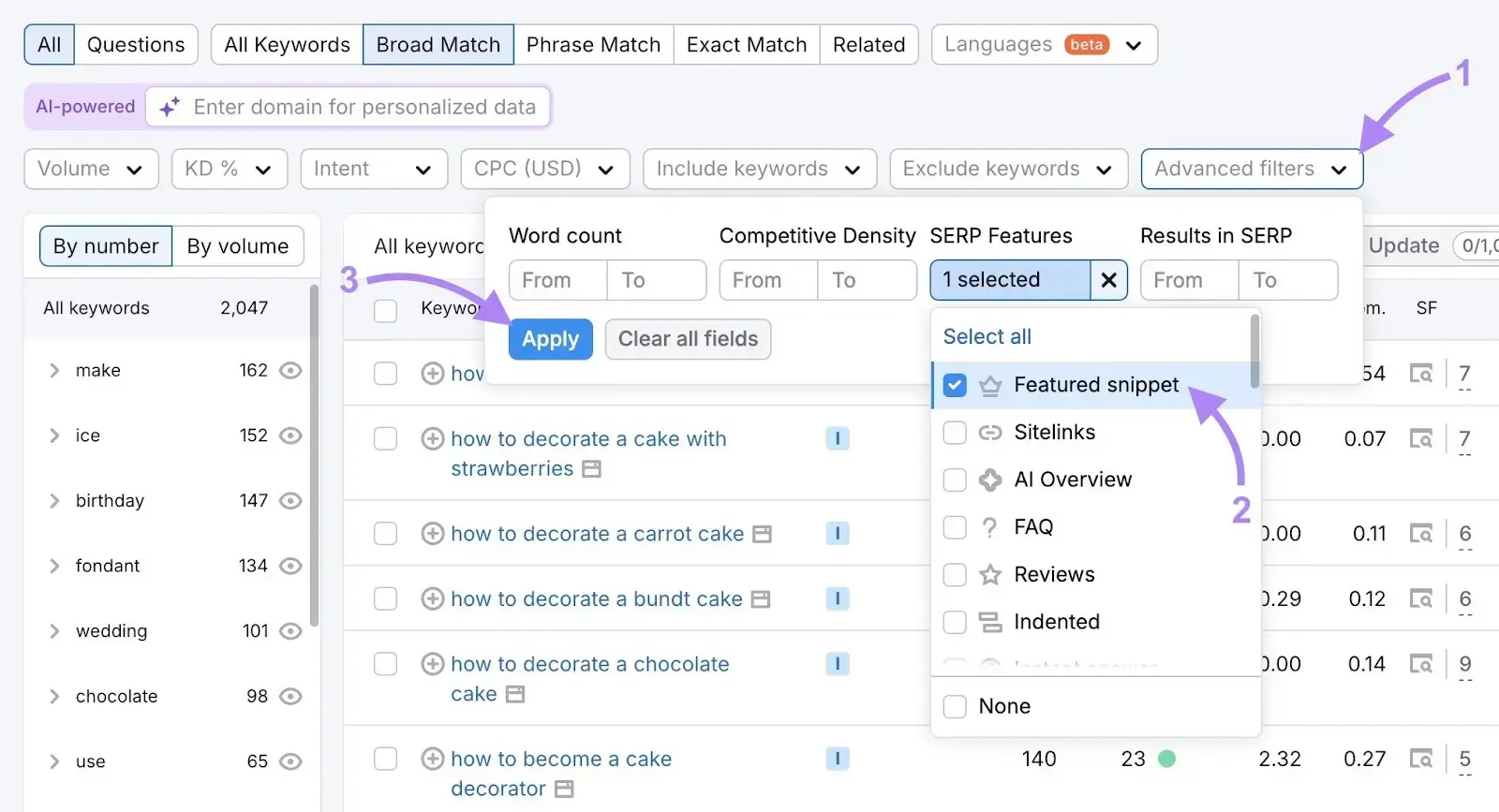
You’ll then see a list of keyword ideas along with valuable metrics such as search intent, search volume, and keyword difficulty. To focus specifically on Featured Snippet opportunities, apply a filter that only shows keywords currently triggering Featured Snippets in the search results.
In Semrush Keyword Magic Tool, open the Advanced filters menu, navigate to SERP features, and select Featured snippet. Applying this filter will help you quickly identify keywords that already generate Featured Snippets and may offer opportunities for optimization.
The filtered results will show only keywords that currently trigger Featured Snippets in Google’s search results. From there, review the available opportunities and examine the existing snippets to understand how Google is presenting answers for those queries.
To analyze a specific keyword, click the Open SERP icon and review the search results page. Pay attention to the Featured Snippet format, the content structure, and the type of information Google is highlighting. This can help you identify ways to create a more comprehensive and competitive answer.
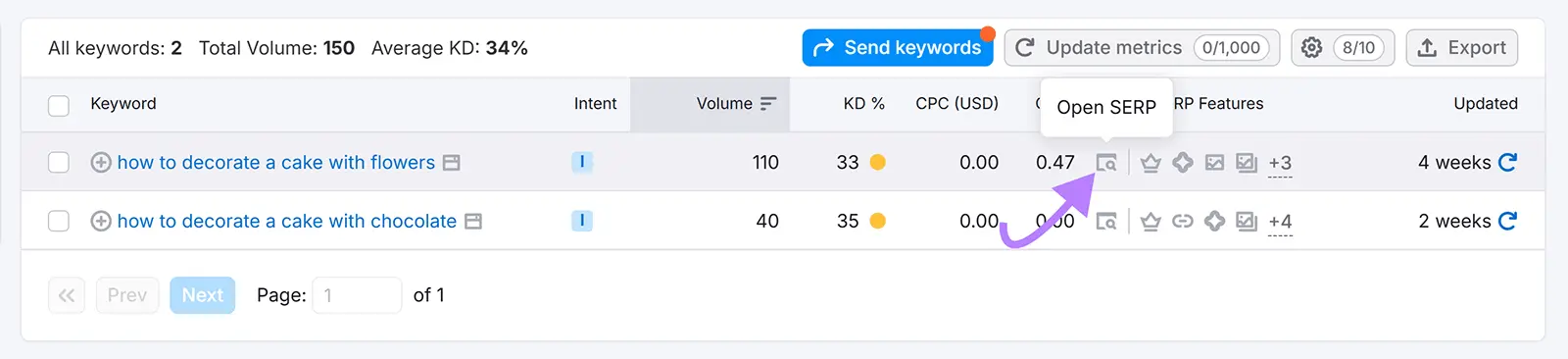
For example, you may find that Google displays a video snippet for a particular query, indicating that users are looking for a visual demonstration rather than a text-based answer.
Visit the page that currently holds the Featured Snippet and analyze how it answers the query. Look at the content structure, level of detail, and formatting, then identify opportunities to create a clearer, more comprehensive, and more valuable resource.
Learn more about the factors that influence AI visibility in our guide to Top 10 AI Search Ranking Factors That Influence AI Citations.
How to Optimize for Featured Snippets
To increase your chances of earning a Featured Snippet, focus on creating content that is easy for both users and search engines to understand. Clear answers, logical organization, and proper formatting can make your content more eligible for snippet placement.
Here are some practical optimization tips:
Answer Questions Directly
Google selects Featured Snippets that provide fast, accurate, and easy-to-understand answers. To improve your chances of earning one, your content should prioritize delivering the most relevant information as efficiently as possible.
Make sure the primary answer appears near the top of the content, either in the introduction or immediately below a relevant heading. This helps both users and search engines quickly identify the information they’re looking for.
When targeting paragraph snippets, aim to write a concise answer of around 40–60 words that directly addresses the query.
Lead with the answer first, then expand with supporting details, explanations, or examples. The key information should always be presented before any additional context.
For example, ONSAAS ranks for a paragraph snippet for the query “saas seo”:
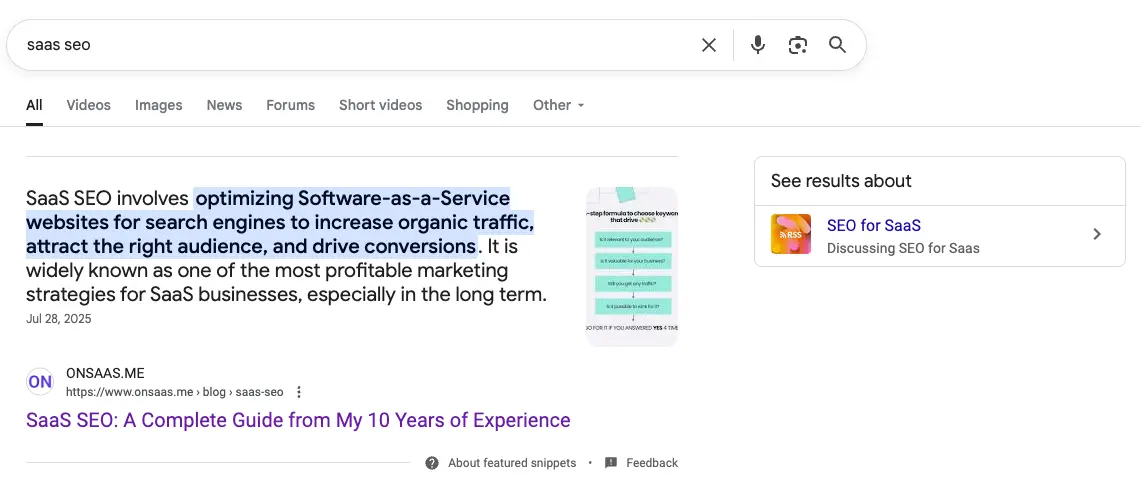
Let’s take a closer look at how this content is structured and why it may have been selected for the Featured Snippet.

The content follows a simple structure: the subheading mirrors the user’s question, followed by a concise answer that addresses it immediately. Additional details are then provided in the following sentences to expand on the topic without distracting from the core answer.
When creating content for Featured Snippets, use a neutral and informative tone. Focus on presenting factual information clearly and avoid subjective opinions, promotional language, or unnecessary wording.
Target Long-Tail Keywords
Targeting long-tail keywords can improve your chances of earning Featured Snippets because these queries are typically more specific and often require direct answers.
Short-tail keywords tend to be broad and competitive, such as:
- “seo tips”
- “cake recipe”
- “marketing techniques”
Long-tail keywords, on the other hand, provide more context and reveal a clearer search intent, such as:
- “seo tips for small business”
- “how to bake a cake step by step”
- “effective marketing techniques for ecommerce startups”
To discover long-tail keyword opportunities, use a keyword research tool like Semrush Keyword Magic Tool. Enter a broad topic related to your niche, then review the suggested keyword ideas to find highly specific queries that align with your content and audience.
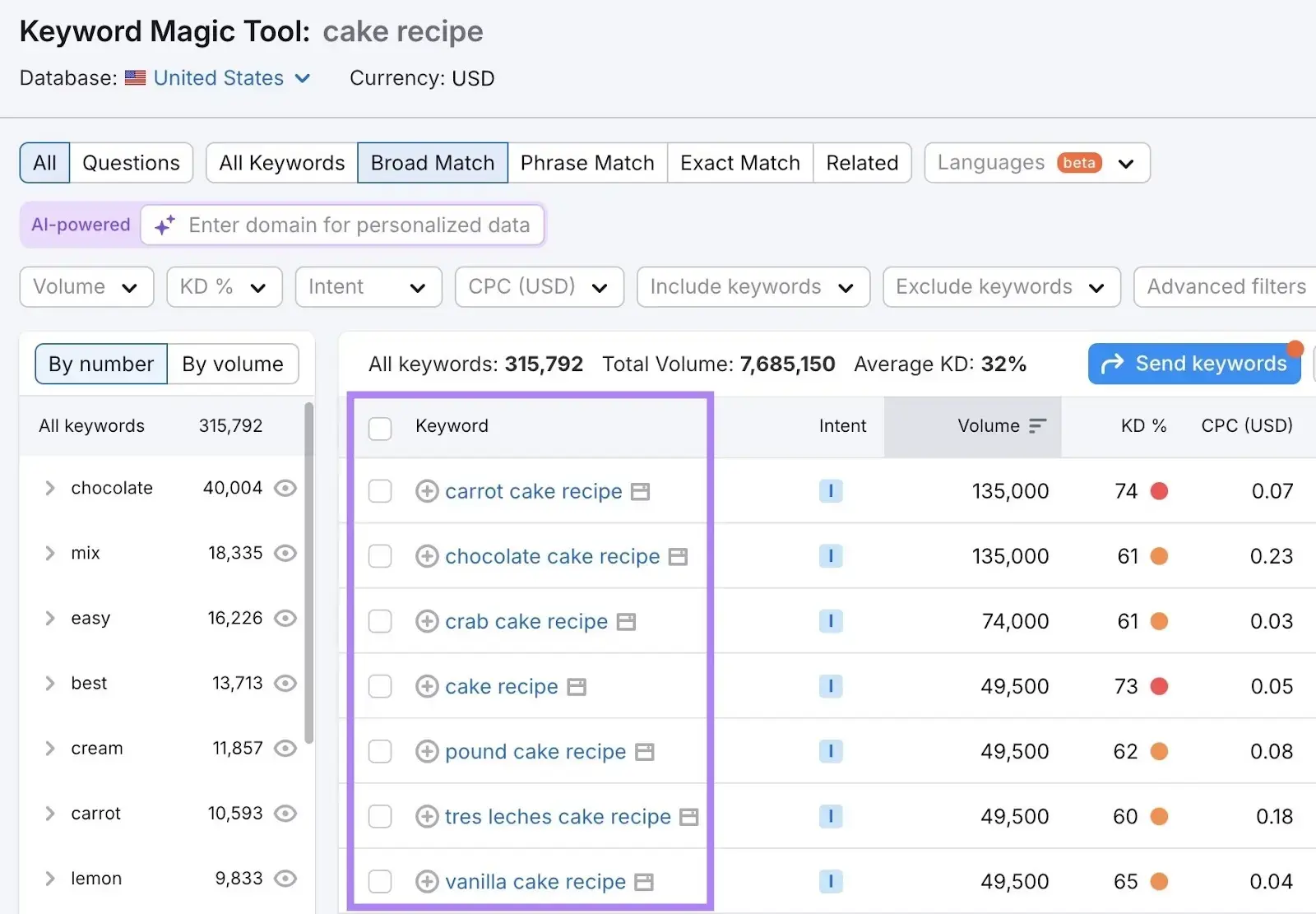
To identify long-tail keyword opportunities more efficiently, use the Advanced filters feature to narrow your keyword list. Applying a minimum word count helps surface more specific queries that often have clearer search intent and a higher likelihood of triggering Featured Snippets.
If the filtered results remain too broad, consider increasing the minimum word count to find even more targeted keyword opportunities.
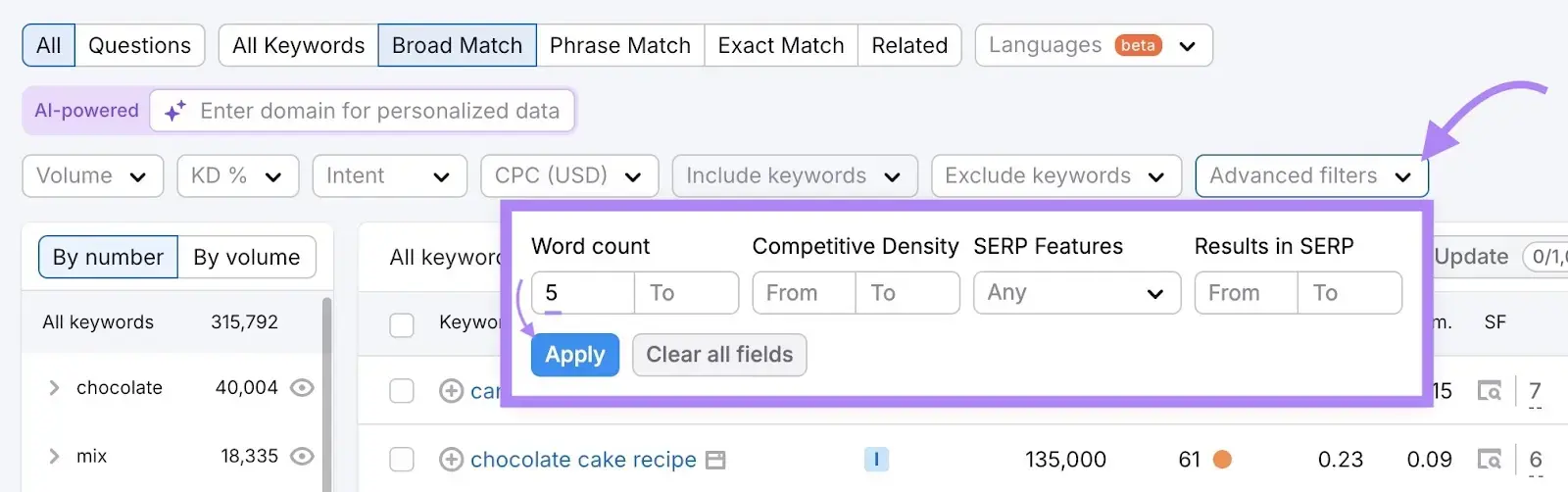
The filtered results will highlight more specific long-tail keywords, making it easier to identify content opportunities. Because these queries often have clear search intent and require direct answers, they can be strong candidates for Featured Snippet optimization.
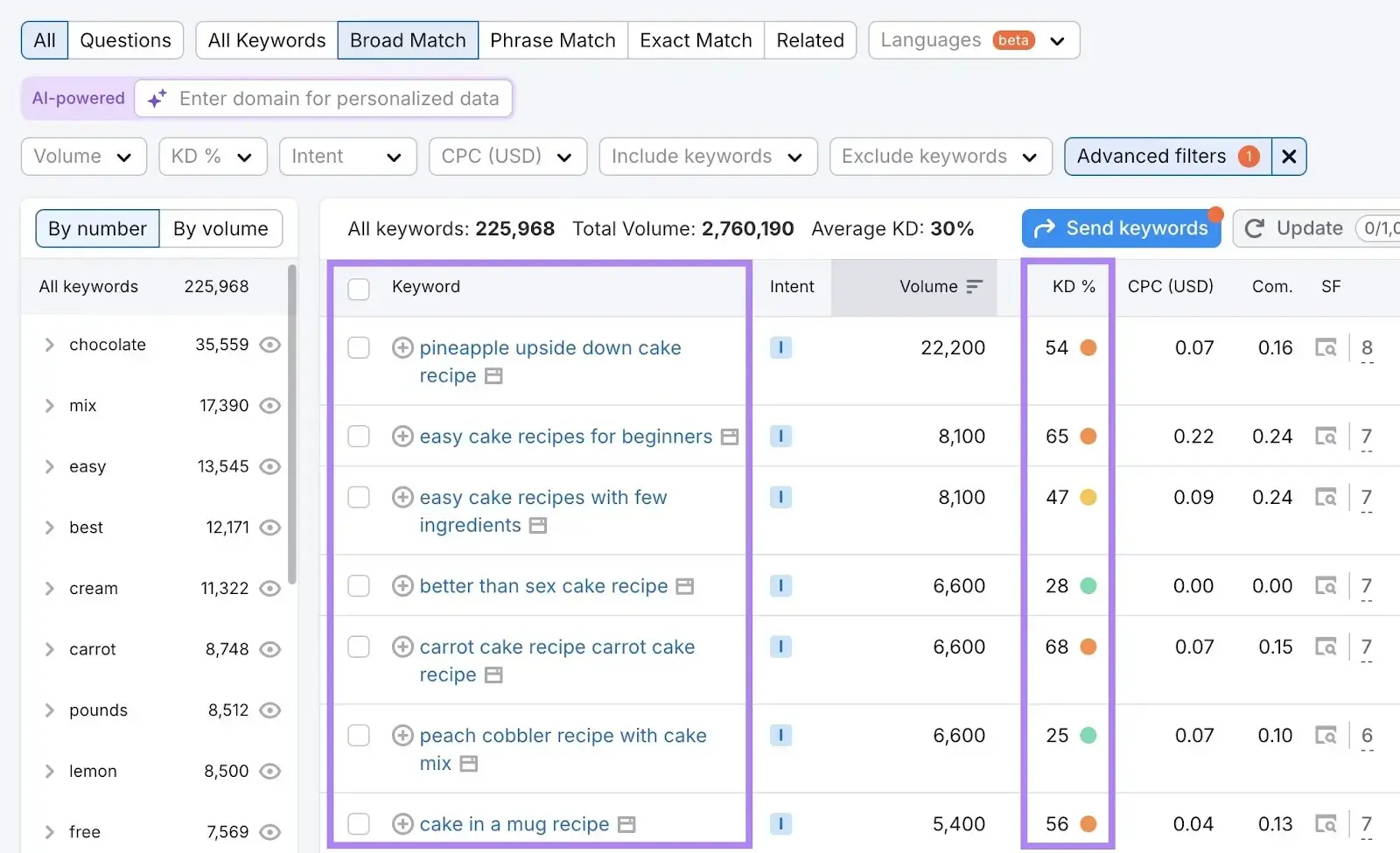
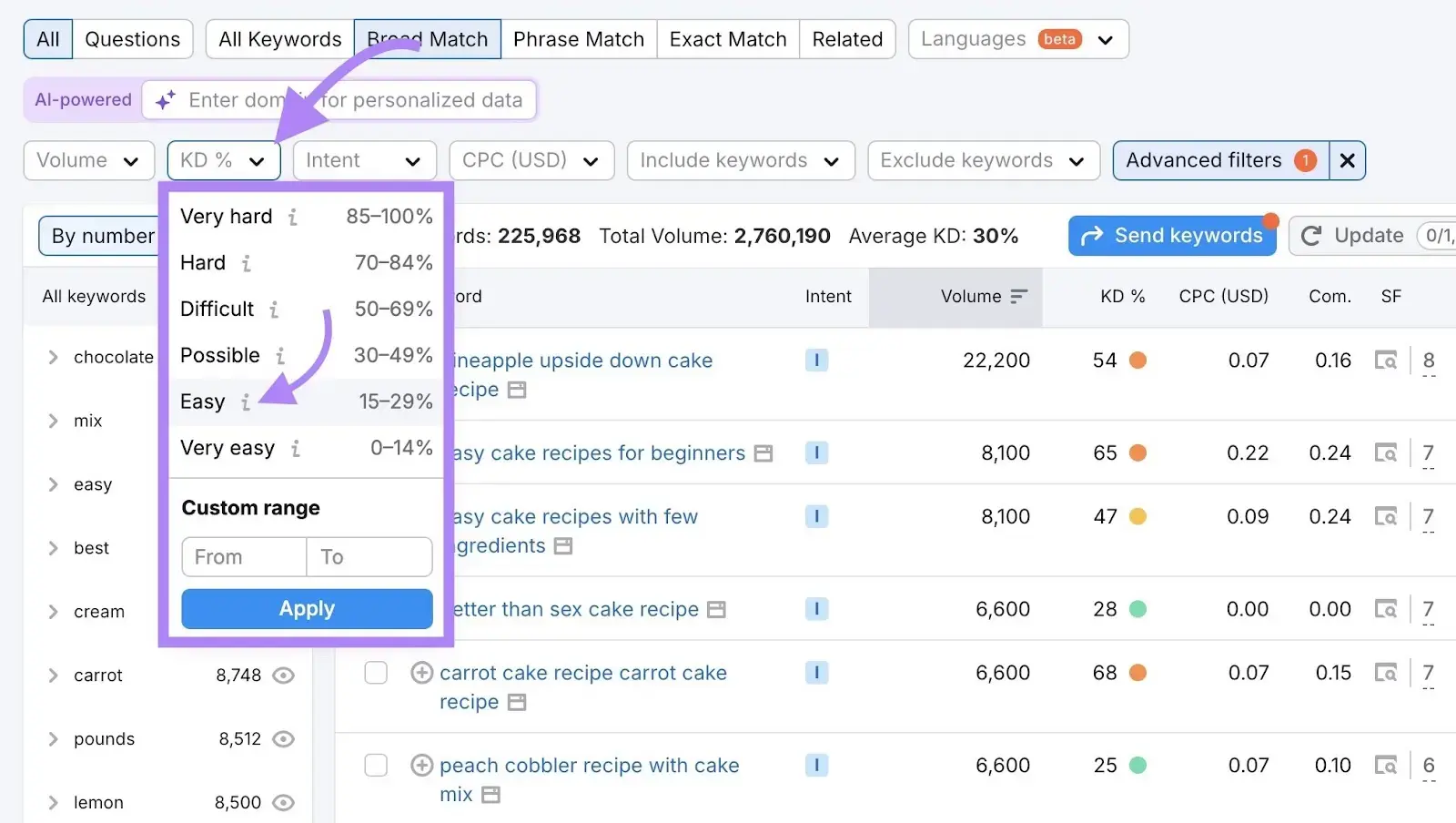
To uncover more attainable opportunities, refine your keyword list using a keyword difficulty filter. Prioritizing lower-difficulty keywords can help you focus on queries that may require less effort to rank for and compete in Featured Snippets.
In Semrush, open the KD % filter and select a low-difficulty range, such as Easy, to display keywords with lower competition levels.
Structure Your Content Appropriately
A clear content structure can improve your chances of earning Featured Snippets, particularly list and table snippets. When information is organized logically, Google can more easily understand and extract relevant sections for search results.
For list snippets, present steps, processes, or key points in a well-structured format. One effective way to do this is by using heading tags to organize content into clearly defined sections.
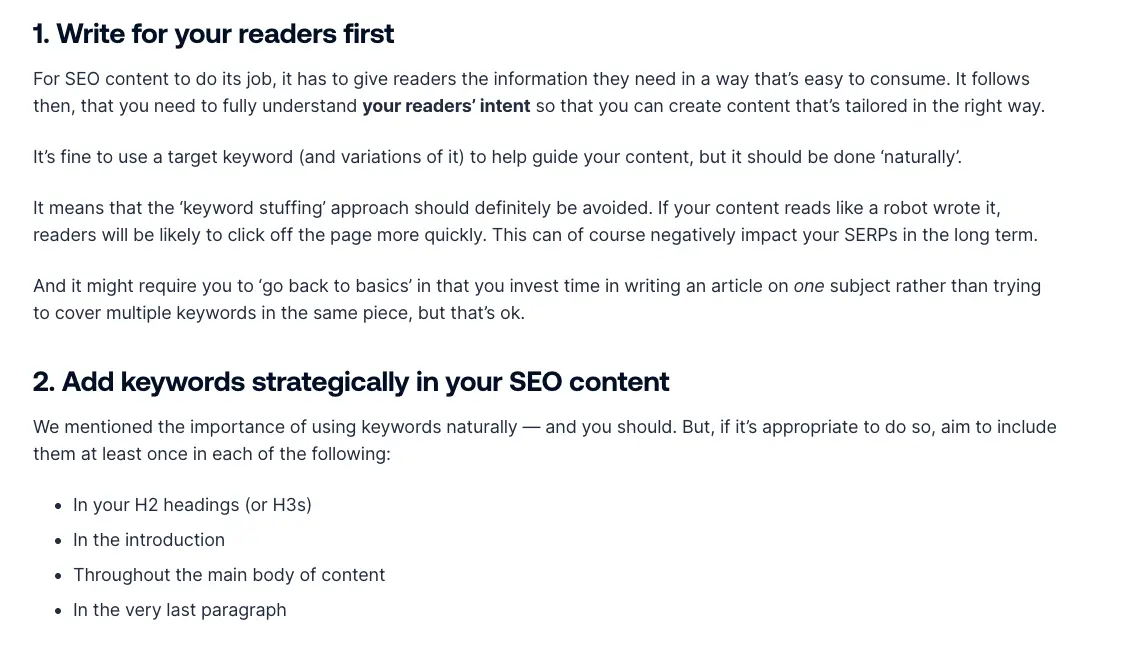
Heading tags, such as H1, H2, and H3, create a hierarchical structure that helps both users and search engines understand the relationship between different parts of your content.
You don’t necessarily need to place every item under a single heading. While grouping related points together is often the clearest approach, Google can also extract information from multiple headings throughout a page and combine them into a Featured Snippet list.
This means that a well-structured article with descriptive headings can still qualify for list snippets, even when the steps or items are spread across different sections.
For example, for the query “seo content writing,” Google may generate a list snippet by pulling information from multiple headings within a page.
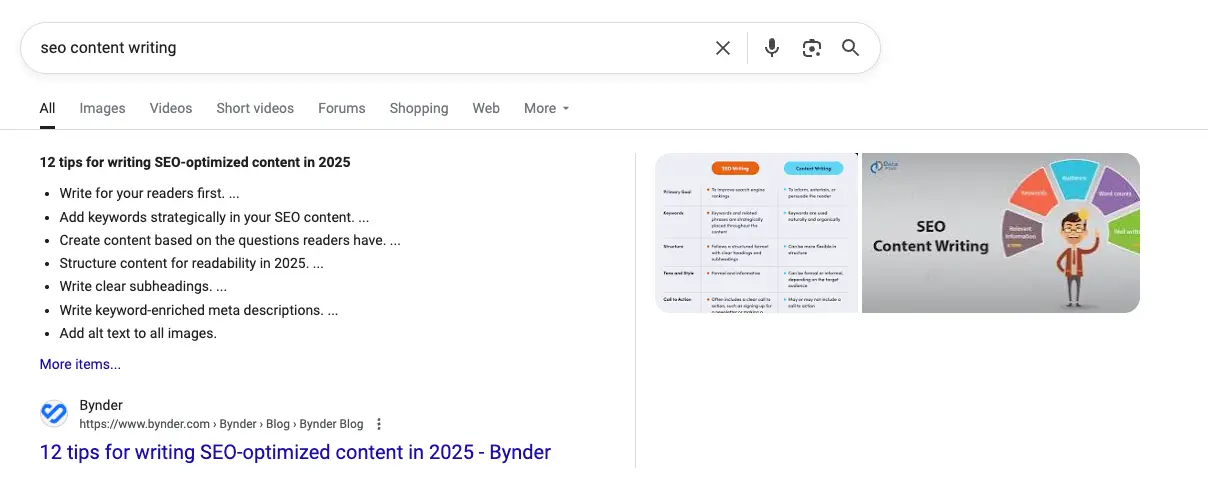
After examining the page structure, it becomes clear that Google created the Featured Snippet by extracting the article’s main subheadings and presenting them as a list. This highlights how important clear, descriptive headings can be when optimizing content for list snippets.
To improve your chances of earning a table snippet, present relevant information in a clear and organized table. Well-structured tables make it easier for Google to understand and extract data for search results, especially when users are looking to compare information.
For example, the Featured Snippet for “netsuite pricing” displays pricing information in a table format, allowing users to quickly compare key details without leaving the search results page.
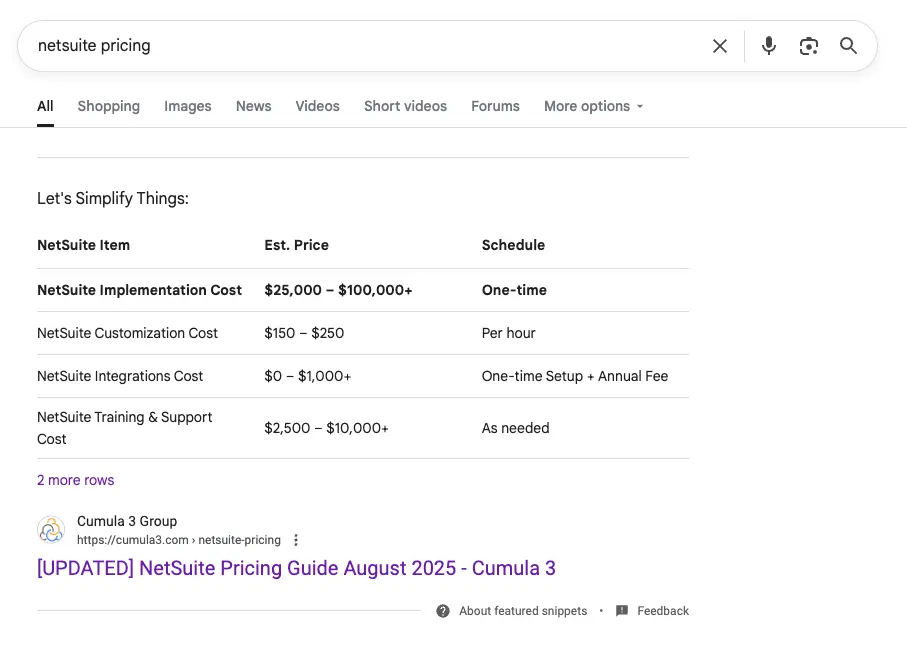
The Featured Snippet presents information extracted directly from a well-structured table on the source page, making the data easy to compare and understand at a glance.
To optimize for table snippets:
- Use a simple table structure: Organize information into clear rows and columns that are easy to read and compare.
- Include relevant data: Make sure the table directly answers the target query and presents meaningful data points.
- Add a descriptive heading: Introduce the table with a clear H2 or H3 heading that explains its purpose.
- Incorporate target keywords naturally: Include relevant keywords in the heading and surrounding content to provide additional context.
A combination of well-structured headings, organized lists, and clear tables can help search engines better understand your content. This improves the likelihood of earning Featured Snippets and can lead to greater visibility in search results.
Target People Also Ask Questions
The People Also Ask (PAA) section can be a valuable source of content ideas when targeting Featured Snippets. The questions shown in this section often reflect specific, long-tail searches that users frequently ask, making them useful for identifying topics that deserve direct answers.
When a user expands a PAA question, Google displays a brief response along with a link to the source page. This format provides insight into the types of answers Google considers relevant and helpful for that query.
For example, a search for “what are keywords in seo” may display several related questions in the PAA section, offering additional keyword and content opportunities to explore.
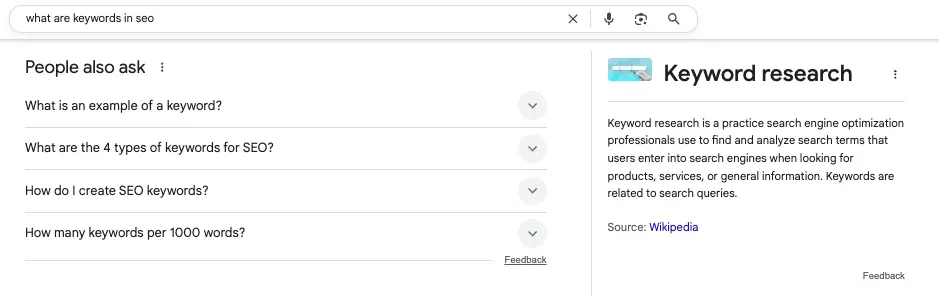
When you click a question such as “What are the 4 types of keywords for SEO?”, Google expands the result to display a concise answer. In many cases, this answer is presented in a format that closely resembles a paragraph-style Featured Snippet.
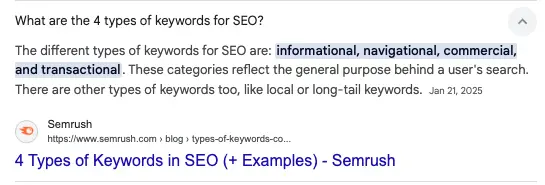
There are several ways to optimize content for People Also Ask (PAA) questions. One effective approach is to create a dedicated page that focuses on answering a specific question.
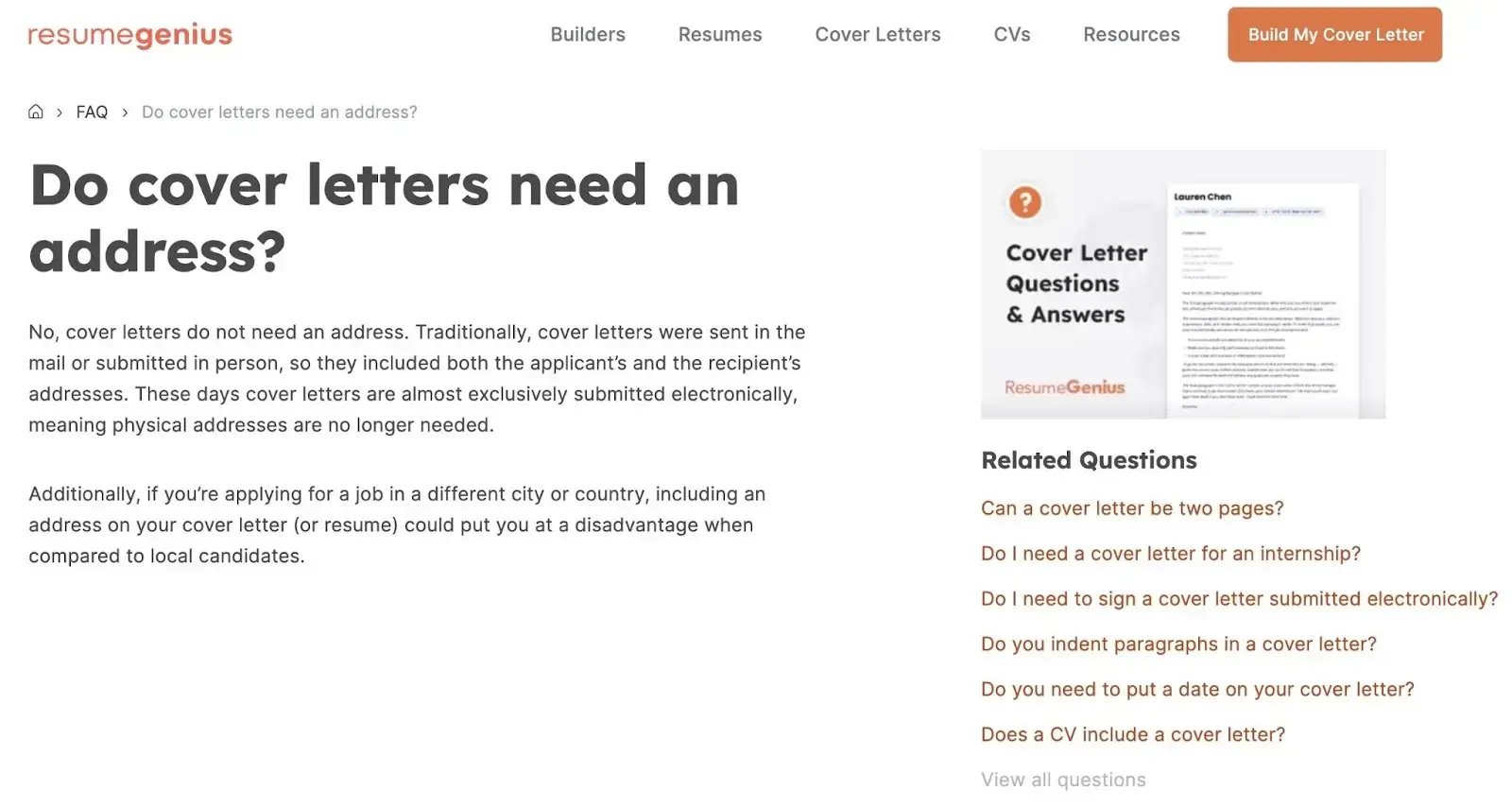
Use the target question as the page title or H1 heading, then provide a concise and direct answer near the top of the page. This makes it easier for both users and search engines to quickly identify the key information.
For example, Resume Genius earns visibility for the query “do cover letters need an address” by dedicating a page to answering that specific question in a clear and straightforward manner.
Another approach is to use PAA questions as H2 subheadings within longer blog posts and answer them directly beneath the heading.
For example, the query “what is a search engine optimization strategy” may trigger a paragraph snippet like this:
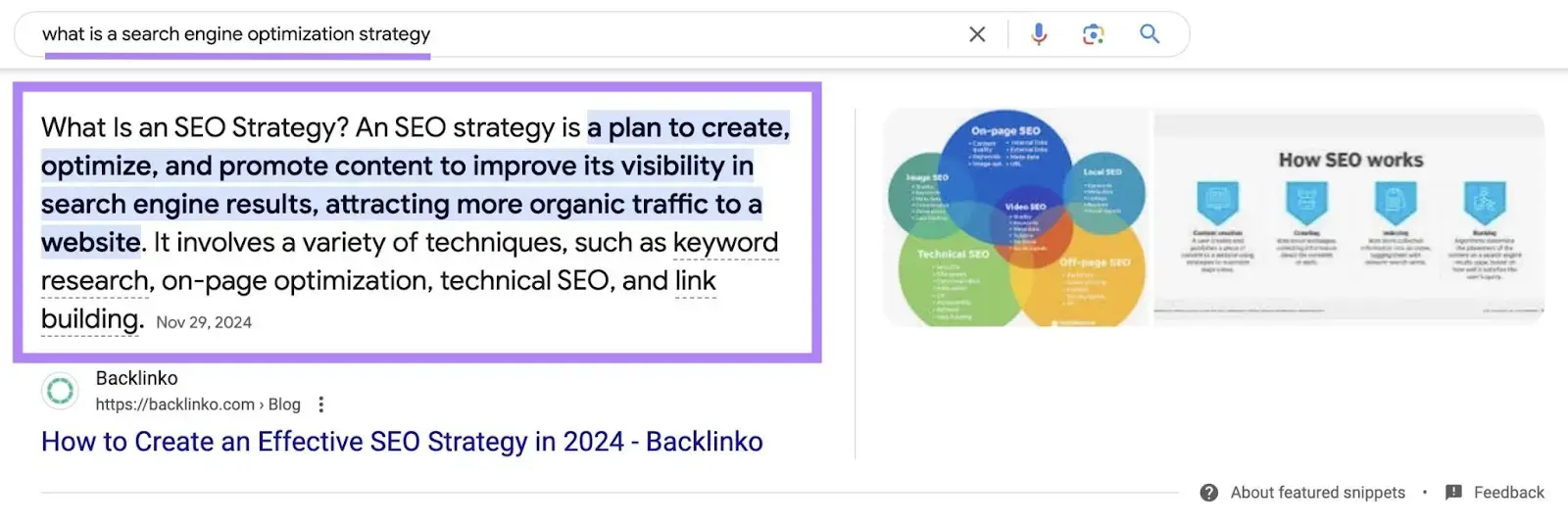
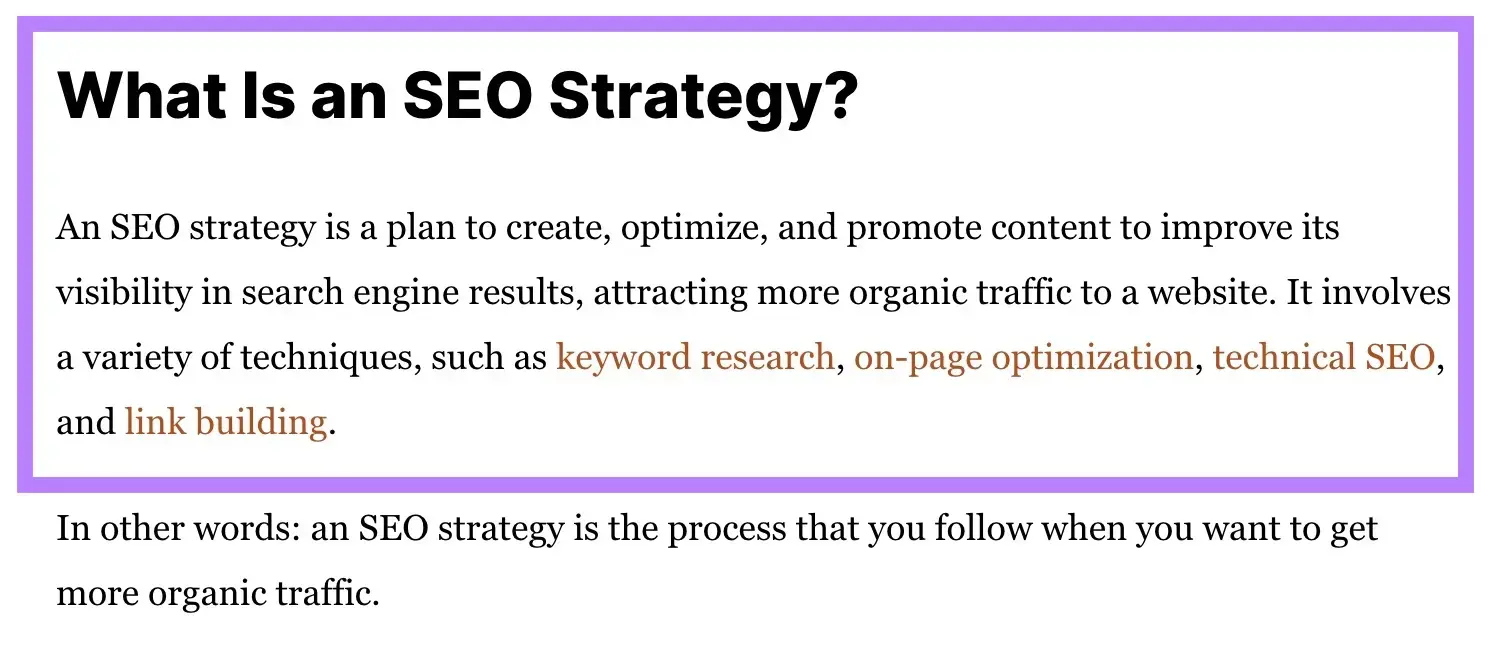
The question is used as an H2 heading, with a clear and direct answer placed immediately below it. This structure helps Google easily connect the answer to the query and potentially use it in a Featured Snippet.
For more strategies to improve AI visibility, read our guide How To Get Cited By AI.
Track Your Featured Snippets (and AI Overviews)
Monitoring your Featured Snippet performance helps you identify successful content, discover new optimization opportunities, and maintain visibility in search results. As AI-powered search features continue to evolve, it’s also important to track how your content appears in AI-generated results such as AI Overviews.
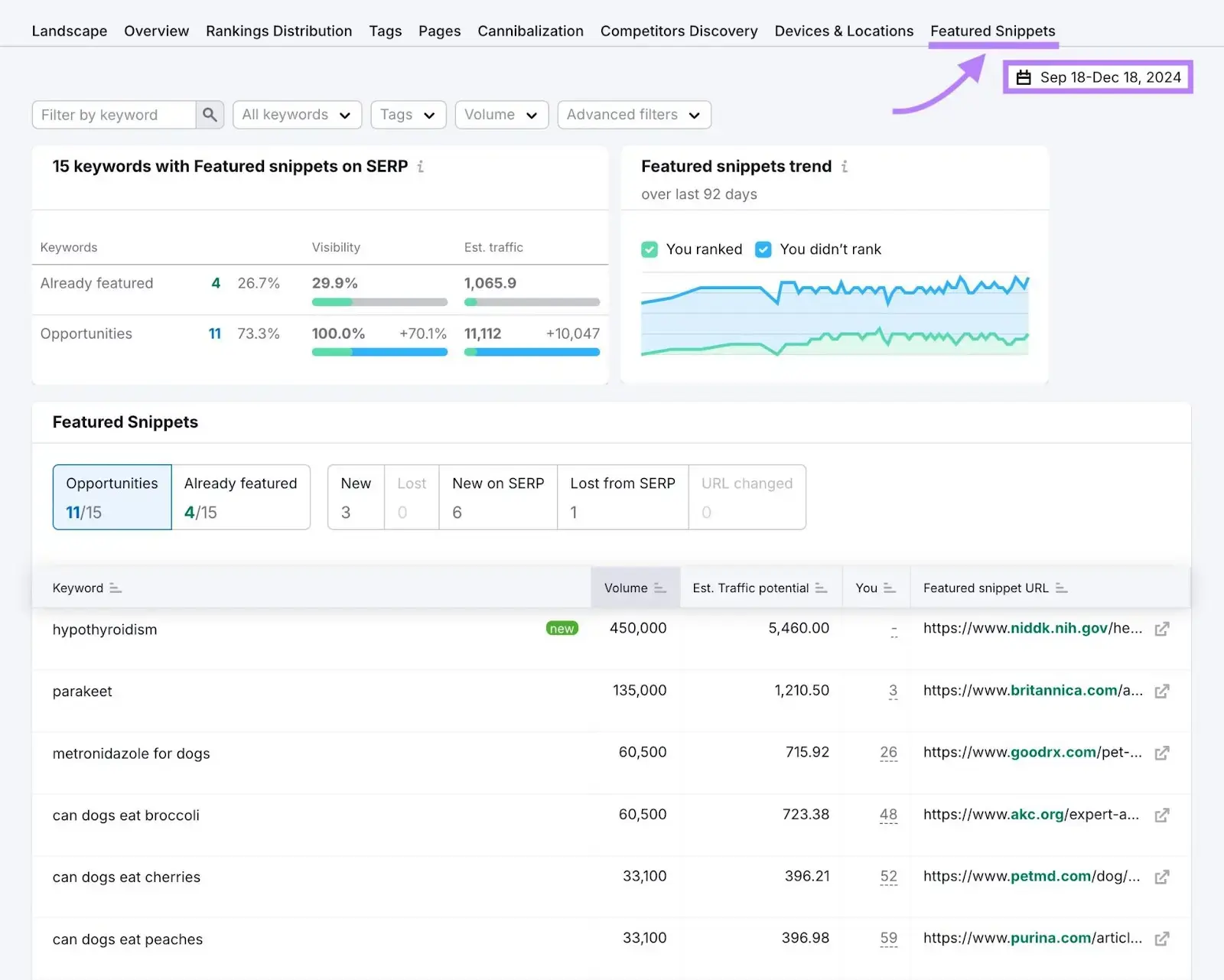
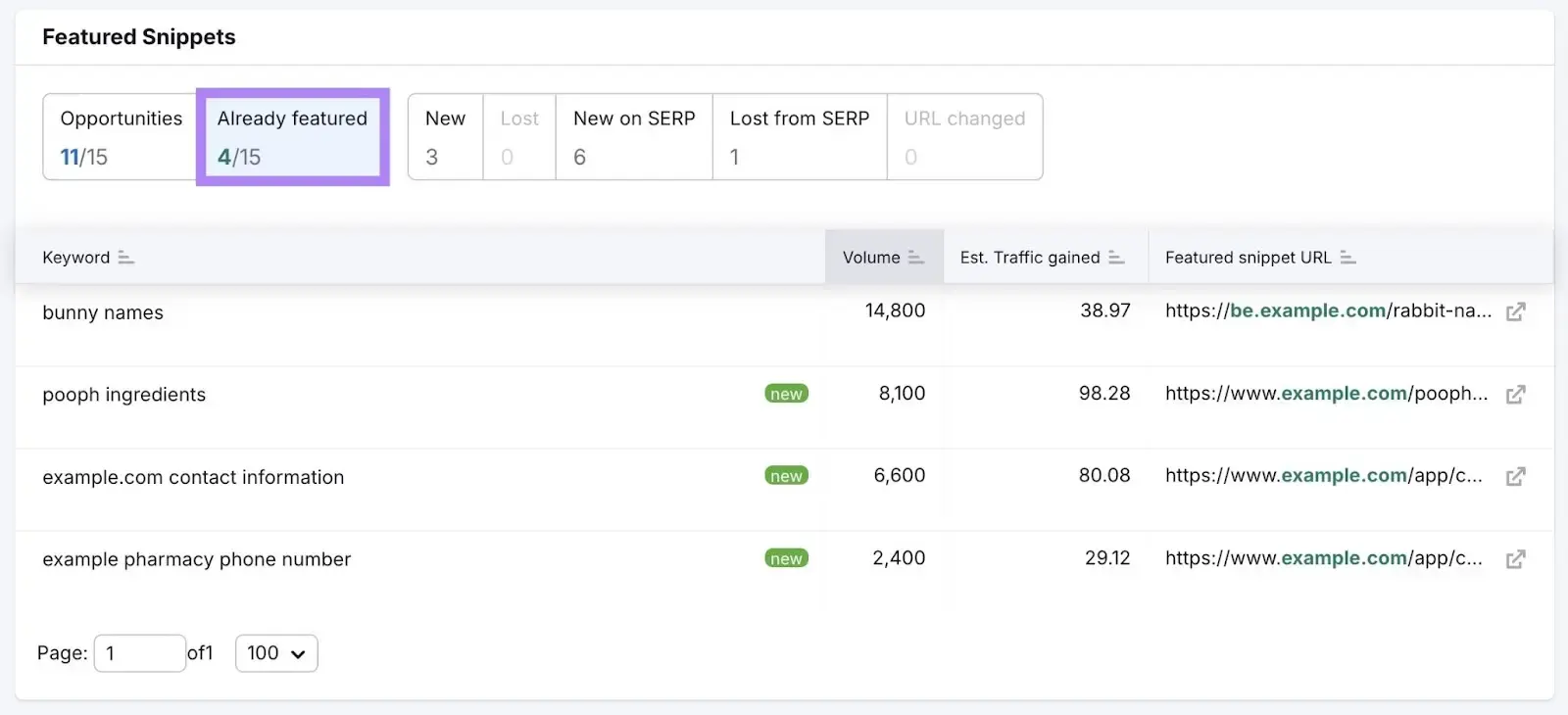
After setting up a Position Tracking project and selecting a reporting period, navigate to the Featured Snippets tab to review your performance.
Click “Already featured” to view the pages on your website that currently appear in Featured Snippets for your target keywords.
Click “Opportunities” to identify keywords that trigger Featured Snippets but for which your website does not currently hold the snippet position. In the “You” column, you can see your current organic ranking for each keyword, helping you prioritize opportunities with the greatest potential.
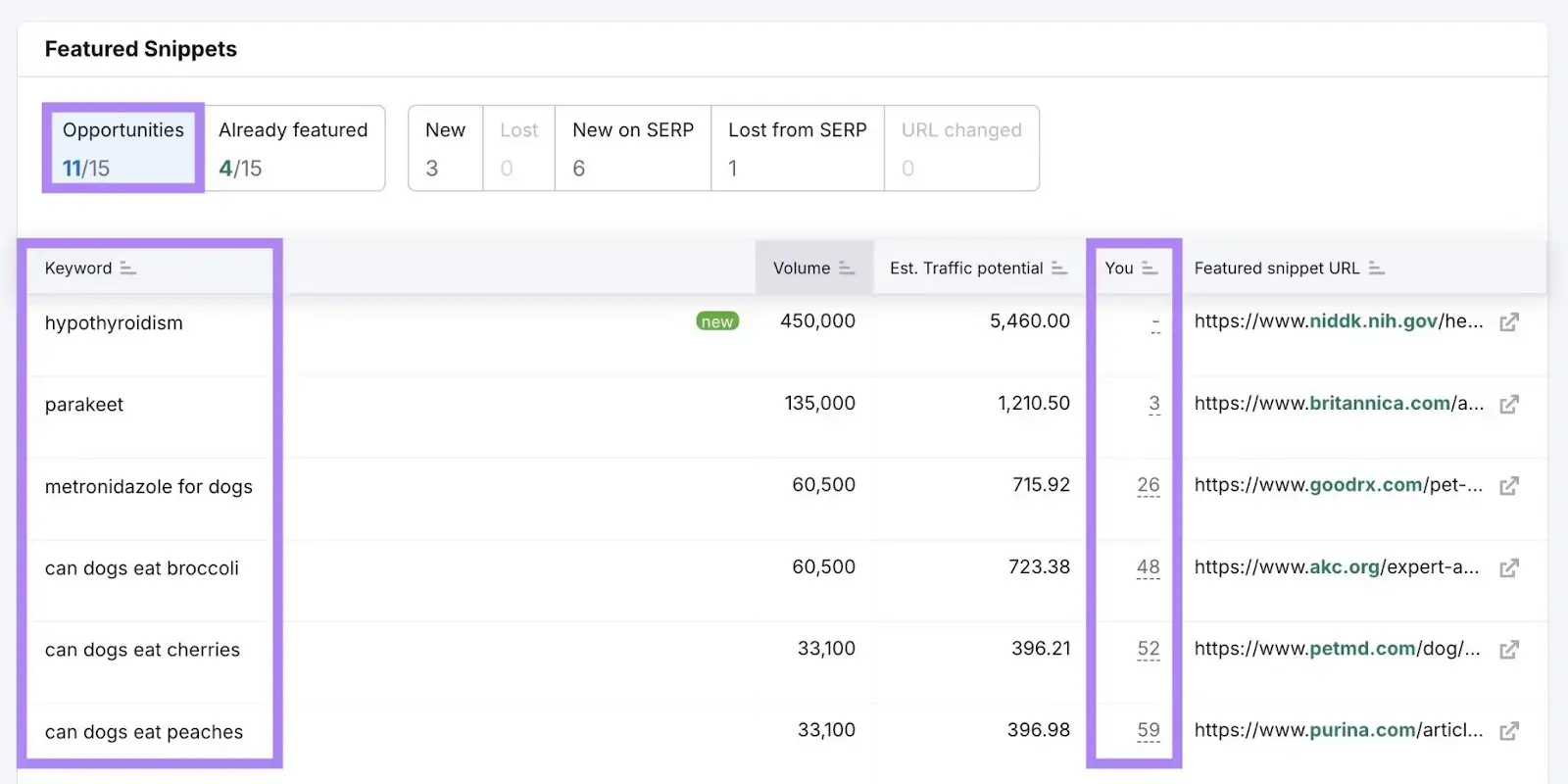
Keywords that already rank on the first page of Google often represent the strongest Featured Snippet opportunities, as they typically require less effort to improve visibility than lower-ranking pages.
By tracking both Featured Snippets and AI Overviews, you can identify where your content is gaining visibility and uncover additional opportunities to expand your presence across the search results page.
Frequently Asked Questions
1. How do I get a featured snippet on Google?
Answer a specific question clearly, structure your content well, and optimize for search intent.
2. Why am I not getting featured snippets?
Your content may not answer the query directly enough or may be outranked by stronger competitors.
3. How long does it take to get a featured snippet?
It can take anywhere from a few weeks to several months, depending on competition and content quality.
4. Can I get a featured snippet without ranking #1?
Yes. Pages ranking anywhere on the first page can still earn featured snippets.
5. Do featured snippets increase traffic?
They can increase visibility and often lead to more clicks, depending on the query and snippet type.
Conclusion
Getting featured snippets requires creating clear, structured content that directly answers user queries and matches search intent. By optimizing your content format and targeting the right opportunities, you can improve visibility and attract more organic traffic.
At Arestós, we help businesses improve their search visibility through AEO and GEO. Our strategies help brands get discovered across Google Search, AI Overviews, and emerging AI search platforms.
Ready to improve your visibility in search and AI results? Contact us today to explore how our AEO and GEO services can support your growth.
Subscribe to our newsletter!
Get updated to
the lastest IT trends
Related Posts
Update the latest technology trends for your business