Back to featured insights
How to Rank in Google’s AI Overviews: The Complete Guide
Google AI Overviews are reshaping search visibility. Learn how to create AI-friendly content, improve your chances of getting cited, and increase your brand presence in AI-powered search results.
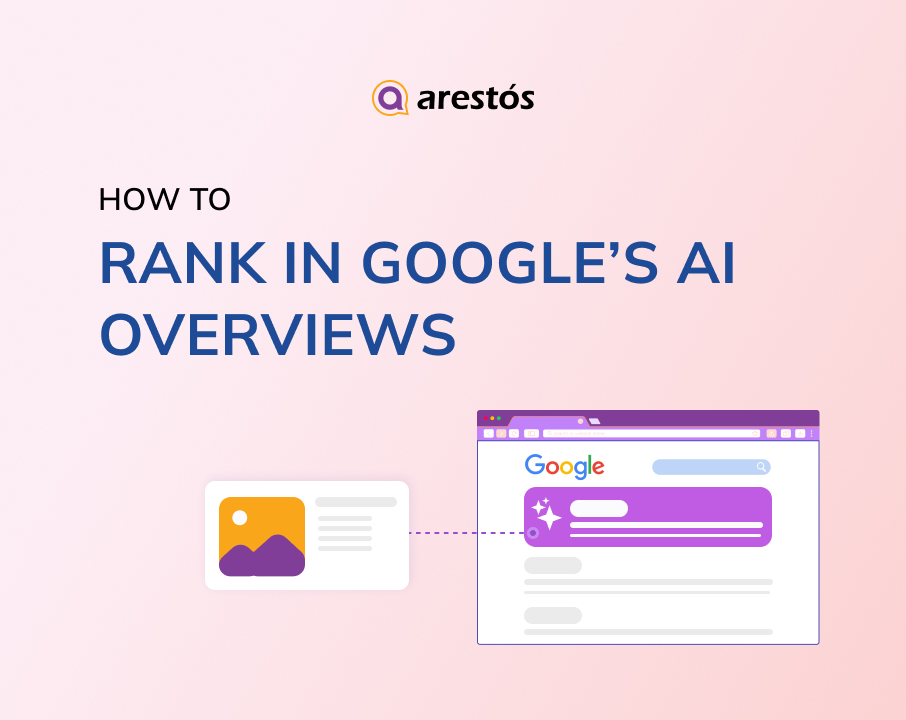

Table of Content
Share
Learning how to rank in Google’s AI Overviews is becoming essential for modern SEO and AI search visibility. Appearing in AI-generated answers can help increase brand awareness, authority, and high-intent organic traffic.
Whether you’re a marketer, business owner, blogger, or SEO professional, understanding how AI Overviews work can give you a competitive advantage. In this guide, you’ll learn practical strategies to optimize your content for Google AI Overviews and improve your chances of getting cited by AI-powered search results.
What are AI Overviews?
AI Overviews are generative AI responses displayed at the top of Google’s search results pages. Rather than presenting only a single featured snippet or a collection of links, Google uses AI to create concise answers by synthesizing information from several authoritative sources across the web.
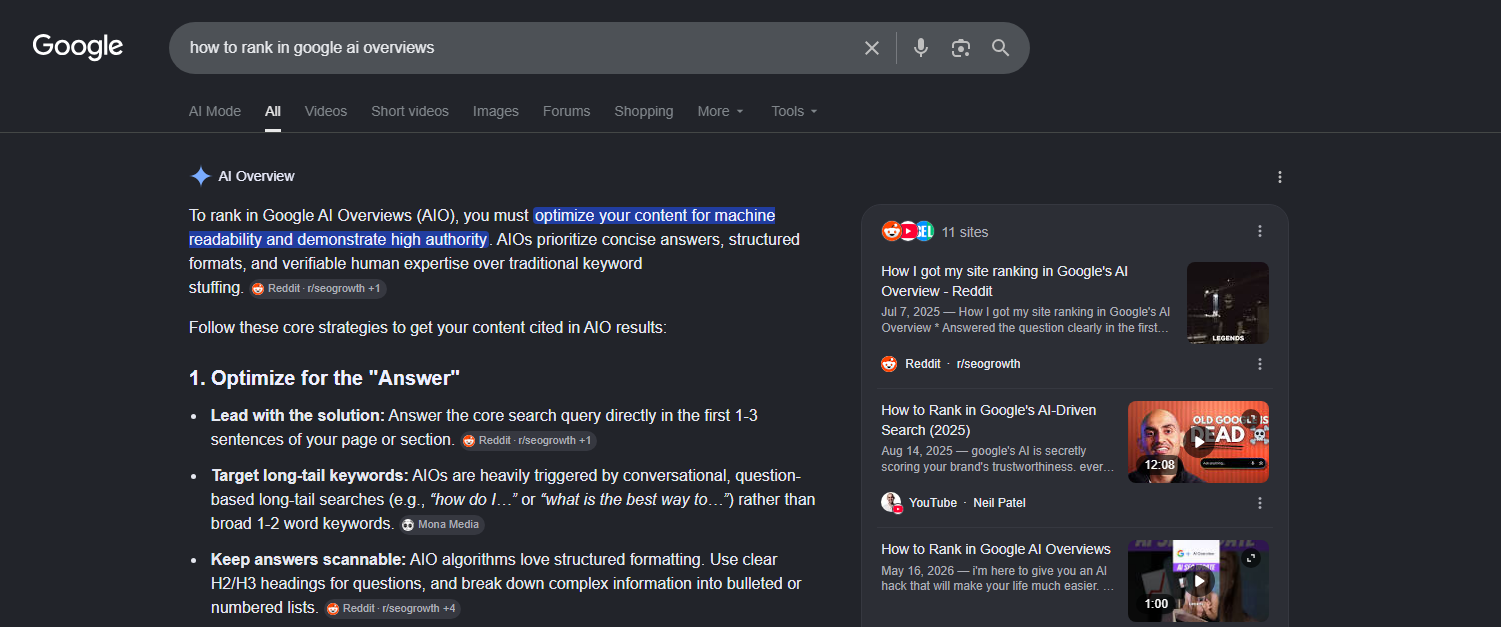
Google officially launched AI Overviews in 2024 as part of its Search Generative Experience (SGE). Unlike traditional featured snippets that pull information from a single page, AI Overviews use AI to combine insights from multiple trusted sources into a summarized answer.
They appear most often for informational and research-based searches, focusing more on relevance, context, and content quality than simple keyword usage. This gives even smaller websites a chance to appear if their content is accurate, helpful, and trustworthy.
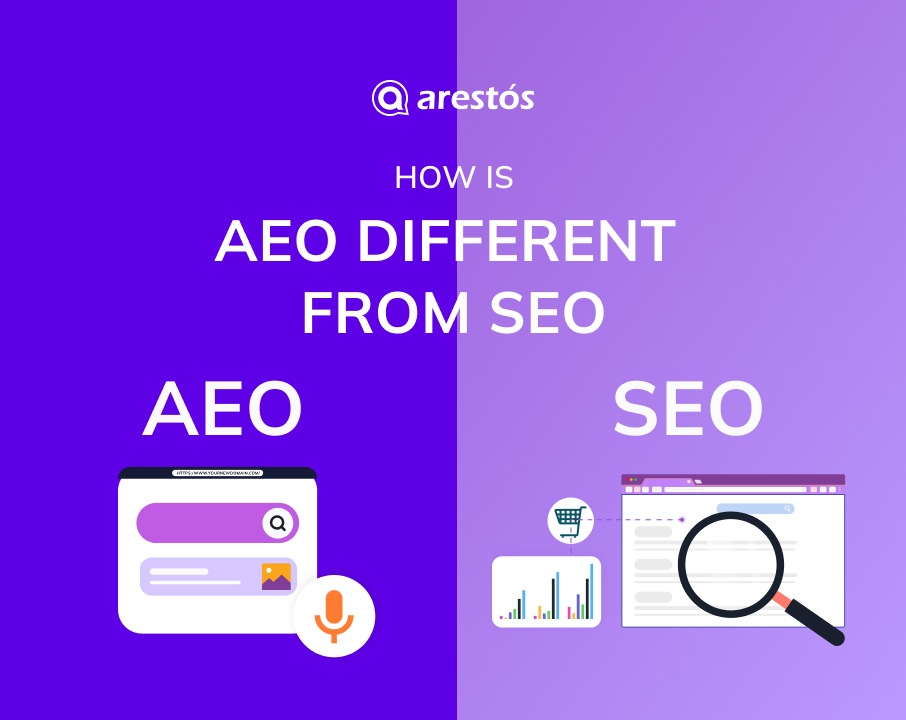
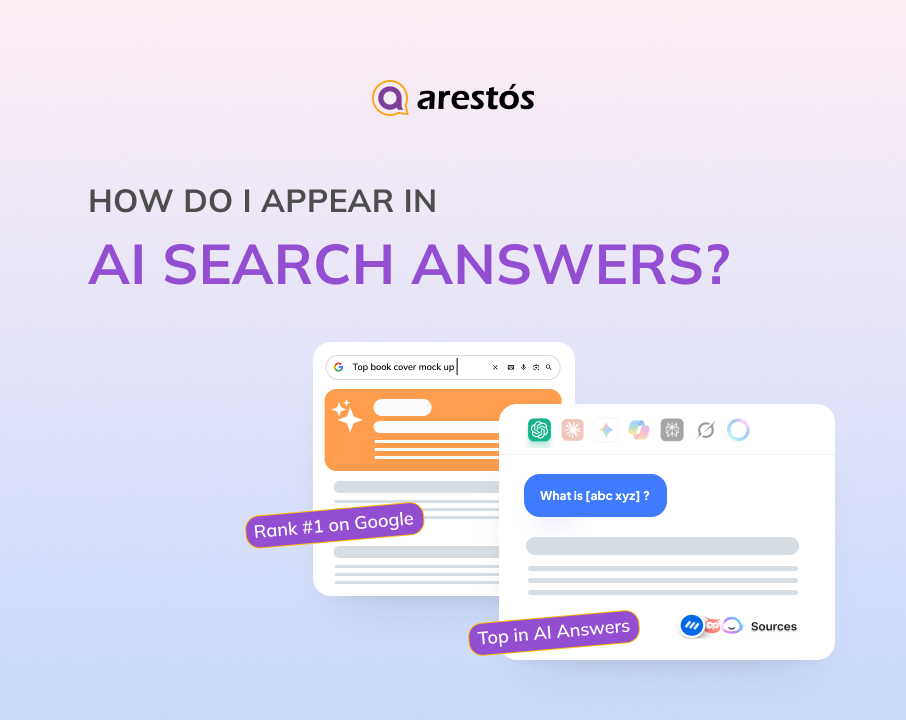
To better understand how AI search optimization works, check out AEO vs GEO: What’s the Difference?
Why Ranking in AI Overviews Matters
Getting featured in Google AI Overviews can dramatically improve your online visibility. Since these AI-generated summaries appear above traditional organic results in many searches, they often become the first thing users notice on the page.
But the value goes beyond clicks. Appearing in an AI Overview signals that Google considers your content trustworthy, relevant, and useful. Even if users don’t immediately visit your website, your brand still gains exposure and credibility.
Here’s why AI Overviews matter:
- Greater visibility beyond traditional rankings: AI Overviews can pull information from well-optimized content even if a page is not ranked #1 organically.
- Higher-quality traffic: Users who click through are usually more engaged and have stronger search intent.
- Stronger authority and trust: Being cited in AI-generated answers supports your brand’s EEAT signals and improves perceived credibility.
- A growing part of search: As Google expands AI-powered search experiences, optimizing for AI Overviews is becoming increasingly important for long-term SEO success.
AI Overviews are already changing how users discover and interact with content. To stay competitive in modern search results, businesses need to optimize not only for rankings, but also for AI-generated visibility.
Two Visibility Goals: Citations vs Mentions
There are two primary ways your website can gain visibility in Google AI Overviews. Understanding the difference between them is essential before optimizing your content, as each type may require a different strategy and optimization approach.
Citations
A citation happens when Google AI Overviews directly reference and link to your webpage as a source of information. These citations usually appear as clickable links or source cards placed within or alongside the AI-generated summary.
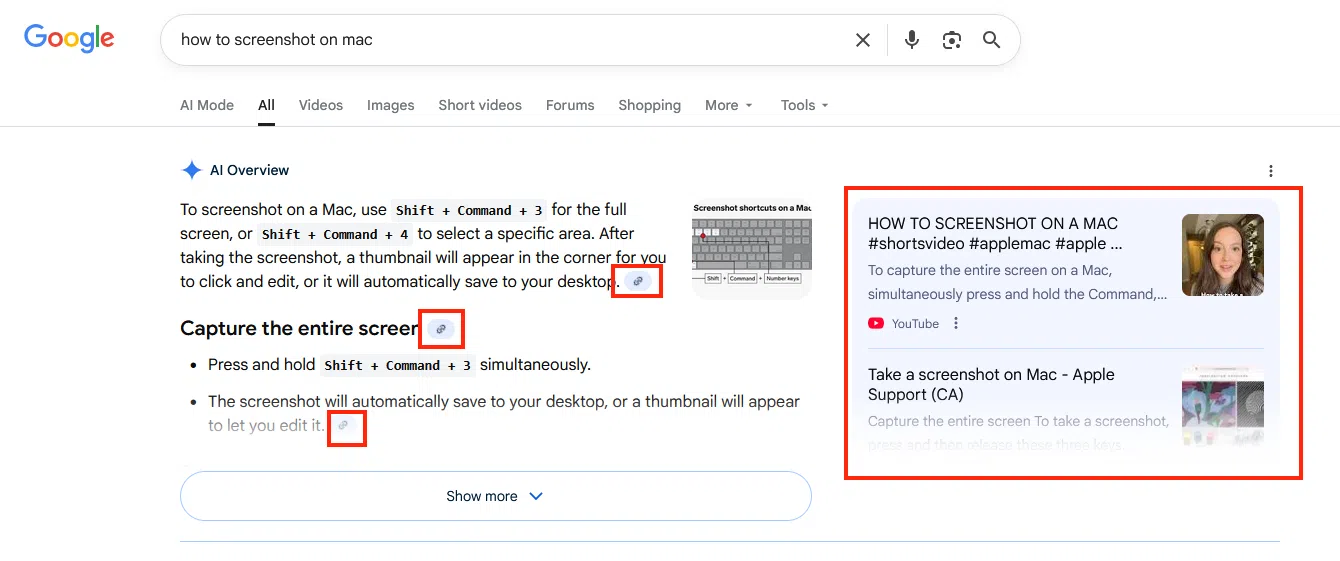
When your content is cited in an AI Overview, it signals to users that Google considers your information reliable and valuable enough to be used in the generated response. Citations can also drive traffic to your website when users click through to explore the topic in more detail.
Mentions
On the other hand, a mention happens when your brand, product, or website name appears within the AI Overview’s response, even if there is no direct clickable link attached to it.
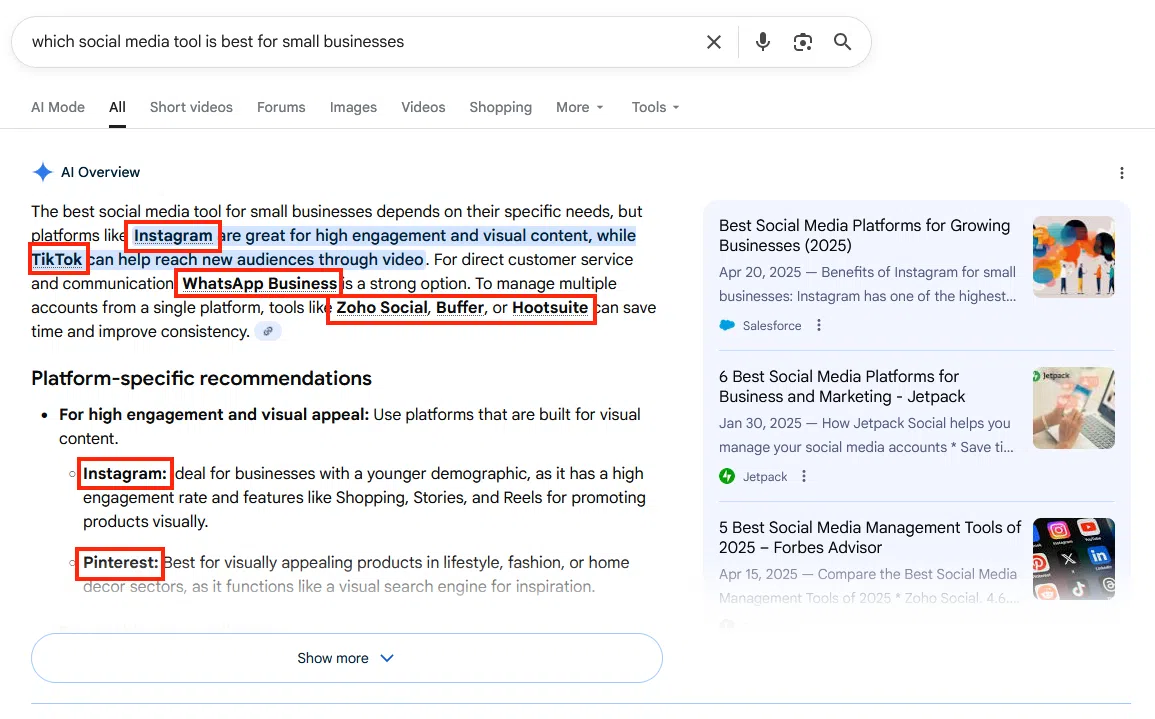
Although mentions do not always generate direct clicks, they are still valuable for building brand awareness. Being included in an AI-generated answer helps increase your brand visibility and can encourage users to search for your brand later.
How to Rank in Google’s AI Overviews
Ranking in Google AI Overviews requires more than traditional SEO. To increase your chances of being cited by Google’s AI, your content needs to be technically optimized, clearly structured, trustworthy, and highly relevant to user intent.
Optimize Your Content With LLMs.txt
LLMs.txt is an emerging standard that allows website owners to provide instructions for AI systems and large language models on how their content should be accessed and used. Similar to a robots.txt file, it is placed in the root directory of a website (for example: yourdomain.com/llms.txt) but is designed specifically for AI crawlers and generative engines.
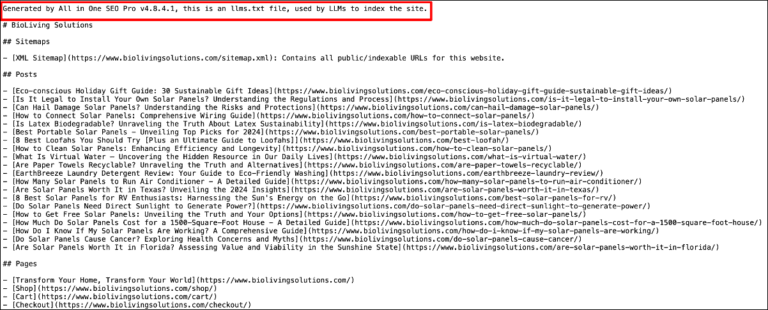
Adding an llms.txt file can support your AI search optimization efforts by helping AI platforms like Gemini, OpenAI, or Anthropic better understand your website structure, content priorities, and usage permissions. It also gives you more control over which parts of your site AI tools can reference or ignore.
Answer Specific, Intent-Focused Questions
One of the best ways to rank in Google AI Overviews is to create content that directly answers your audience’s questions. Since AI Overviews are designed to provide quick and clear responses, content that solves specific problems has a higher chance of being cited.
Start by identifying your audience’s pain points and common search queries. You can use keyword research tools like LowFruits, AnswerThePublic, AlsoAsked, or Google’s “People Also Search For” suggestions to discover what users are searching for.
Once you find these questions, answer them clearly and concisely within your content. Use structured headings such as H2s and H3s, short paragraphs, bullet points, and step-by-step explanations to make the information easy for both users and AI systems to understand.
For example, instead of writing long blocks of text, create sections like:
How to Make Perfect Chocolate Chip Cookies
- Prepare the ingredients
- Mix the dough properly
- Bake at the correct temperature
- Let the cookies cool before serving
Because AI Overviews often extract summarized information, well-structured and easy-to-scan content is more likely to be selected as a citation source.
Target Long-Tail and Niche Keywords
Long-tail and niche keywords can significantly improve your chances of appearing in Google AI Overviews. Unlike broad and highly competitive keywords, long-tail queries are more specific and usually reflect clearer search intent.
For example, a search like “how to clean a DSLR lens with vinegar” tells Google that the user wants a detailed and practical answer, not a general overview. This type of query aligns perfectly with how AI Overviews work, delivering direct and useful responses to highly specific questions.
Long-tail keywords are also more likely to trigger SERP features such as featured snippets and People Also Ask (PAA), which increases the likelihood of your content being used as a source in AI-generated answers.
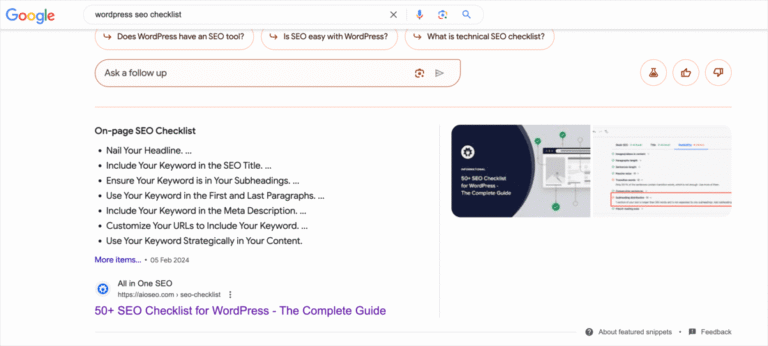
Google often pulls answers for highly specific questions into SERP features such as featured snippets and People Also Ask. Optimizing your content for these targeted queries can also increase the likelihood of being selected for AI Overviews.
Long-tail keywords are also valuable because they help you compete in niche markets. Even in highly competitive industries, focusing on specific subtopics allows smaller websites to stand out and improve their visibility in both traditional search results and AI-generated answers.
Optimize for Generative Engine Optimization (GEO)
Generative Engine Optimization (GEO) is an emerging approach to search optimization designed specifically for AI-powered search systems such as Google Gemini and ChatGPT.
Unlike traditional SEO, which mainly focuses on rankings, keywords, and backlinks, GEO prioritizes content clarity, structure, context, and accuracy. These factors help AI models better understand your content and increase the likelihood of it being included in AI-generated answers like Google AI Overviews.
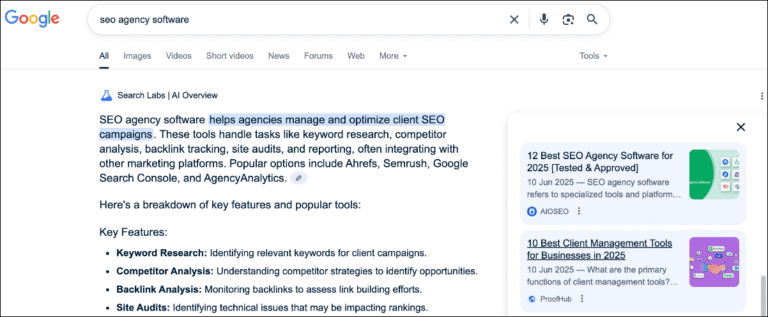
To optimize for Generative Engine Optimization (GEO), your content needs to be easy for AI systems to read, understand, and summarize. AI models tend to favor content that is clear, direct, well-structured, and factually accurate.
Here are some GEO best practices:
- Write in simple, easy-to-understand language
- Avoid unnecessary jargon or overly complex explanations
- Use active voice and answer questions directly
- Keep information accurate and updated
- Focus on clarity rather than keyword stuffing
Content structure is equally important. Large blocks of text are harder for both users and AI systems to process, so formatting your content properly can improve your chances of being featured in AI Overviews.
Use:
- Short paragraphs
- Clear H2 and H3 headings
- Bullet points and numbered lists
- Tables for comparisons
- Bold text for important definitions or takeaways
Well-structured content is easier for AI to extract, summarize, and cite in search results.
Add First-Hand Expertise and E-E-A-T Signals
Google is becoming increasingly advanced at evaluating content quality and credibility. That’s why E-E-A-T — Experience, Expertise, Authoritativeness, and Trustworthiness — plays a major role in determining which content appears in AI Overviews.
Google’s AI systems tend to prioritize content created by people with real experience and proven expertise. Even accurate information may struggle to rank if it lacks strong trust and authority signals.
Here are some ways to strengthen E-E-A-T in your content:
- Share real experience: Include practical examples, case studies, or personal insights related to the topic.
- Highlight author expertise: Add author bios, credentials, or professional background information to build credibility.
- Use trust signals: Include testimonials, statistics, research sources, expert references, or mentions from reputable websites.
- Keep information accurate: Regularly update outdated content and verify important claims.
Use Structured Data (Schema Markup)
Structured data is a type of code added to your website that helps search engines better understand your content. It uses schema markup to clearly define information such as articles, products, recipes, FAQs, reviews, or local business details.
Although visitors cannot see this code, search engines use it to interpret your pages more accurately and display enhanced search features like rich snippets.
Why structured data matters for AI Overviews
Google AI Overviews rely heavily on well-structured and clearly organized information. By adding schema markup, you make it easier for AI systems to:
- Understand key topics and entities
- Identify direct answers to questions
- Extract step-by-step instructions
- Recognize product details, reviews, or important features
- Generate more accurate summaries
In other words, structured data not only improves technical SEO but also helps prepare your content for AI-driven search experiences.
Keep Your Content Fresh and Updated
Content freshness plays an important role in both traditional search rankings and Google AI Overviews. Search engines aim to provide users with the most relevant and up-to-date information, which means outdated content can gradually lose visibility over time — a process often referred to as content decay.
That’s why regularly updating your content is one of the most effective ways to improve your chances of appearing in AI-generated search results.
Why fresh content matters
Google and AI systems tend to prioritize updated content because:
- Users expect current and accurate information
- AI models favor relevant and timely context
- Google uses freshness signals such as updated timestamps, revised content, and refreshed links
- Even small updates can signal that a page is actively maintained
Refreshing old content not only helps improve rankings but also strengthens trust, authority, and the likelihood of being selected for AI Overviews.
Write in a Natural, Conversational Tone
One of the most effective ways to improve your chances of appearing in Google AI Overviews is to write in a natural, conversational style. AI systems tend to favor content that feels clear, helpful, and easy for users to understand.
If your writing sounds overly technical, robotic, or unnecessarily complicated, it may be harder for AI systems to summarize and surface your content effectively.
A conversational writing style offers several advantages:
- Matches how AI communicates: AI-generated answers are designed to sound natural and human-like, so content written in a similar tone is easier to process and summarize.
- Improves user engagement: Readers are more likely to stay on the page and trust content that feels approachable and easy to follow.
- Makes complex topics easier to understand: Simple explanations help reach a broader audience, including non-experts.
- Enhances readability: Clear and concise writing improves both user experience and AI comprehension.
When your content feels natural and easy to read, you are optimizing not only for people but also for AI-driven search systems.
Earn High-Quality Backlinks
Backlinks remain an important ranking factor, even in the era of AI-powered search. Google and AI systems still use backlinks as signals of credibility, authority, and trustworthiness when deciding which content to feature in AI Overviews.
When reputable websites link to your content, it acts as a strong endorsement that your information is valuable and reliable. This increases the likelihood of your pages being cited or summarized in AI-generated answers.
High-quality backlinks also provide several additional benefits:
- Build trust and authority: Links from respected websites strengthen your website’s credibility.
- Improve topical relevance: Backlinks from niche-related sites help establish expertise within your industry.
- Increase discoverability: External links make it easier for search engines and AI systems to find and understand your content.
- Support long-term SEO performance: Strong backlink profiles improve both traditional rankings and AI visibility.
In short, backlinks continue to play a major role in helping both users and AI systems trust your content.
Optimizing content for Google AI Overviews goes beyond traditional SEO. You also need to make your content easier for AI systems to understand, summarize, and cite.
If you want to learn more about improving AI readability and content structure, check out our guide on How to Use AI for Content Optimization.
Frequently Asked Questions
1. How do I get featured in Google AI Overviews?
To increase your chances of appearing in AI Overviews, create high-quality content that directly answers user questions, follows strong SEO practices, and demonstrates trust and expertise.
2. Can small websites rank in Google AI Overviews?
Yes. Google AI Overviews can cite smaller websites if the content is helpful, well-structured, and relevant to the search query.
3. What type of content appears in AI Overviews most often?
Informational content, tutorials, comparisons, and detailed answers to specific questions are the types of content most commonly featured in AI Overviews.
4. Do I need structured data to rank in AI Overviews?
Structured data is not mandatory, but it helps Google better understand your content and can improve your chances of being selected.
5. Are AI Overviews replacing traditional SEO?
No. Traditional SEO still matters, but optimizing for AI search and GEO is becoming increasingly important alongside standard SEO practices.
Conclusion
As AI-powered search continues to evolve, Google AI Overviews are becoming an increasingly important part of online visibility. Businesses and content creators that adapt early will have a stronger chance of staying competitive and reaching users through AI-driven search experiences.
At Arestós, we help brands navigate the future of search with modern AEO and GEO strategies designed for the AI era. Our approach focuses on improving visibility, authority, and long-term organic growth across both traditional and AI-powered search platforms.
Contact us today and discover how AI-focused optimization can help your brand grow online.
Subscribe to our newsletter!
Get updated to
the lastest IT trends
Related Posts
Update the latest technology trends for your business