Back to featured insights
How To Get Cited By AI: 8 Optimization Tips
Ranking on search engines is no longer the only way to get discovered online. As AI-generated answers become more common, brands that earn AI citations gain greater visibility, credibility, and influence. Learn what it takes to become a trusted source in the age of AI search.
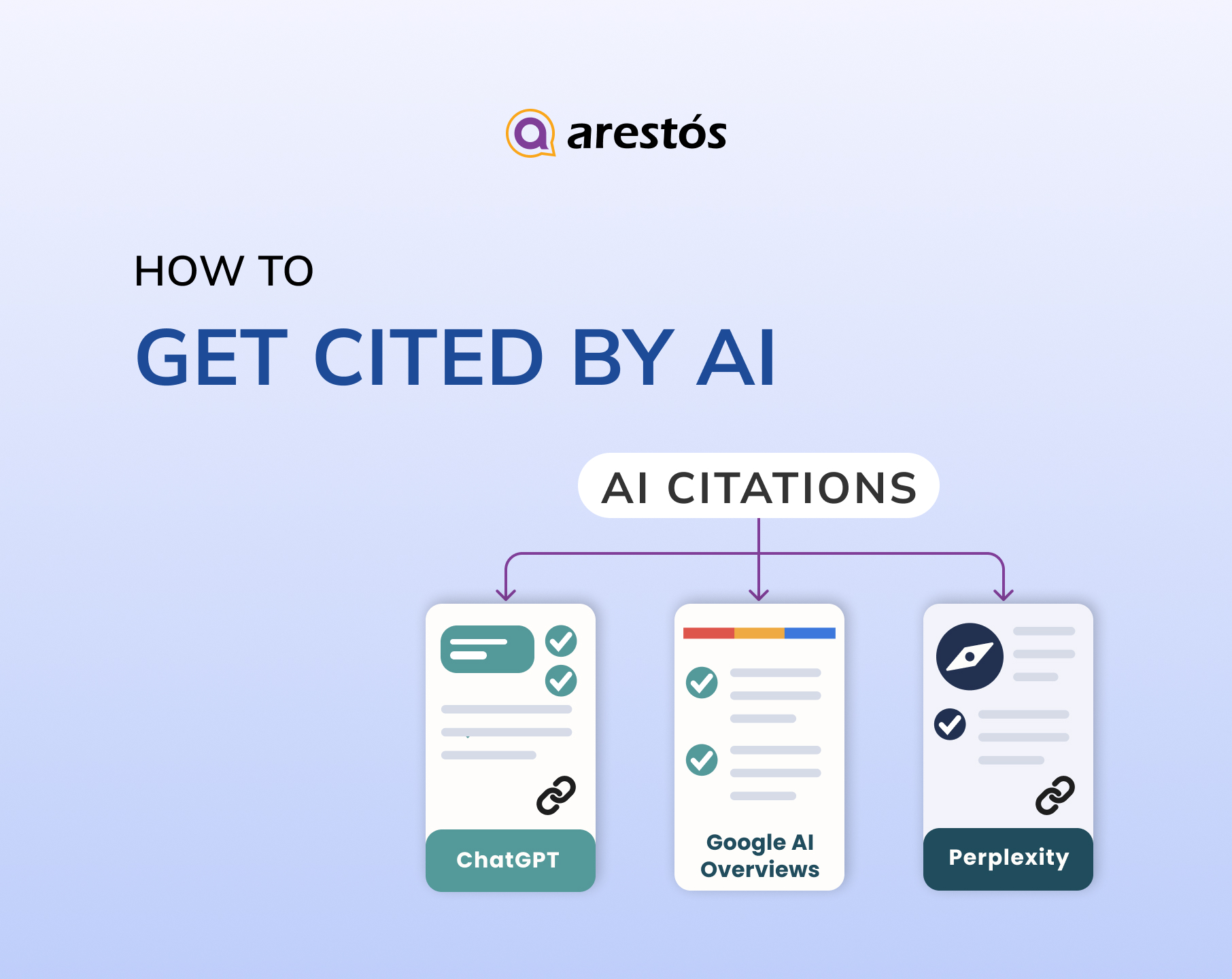

Table of Content
Share
Learning how to get cited by AI is becoming essential as platforms like ChatGPT, Gemini, Perplexity, and Google AI Overviews increasingly shape how users discover information online. Being cited by AI can improve brand visibility, strengthen authority, and help drive qualified traffic from AI-powered search experiences.
This guide is designed for marketers, business owners, SEO professionals, and content teams looking to increase their presence in AI-generated answers. In this guide, you’ll learn eight practical optimization tips to help AI systems understand, trust, and cite your content more often.
What Does “Getting Cited By AI” Mean?
Getting cited by AI means AI platforms like ChatGPT, Google AI Overviews, Gemini, or Perplexity use your website as a source when generating answers.
Instead of only ranking pages, AI systems now extract and summarize information from trusted websites. If your content is clear, authoritative, and easy for AI to understand, your brand may appear in AI-generated responses.
This helps increase:
- Brand visibility
- Authority and trust
- Organic traffic from AI search
In the AI search era, being cited can become just as important as ranking on Google.
While getting cited by AI helps increase your visibility across AI-powered platforms, appearing in Google’s AI-generated results requires a slightly different approach. Learn more in our guide: How to Rank in Google’s AI Overviews
How AI Search Engines Choose Sources
AI search engines analyze multiple signals to determine which websites are trustworthy enough to use in AI-generated answers.
- Content relevance: AI prioritizes content that directly matches user intent and answers questions clearly.
- Authority and trust: Websites with strong EEAT signals and credible information are more likely to be cited.
- Clear structure: AI prefers content with headings, short paragraphs, lists, and easy-to-scan formatting.
- Topical authority: Websites that consistently publish in one niche are seen as more reliable sources.
- Entity recognition: Consistent brand mentions across the web help AI validate your authority.
- Fresh and accurate information: Updated content with reliable facts improves citation potential.
- Technical SEO: Fast-loading, mobile-friendly, and crawlable websites are easier for AI systems to process.
If you want to learn how to make your content easier for AI systems to understand, extract, and reference, read our guide: How to Optimize Content for AI Search
How To Get Cited By AI
Getting cited by AI requires more than traditional SEO. To appear in AI-generated answers, your content must be clear, trustworthy, well-structured, and easy for AI systems to understand and extract.
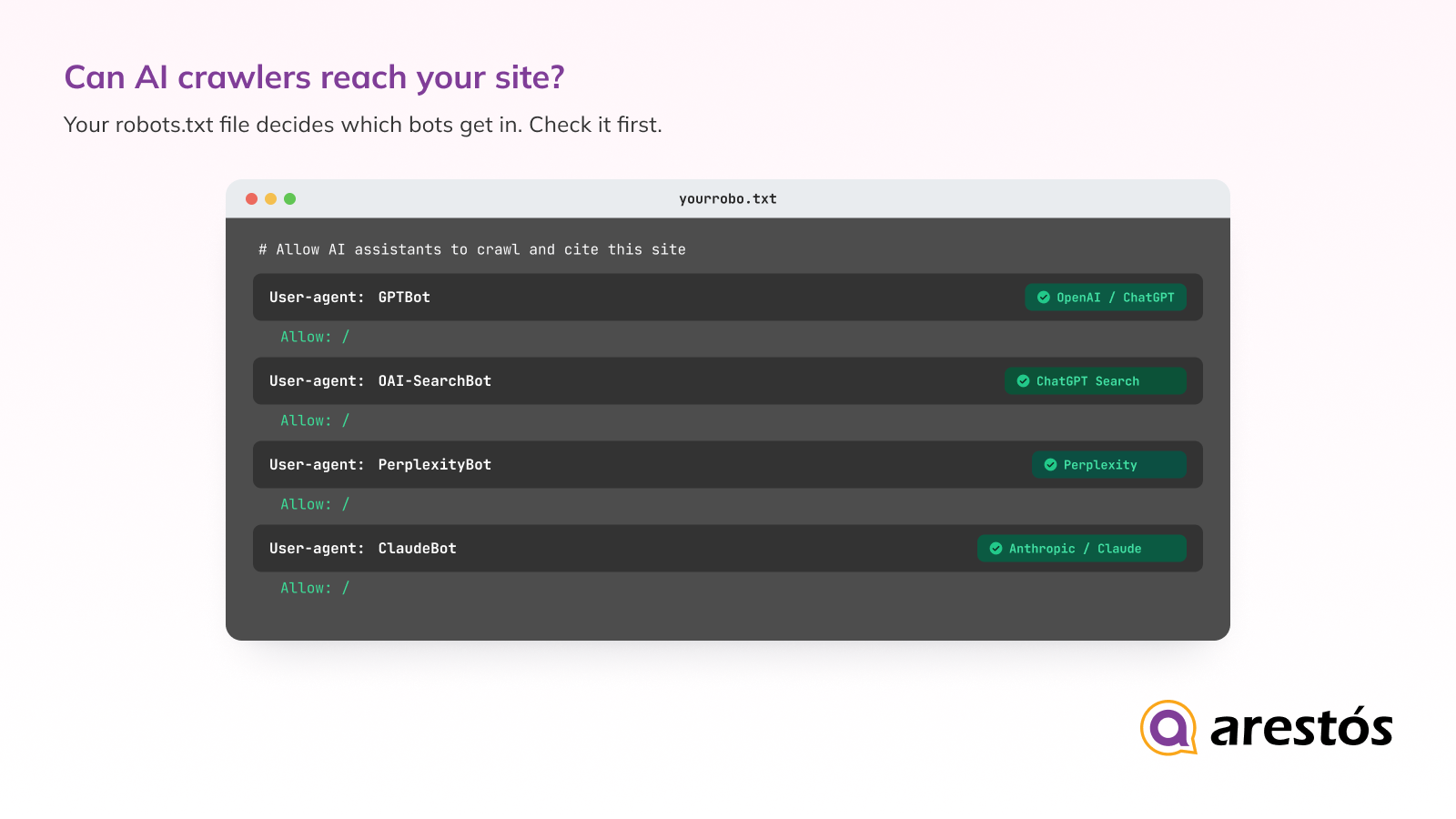
Check whether AI crawlers can even get in
One of the most overlooked reasons websites fail to get AI citations has nothing to do with content quality. AI crawlers simply cannot access the site.
Many brands are still using old robots.txt settings created before AI search tools became mainstream. If crawlers like GPTBot, ClaudeBot, PerplexityBot, Google-Extended, or Bingbot are blocked, your pages may never be seen by the AI systems behind ChatGPT, Gemini, Copilot, or Perplexity.
If AI cannot crawl your content, it cannot cite it.
What to do:
Check your robots.txt file and review which AI crawlers are currently allowed to access your website.
Make sure important pages are not accidentally blocked by:
- noindex tags
- login restrictions
- CDN or firewall settings
- JavaScript rendering issues
For most websites trying to improve AI visibility, allowing trusted AI crawlers is the simplest and highest-impact technical optimization you can make.
This is a fast fix, yet many websites still overlook it.
Structure your content the way a model actually reads it
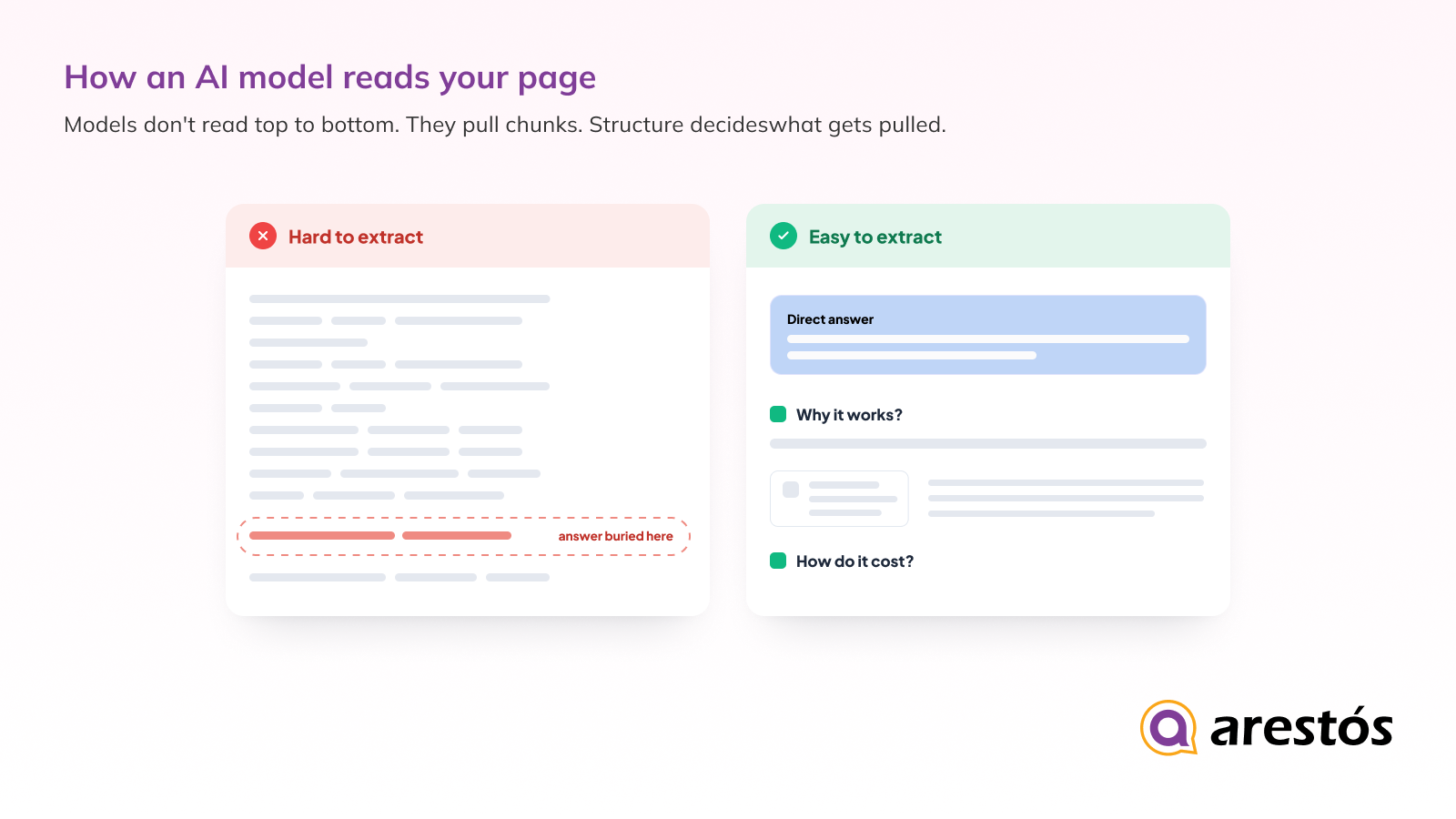
AI models do not read content the same way humans do. Instead of processing an entire page from top to bottom, AI systems break content into smaller sections and retrieve the parts that best match a user’s query.
This means well-structured, easy-to-extract content has a much higher chance of being cited by AI.
What to do:
- Lead with a direct answer. For question-based content, provide the main answer within the first few sentences before expanding into details.
- Use clear H2 and H3 headings that match real search queries. For example, “How Much Does SEO Cost?” is more effective than a vague heading like “Pricing.”
- Keep sections self-contained. Each section should still make sense even if AI only extracts that specific part of the page.
- Use bullet points, numbered lists, and tables for comparisons or step-by-step information. AI systems process structured formats more efficiently than long paragraphs.
- Add a short summary near the top of long articles. This gives AI models a clean and concise section to reference quickly.
Content structure alone will not guarantee AI citations. However, poorly organized content significantly reduces the chances of being referenced by AI systems.
Send the freshness and schema signals
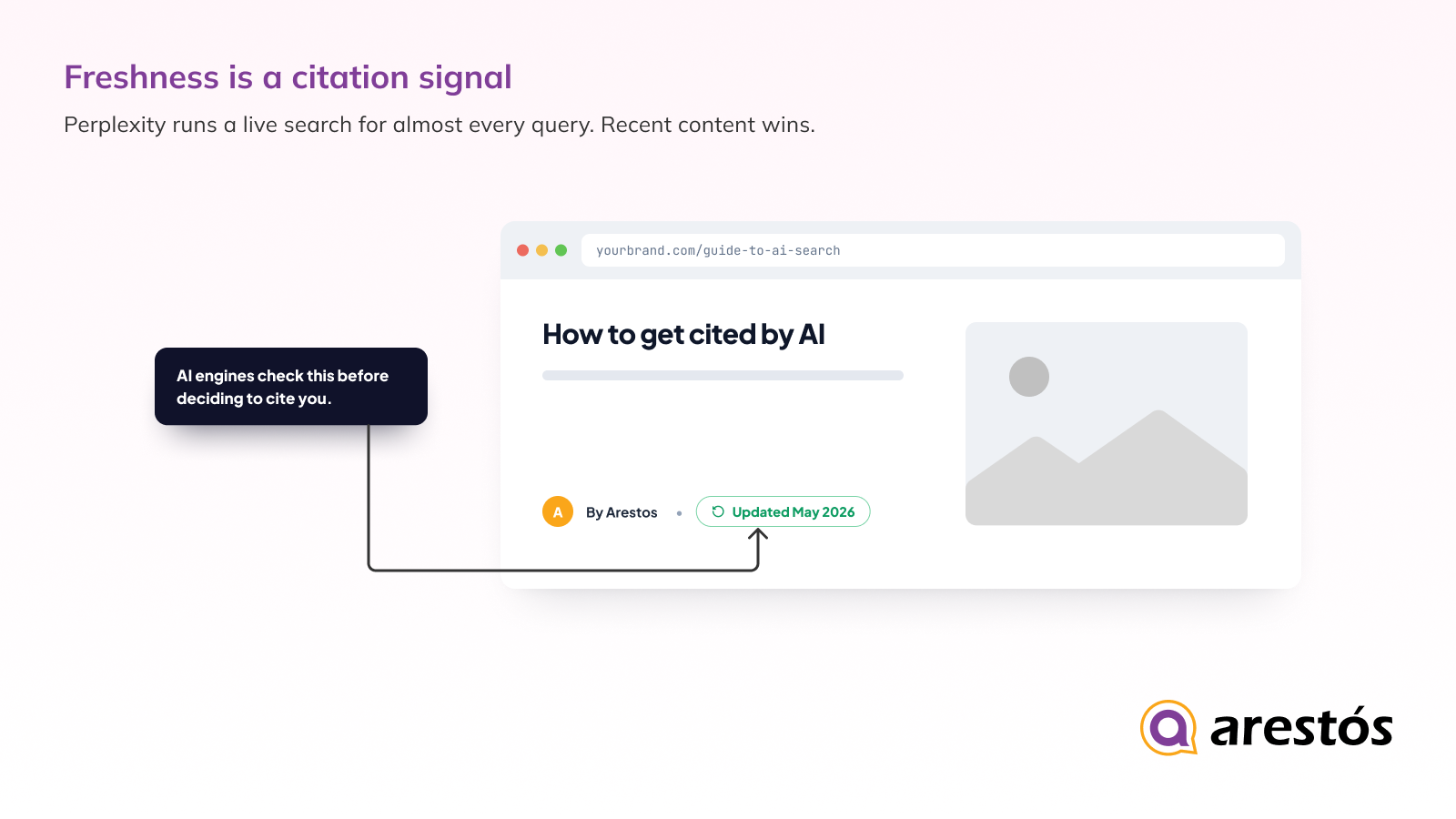
Freshness and structured data are two important signals AI systems use to evaluate whether content is reliable enough to reference.
Many AI search platforms prioritize recent and updated information, especially tools that rely on live web results. Older pages with outdated statistics, examples, or screenshots are less likely to be retrieved compared to recently updated content.
Structured data also helps AI understand your content more clearly. Schema markup provides machine-readable context about your page, making it easier for AI systems to identify topics, authors, organizations, products, and FAQs.
What to do:
Display visible “last updated” dates on important pages and refresh content regularly with updated statistics, examples, screenshots, and references.
Use relevant schema markup such as:
- Article
- FAQPage
- HowTo
- Organization
- Product
Keep your Organization schema and company information consistent across your website to strengthen entity recognition and trust signals.
Fresh content and structured data alone will not guarantee AI citations, but they make your content easier for AI systems to understand, trust, and retrieve.
Find the exact prompts and sources AI uses in your category
One of the biggest mistakes in Generative Engine Optimization (GEO) is relying only on traditional SEO keywords.
Search behavior in AI tools is different from traditional search engines. Users interact with ChatGPT, Gemini, Perplexity, and Google AI Overviews using full questions and conversational prompts rather than short keyword phrases.
Because of this, ranking for keywords alone does not guarantee visibility in AI-generated answers.
The real goal is understanding:
- What questions users are actually asking AI tools
- Which websites AI platforms frequently cite when answering those questions
To improve AI visibility, brands need to research AI-driven search intent instead of relying only on conventional SEO data.
What to do:
- Identify the real prompts users ask across AI platforms in your industry.
- Analyze which websites and pages are consistently referenced in AI-generated answers.
- Study the structure, formatting, and depth of content used by frequently cited sources.
- Create content that directly answers AI-style queries using clear, conversational language and structured formatting.
- AI search optimization is no longer only about ranking higher in search results. It is about becoming a trusted source that AI systems choose to retrieve and cite.
Build the consensus signal across third-party sources
This is one of the most important factors behind AI citations, yet many SEO strategies still overlook it.
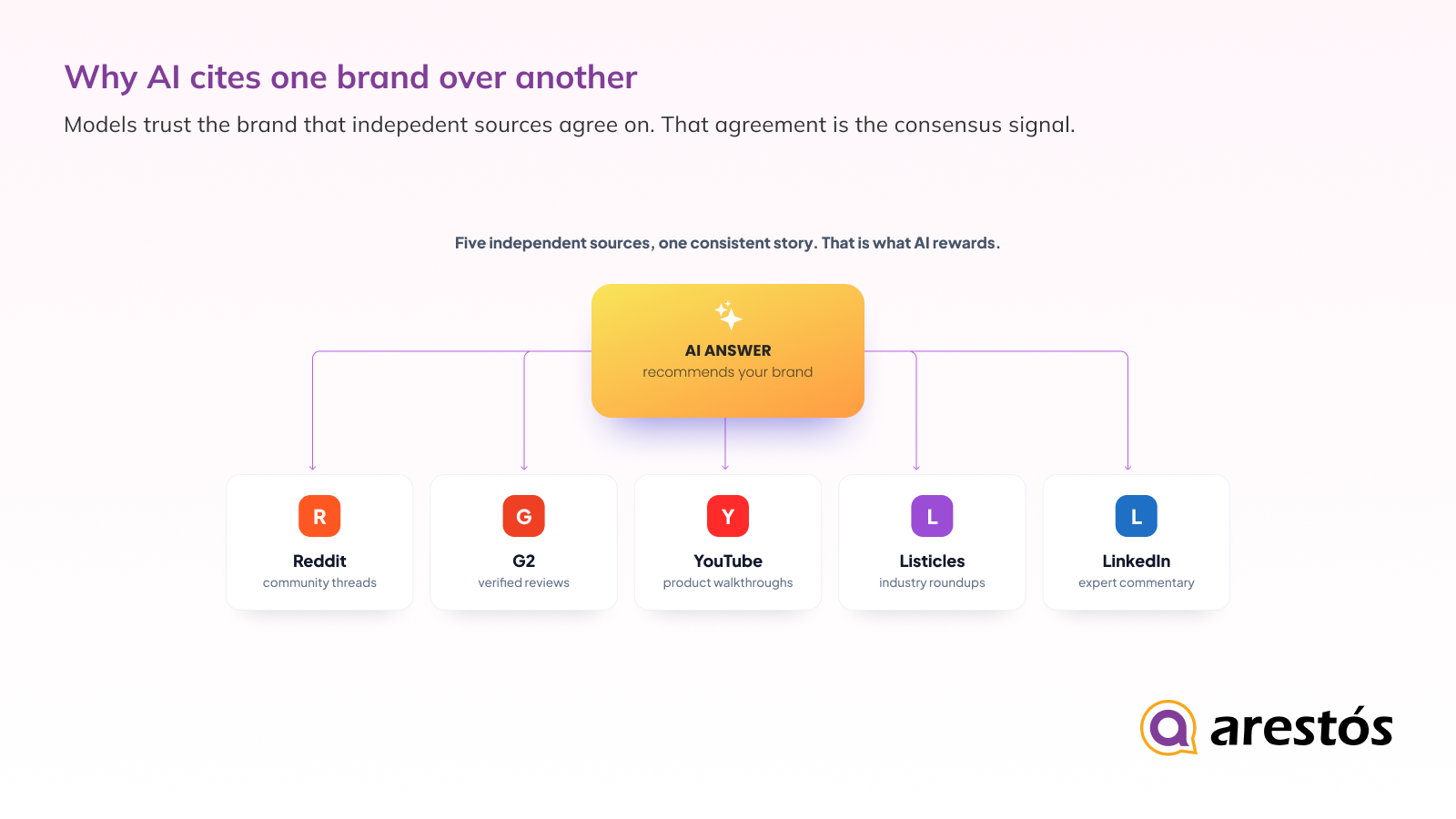
AI systems do not trust a brand simply because it publishes content on its own website. Trust increases when multiple independent sources mention the same brand consistently across the web. This creates what many call a “consensus signal.”
If your company appears across review platforms, Reddit discussions, YouTube videos, industry blogs, LinkedIn posts, and comparison articles with similar positioning and messaging, AI models are more likely to view your brand as credible and trustworthy.
This means AI visibility depends not only on owned content, but also on how your brand is discussed across third-party platforms.
What to do:
- Build visibility on trusted external platforms where your industry is actively discussed.
- Optimize profiles on review websites such as G2, Capterra, and Trustpilot to strengthen trust signals.
- Encourage authentic customer reviews and testimonials to improve brand credibility.
- Earn mentions in industry listicles, comparison posts, and “best tools” articles that AI systems frequently reference.
- Participate genuinely in communities like Reddit, LinkedIn, and niche forums instead of relying on direct promotion.
- Keep your brand positioning and messaging consistent across every platform. Mixed or inconsistent messaging weakens AI trust signals.
AI models rely heavily on repeated validation from multiple sources. The more consistently your brand is mentioned across the web, the stronger your chances of being cited in AI-generated answers.
Publish original data nobody else has
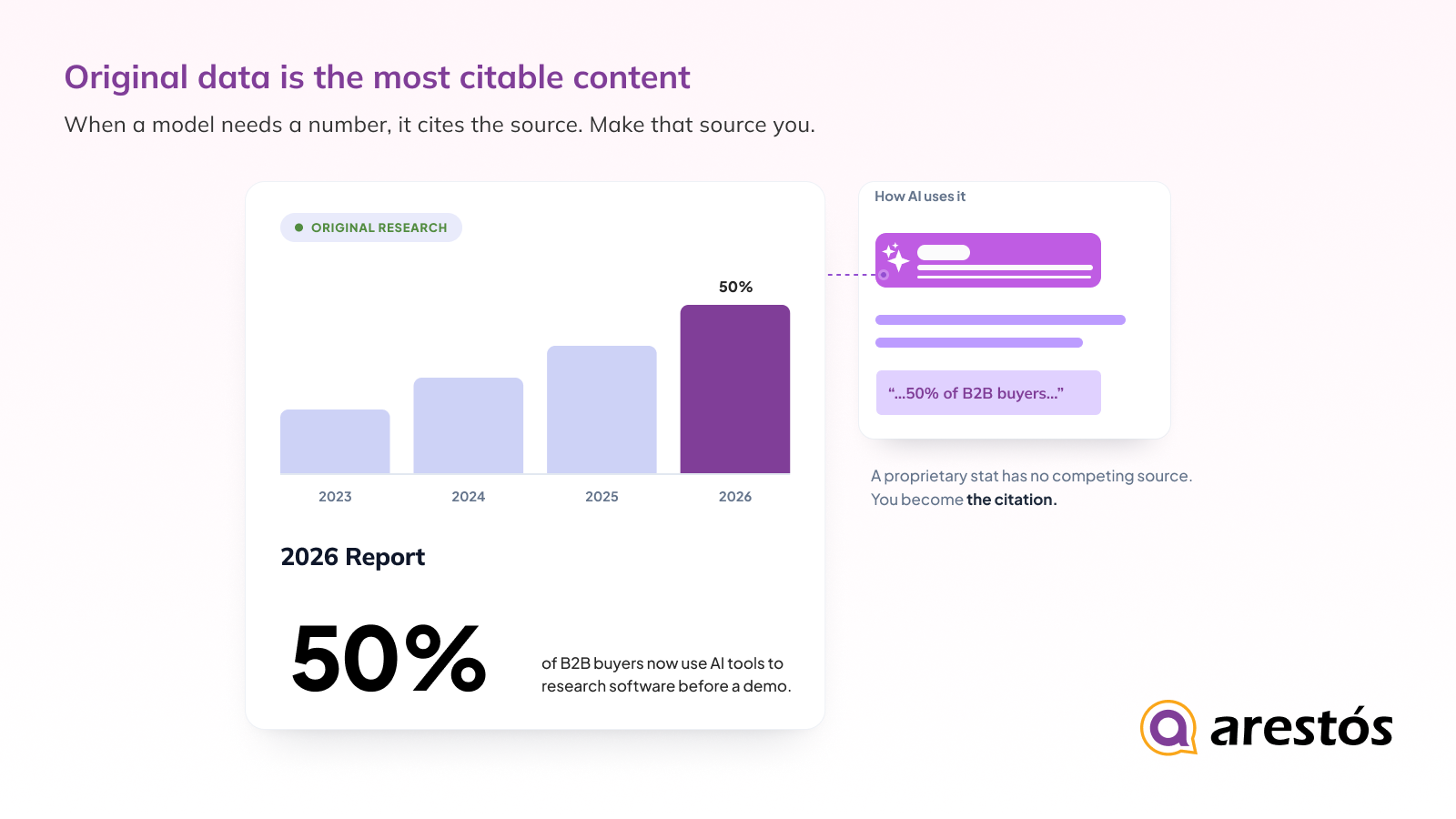
If you do one thing to improve AI citations, create original data. It is one of the most effective content formats for AI search visibility.
AI models are designed to retrieve factual, verifiable, and attributable information. When an AI system needs a statistic, benchmark, or industry insight, it looks for a reliable source it can reference confidently. If that data comes from your research, survey, customer insights, or internal analysis, your brand becomes the original source.
Unlike general opinion content, proprietary data has little direct competition because no other website owns the exact same information.
What to do:
Run original research regularly, such as customer surveys, industry reports, benchmark studies, or proprietary data analysis.
Highlight the most important statistics clearly in:
- headlines
- charts
- summary sections
- bullet points
Make your data easy to quote by using simple wording, rounded figures, and clear attribution to your brand or study.
Distribute your research across trusted third-party platforms, industry blogs, social media, and communities to increase mentions and strengthen your consensus signals.
Original data not only increases your chances of being cited directly by AI systems, but also encourages other websites to reference your content, improving your overall authority across the web.
Fix your entity so AI understands what you are
AI models do not think in terms of webpages. They understand the web through entities — such as brands, companies, products, people, and concepts — and the relationships between them.
Before AI systems can confidently cite your brand, they need a clear understanding of who you are, what category you belong to, and how your brand is connected to related topics or competitors.
If your company is described differently across websites, social profiles, review platforms, and directories, AI models may struggle to understand your entity clearly. Weak or inconsistent entity signals often reduce your chances of being cited.
What to do:
Create one consistent description of your company, product, and category, then use it across your website, social media profiles, review platforms, and press materials.
Keep your business information accurate and consistent on important entity sources such as:
- Google Business Profile
- Crunchbase
- Wikidata
- industry directories
Use Organization schema and Product schema to provide explicit machine-readable information about your brand.
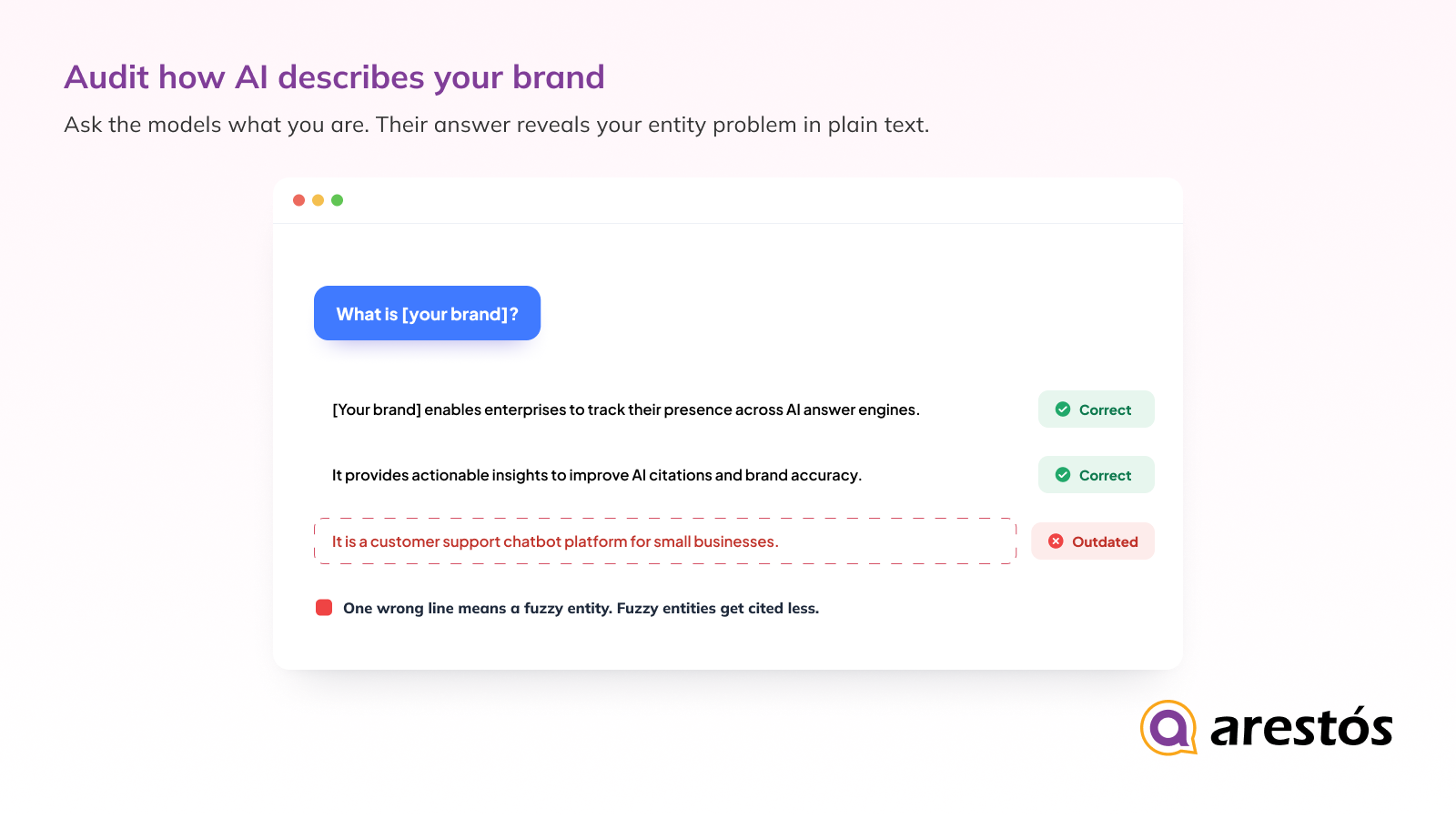
Regularly check how AI platforms currently describe your business by asking tools like ChatGPT, Gemini, or Perplexity questions such as:
- “What is [your brand]?”
- “What category is [your brand] in?”
If the answers are unclear, inconsistent, or inaccurate, it usually means your entity signals need improvement.
Strong entity clarity helps AI systems understand, trust, and reference your brand more confidently in AI-generated answers.
Monitor your citations and defend against bad ones
Getting cited by AI is not a one-time optimization. AI-generated answers constantly change as models update, retrieval systems evolve, and new content appears across the web.
A website heavily cited today may lose visibility later even if nothing changes on its own pages. AI search visibility requires ongoing monitoring and optimization.
There is also a reputation risk many brands overlook. AI systems may reference outdated, inaccurate, or negative sources when describing your company, pricing, features, or reviews. If you are not actively monitoring AI citations, incorrect information can continue spreading across AI-generated answers.
What to do:
Monitor your AI visibility regularly across platforms such as ChatGPT, Gemini, Perplexity, and Google AI Overviews.
Track important metrics such as:
- citation frequency
- brand mentions
- share of voice
- sentiment of cited sources
Review the websites and pages AI systems frequently reference about your brand.
If you find inaccurate or outdated information:
- request corrections
- update the original source if possible
- publish accurate information on trusted platforms
- strengthen positive and authoritative sources
Review your AI citation performance monthly and continuously improve your content, entity signals, and off-site mentions.
AI search optimization is an ongoing process. Brands that consistently monitor and improve their visibility are more likely to maintain long-term AI citations.
Frequently Asked Questions
1. How do I get ChatGPT to cite my website?
Create accurate, well-structured content, build topical authority, and strengthen your brand presence across trusted websites.
2. Can AI cite a website that doesn’t rank on Google?
Yes. AI systems can cite content from websites that are not ranking at the top of Google if the information is relevant and trustworthy.
3. What content gets cited by AI most often?
Original research, statistics, case studies, FAQs, and clear step-by-step guides are among the most frequently cited content types.
4. How long does it take to get cited by AI?
It depends on your authority, content quality, and online presence. Results may take weeks or several months.
5. Is AI citation optimization different from SEO?
Yes. SEO focuses on rankings, while AI citation optimization focuses on becoming a trusted source that AI systems choose to reference.
Conclusion
As AI search becomes more influential, getting cited by AI is becoming just as important as ranking on search engines. By creating trustworthy content, strengthening your brand entity, and improving AI visibility, you can increase your chances of appearing in AI-generated answers.
Arestós helps businesses improve their visibility through AEO and GEO services, combining content optimization, entity building, and AI search strategies to drive long-term growth.
Contact us today and discover how we can help your brand become a trusted source in AI search.
Subscribe to our newsletter!
Get updated to
the lastest IT trends
Related Posts
Update the latest technology trends for your business