Back to featured insights
AEO vs GEO: What’s the Difference?
As AI-powered search continues to evolve, understanding AEO vs GEO is becoming essential for modern brands. Learn how these strategies improve visibility, strengthen authority, and help your content appear in AI-generated answers, featured snippets, and conversational search experiences.
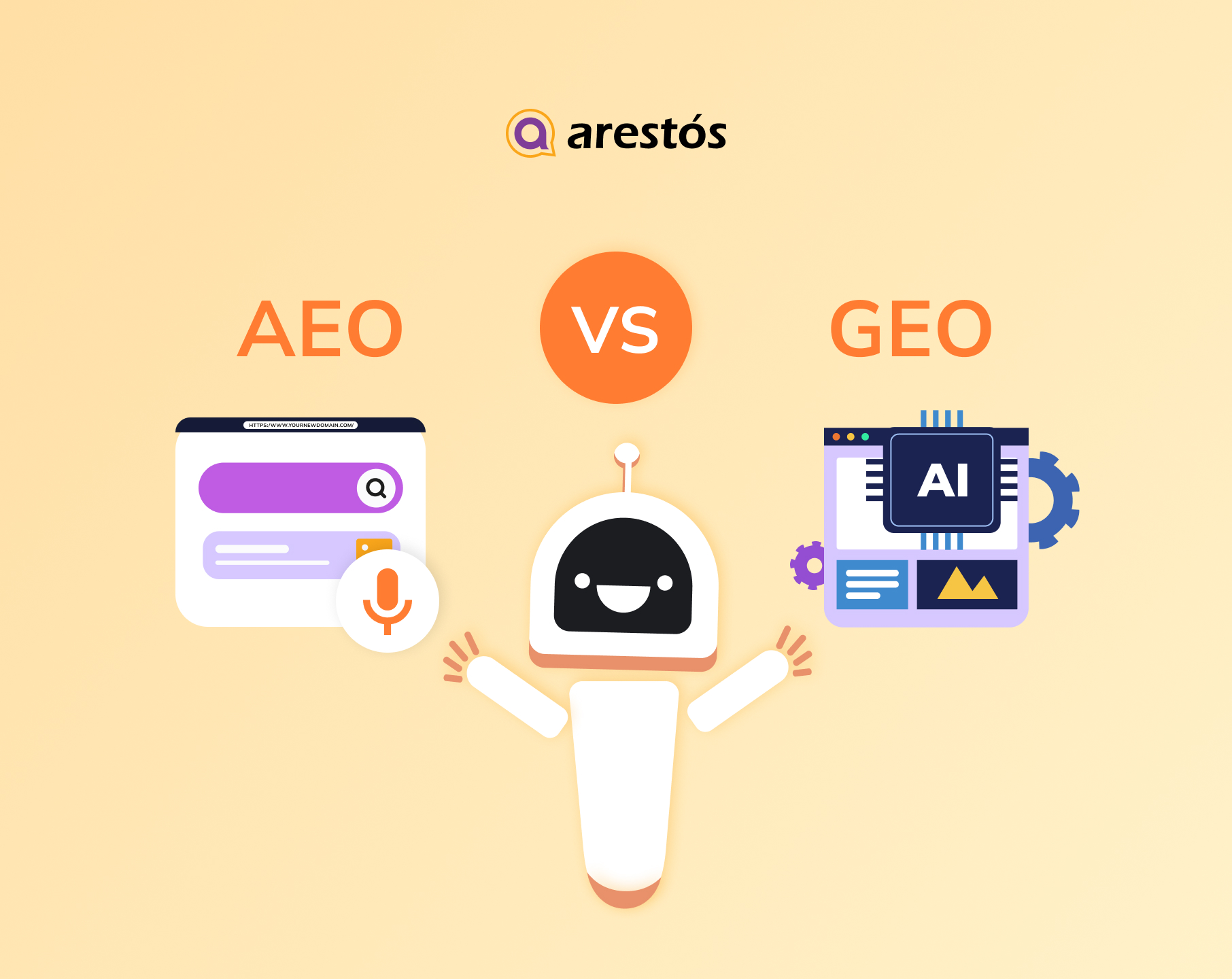

Table of Content
Share
AEO vs GEO has become an important topic as AI-driven search continues to reshape how users discover information online. Understanding the difference between these strategies can help businesses improve visibility, strengthen authority, and increase their chances of appearing in AI-generated answers and search results.
Whether you are a marketer, business owner, SEO specialist, or content creator, knowing how AEO and GEO work is becoming increasingly valuable in modern digital marketing. In this guide, we’ll explain the key differences between AEO and GEO, how each strategy works, and how to optimize content for AI-powered search engines.
AEO vs GEO: Understanding the Core Concepts
Before comparing AEO and GEO directly, it’s essential to understand what each strategy actually involves. While both are designed to improve visibility within AI-powered search environments, they serve different purposes and rely on different optimization approaches.
Let’s explore each concept individually first.
What is AEO? (Answer Engine Optimization)
Answer Engine Optimization (AEO) is the practice of optimizing content so search engines and AI-powered answer systems can understand and deliver direct answers to users’ questions. Its goal is to help content appear in formats such as featured snippets, voice search results, and AI-generated answers by making information clear, structured, and easy for machines to interpret.
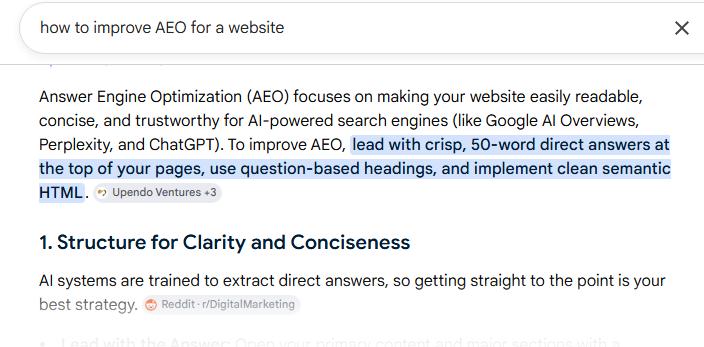
Key Features of AEO
- Schema-Based Content Structure: Using FAQ, Q&A, and HowTo schema helps search engines better interpret content and identify answer-focused information.
- Optimization for Instant Answers: AEO aims to position content in highly visible areas such as featured snippets and AI-generated answer boxes within search results.
- Conversational Search Readiness: Content is optimized around natural-language queries to align with the way users speak when using voice assistants and AI search tools.
- Easy-to-Process Content Formatting: Clear headings, concise explanations, and scannable layouts make information easier for both users and search engines to understand quickly.
AEO focuses on making content easier for search engines and AI systems to understand, it has become a key component of AI search optimization. Learn more in our guide: How to Optimize Content for AI Search.
What are common AEO strategies?
To optimize for AEO, content should be structured in a way that makes it easy for search engines and AI systems to identify, interpret, and deliver direct answers. Here are some common AEO strategies.
- Create question-focused content: Organize content around real user queries to improve visibility in answer engines and voice search results.
- Optimize for featured snippets: Structure information clearly so search engines can easily extract and display answers in “position zero.”
- Use structured formatting: Improve readability with bullet points, numbered lists, tables, and short sections that are easy for both users and machines to process.
- Implement schema markup: Add structured data such as FAQ and HowTo schema to help search engines better understand page content and context.
- Write concise and direct answers: Use clear, factual explanations that quickly answer a question without unnecessary complexity.
- Use conversational language: Align content with natural-language search behavior, especially for voice assistants and AI-driven queries.
What is GEO? (Generative Engine Optimization)
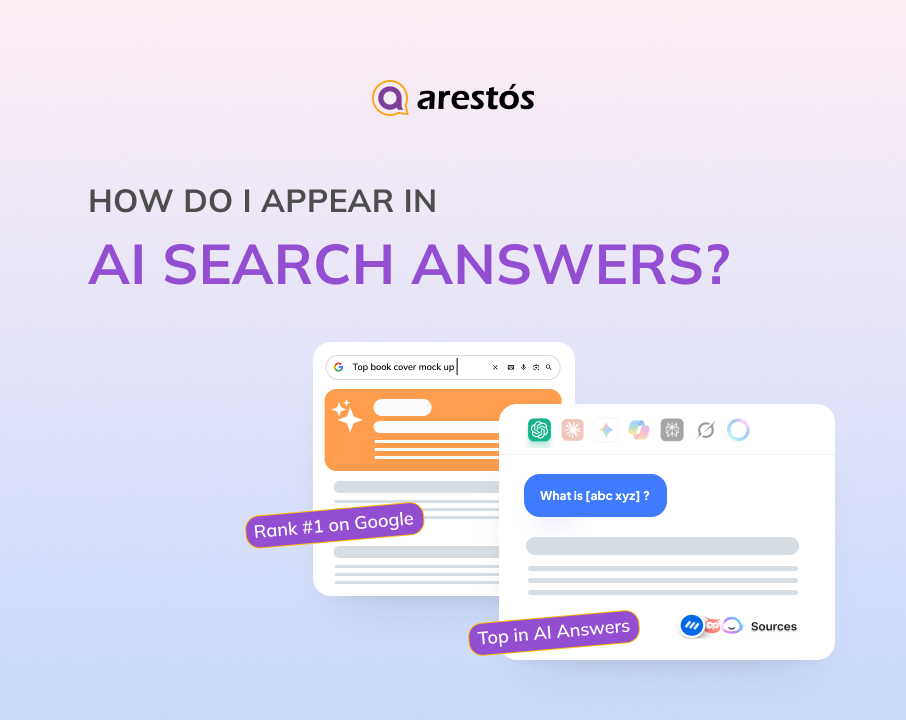
Generative Engine Optimization (GEO) is the process of optimizing content so AI-driven generative systems can understand, reference, and cite it in AI-generated responses. Unlike traditional SEO, which focuses on rankings, GEO focuses on increasing a brand’s visibility within platforms such as ChatGPT, Gemini, Perplexity, and other AI-powered search experiences.
GEO aims to help AI systems recognize content as trustworthy, authoritative, and contextually relevant. This makes it more likely for a brand, website, or piece of content to be mentioned or used as a source when AI generates answers for users.
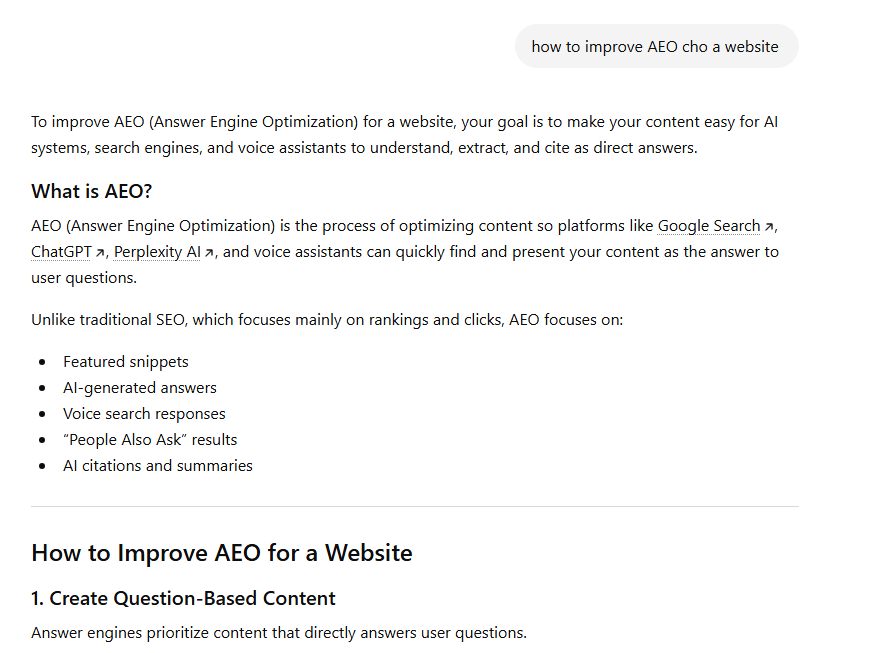
Key Features of GEO
- AI-focused content optimization: GEO is designed to improve how AI systems understand, reference, and generate responses using your content.
- Entity-based optimization: GEO emphasizes entities, relationships, and contextual meaning rather than relying only on keywords.
- Topical authority building: Creating comprehensive and trustworthy content helps establish expertise within a specific subject area.
- Context-rich content structure: GEO favors detailed, well-structured content that provides depth, explanations, and supporting context.
- AI citation and brand visibility: The goal of GEO is to increase the chances of being mentioned or cited in AI-generated responses.
- Semantic relevance: Content is optimized around meaning, intent, and topic relationships to improve AI understanding.
- Trust and credibility signals: Strong E-E-A-T, accurate information, and authoritative references help improve GEO performance.
- Optimization for conversational AI: GEO supports natural-language and conversational search experiences used in platforms like ChatGPT and Gemini.
What GEO strategies can you implement today?
To optimize for GEO, brands need to create content that AI systems can easily understand, trust, and reference in generated responses. Here are some GEO strategies you can implement today.
- Build topical authority: Create comprehensive, high-quality content around a specific subject to establish expertise and improve AI trust signals.
- Strengthen entity recognition: Maintain consistent brand, author, and company information across your website and external platforms to help AI systems understand your identity.
- Create context-rich content: Publish detailed, well-structured content that provides depth, examples, explanations, and supporting information.
- Earn third-party mentions and citations: Increase credibility through backlinks, PR coverage, expert mentions, and references from authoritative websites.
- Use structured and semantic content: Organize information clearly with headings, sections, lists, and semantic formatting that AI systems can process more effectively.
- Keep content accurate and updated: Regularly refresh content to ensure information remains relevant, trustworthy, and aligned with current search behavior.
- Optimize for conversational AI queries: Write naturally and contextually to match how users interact with AI assistants and generative search engines.
Why AEO Vs GEO Matters
AEO and GEO matter because search behavior is rapidly shifting toward AI-driven experiences. Users increasingly expect direct answers from search engines, AI assistants, and generative platforms instead of browsing multiple websites.
Understanding the difference between AEO and GEO helps businesses stay visible in modern search environments.
- AEO improves direct answer visibility: Helps content appear in featured snippets, voice search results, and AI summaries.
- GEO increases AI-generated visibility: Helps brands get mentioned and cited in platforms like ChatGPT, Gemini, and Perplexity.
- Both support AI-powered search experiences: They optimize content for how modern AI systems interpret and deliver information.
- They strengthen brand authority: Well-optimized content is more likely to be recognized as trustworthy and relevant.
- They prepare businesses for the future of search: AI-driven discovery is becoming a major part of how users find information online.
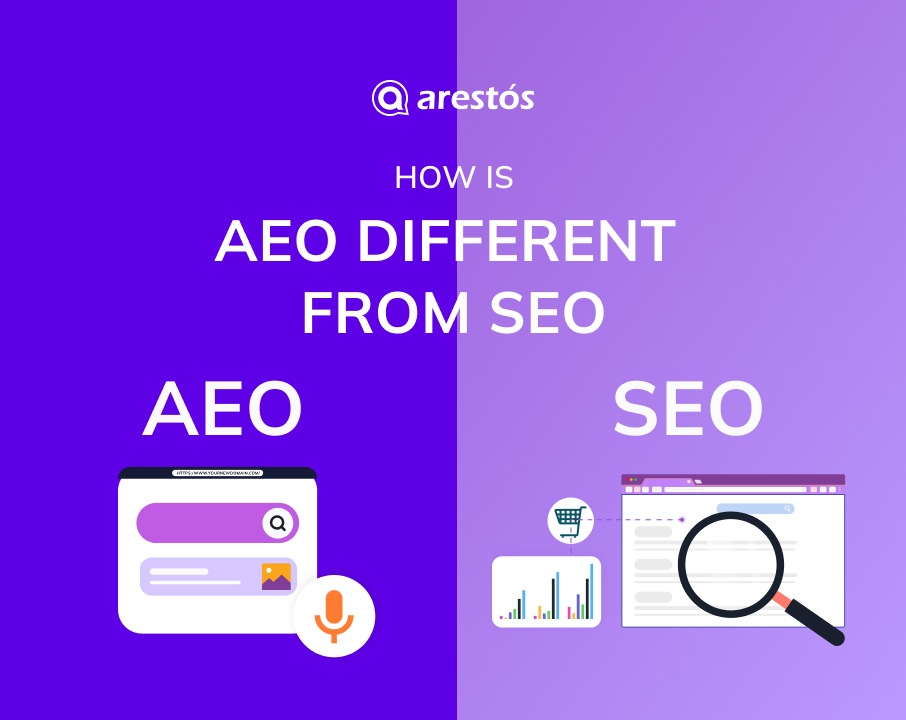
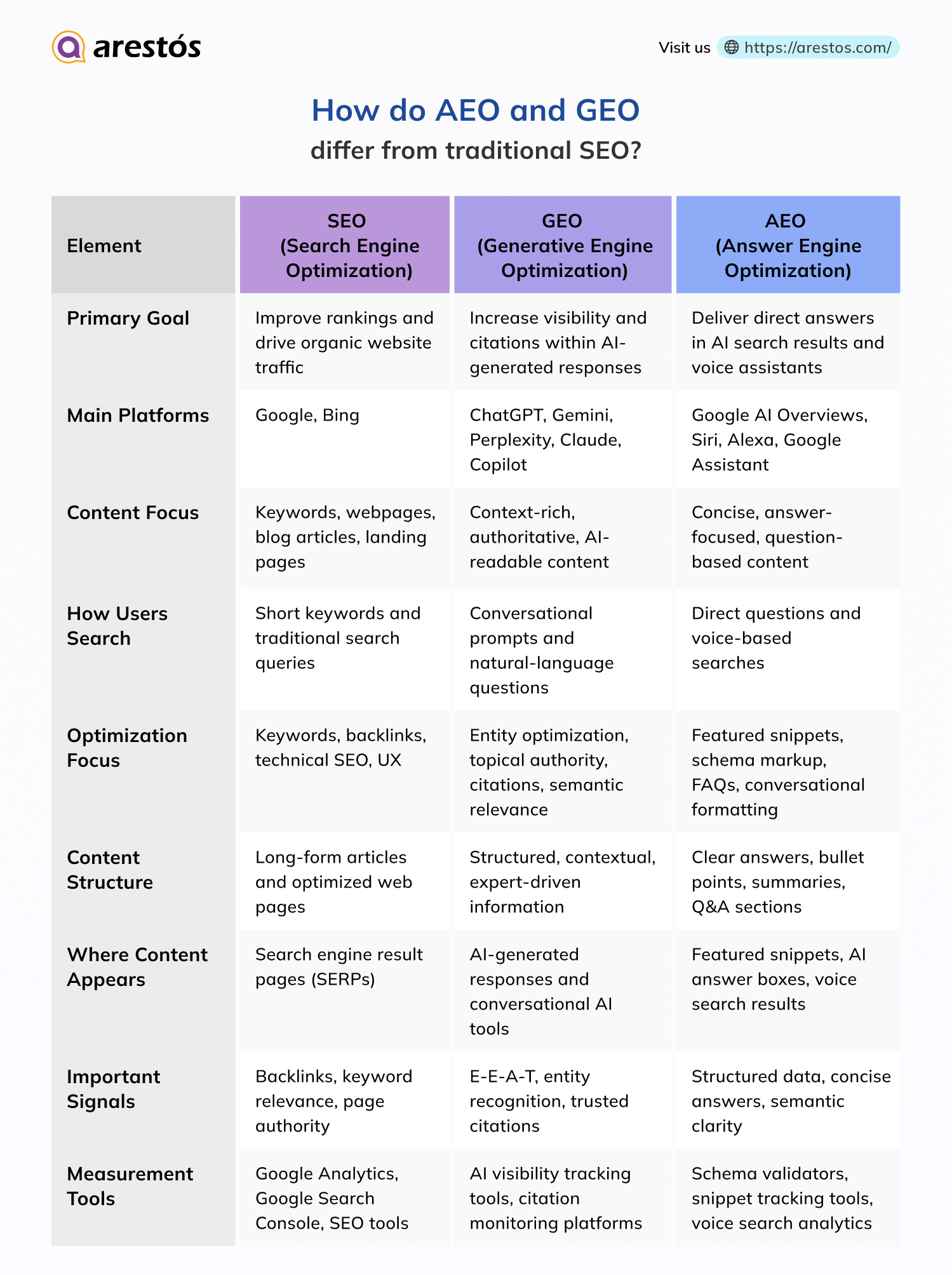
How do AEO and GEO differ from traditional SEO?
The Future of AEO and GEO
As AI continues to reshape how people search for information, AEO and GEO are expected to become essential parts of digital marketing strategies. Search engines are increasingly moving toward direct answers, conversational experiences, and AI-generated recommendations rather than traditional lists of links.
In the future, businesses will need to optimize not only for rankings, but also for how AI systems understand, summarize, and reference content. This means structured information, topical authority, semantic relevance, and trust signals will become even more important.
Several trends are expected to shape the future of AEO and GEO:
- AI-generated search experiences will continue to grow: Platforms like ChatGPT, Gemini, and Google AI Overviews are changing how users discover information online.
- Zero-click searches will become more common: Users will increasingly get answers directly from AI systems without visiting multiple websites.
- Entity-based optimization will become more important: AI systems rely heavily on entities, relationships, and contextual understanding instead of only keywords.
- Trust and authority will play a larger role: Brands with strong E-E-A-T signals and reliable information will have better visibility in AI-driven search.
- Conversational search will dominate user behavior: Natural-language and voice-based queries will continue to increase across search platforms.
- SEO, AEO, and GEO will become more interconnected: Future optimization strategies will likely combine traditional SEO foundations with answer-focused and AI-focused optimization techniques.
Businesses that adapt early to these changes will be better positioned to maintain visibility, authority, and discoverability in the evolving AI search landscape.
Frequently Asked Questions
1. What is the difference between AEO and GEO?
AEO focuses on optimizing content for direct answers in search engines and voice assistants, while GEO focuses on increasing visibility and citations within AI-generated responses from platforms like ChatGPT and Gemini.
2. Is AEO different from traditional SEO?
Yes. Traditional SEO mainly focuses on improving rankings and website traffic, while AEO focuses on helping content appear as direct answers in featured snippets, AI summaries, and voice search results.
3. Does GEO replace SEO?
No. GEO does not replace SEO. Instead, it builds on traditional SEO by optimizing content for generative AI systems and conversational search experiences.
4. How can businesses optimize for AEO?
Businesses can optimize for AEO by creating question-based content, using structured data, improving content clarity, and optimizing for featured snippets and voice search.
5. Can AEO and GEO work together?
Yes. AEO and GEO complement each other. AEO improves direct answer visibility, while GEO increases visibility within AI-generated responses and conversational AI platforms.
Conclusion
As AI-powered search continues to evolve, understanding the difference between AEO and GEO is becoming essential for modern digital marketing. While AEO focuses on optimizing content for direct answers and featured snippets, GEO helps brands increase visibility within AI-generated responses and conversational search platforms. Together, these strategies help businesses improve discoverability, authority, and long-term relevance in the future of search.
At Arestós, we provide AEO content services designed to help brands optimize for AI-driven search experiences. From structured, answer-focused content creation to entity optimization and AI-friendly content strategies, our team helps businesses build stronger visibility across search engines, AI assistants, and generative platforms.
Ready to future-proof your content strategy? Contact us today to discover how our AEO and AI search optimization services can help your brand stay visible in the evolving AI search landscape.
Subscribe to our newsletter!
Get updated to
the lastest IT trends
Related Posts
Update the latest technology trends for your business