Back to featured insights
What Is Answer Engine Optimization? The Complete Guide
Want your content to appear in AI-generated answers? Answer Engine Optimization helps improve your visibility across AI-powered search platforms, making it easier for your brand to earn citations, build authority, and reach more potential customers.
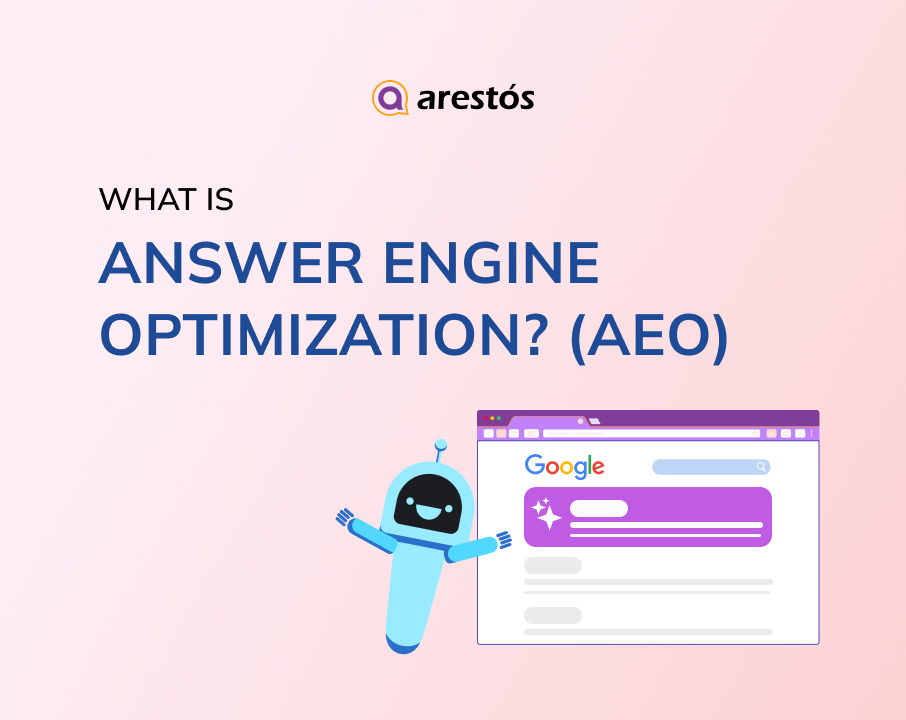

Table of Content
Share
Answer Engine Optimization (AEO) is the process of optimizing content so AI-powered search engines can understand, retrieve, and cite it in their answers. An effective AEO strategy can increase your brand visibility, build authority, and improve your chances of being referenced across AI search platforms.
Whether you’re a marketer, business owner, SEO professional, or content creator, understanding AEO is essential as AI search continues to grow. In this guide, you’ll learn what Answer Engine Optimization is, why it matters, and the best practices to optimize your content for AI-powered search.
What Is Answer Engine Optimization?
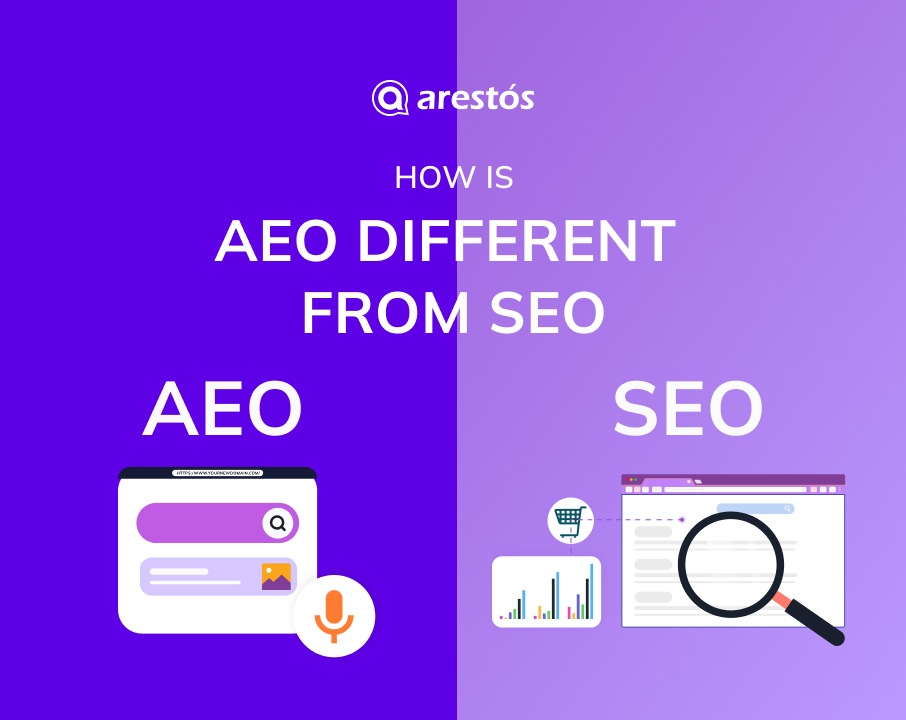
Answer Engine Optimization (AEO) is the practice of optimizing content so AI-powered answer engines can easily understand, retrieve, and cite it when responding to user queries. Unlike traditional SEO, which focuses on improving rankings in search engine results, AEO aims to make your content the trusted source behind AI-generated answers.
As AI search platforms such as ChatGPT, Google AI Overviews, Perplexity, and Gemini become more popular, Answer Engine Optimization helps businesses increase their visibility by providing clear, accurate, and well-structured content that AI systems can confidently reference.
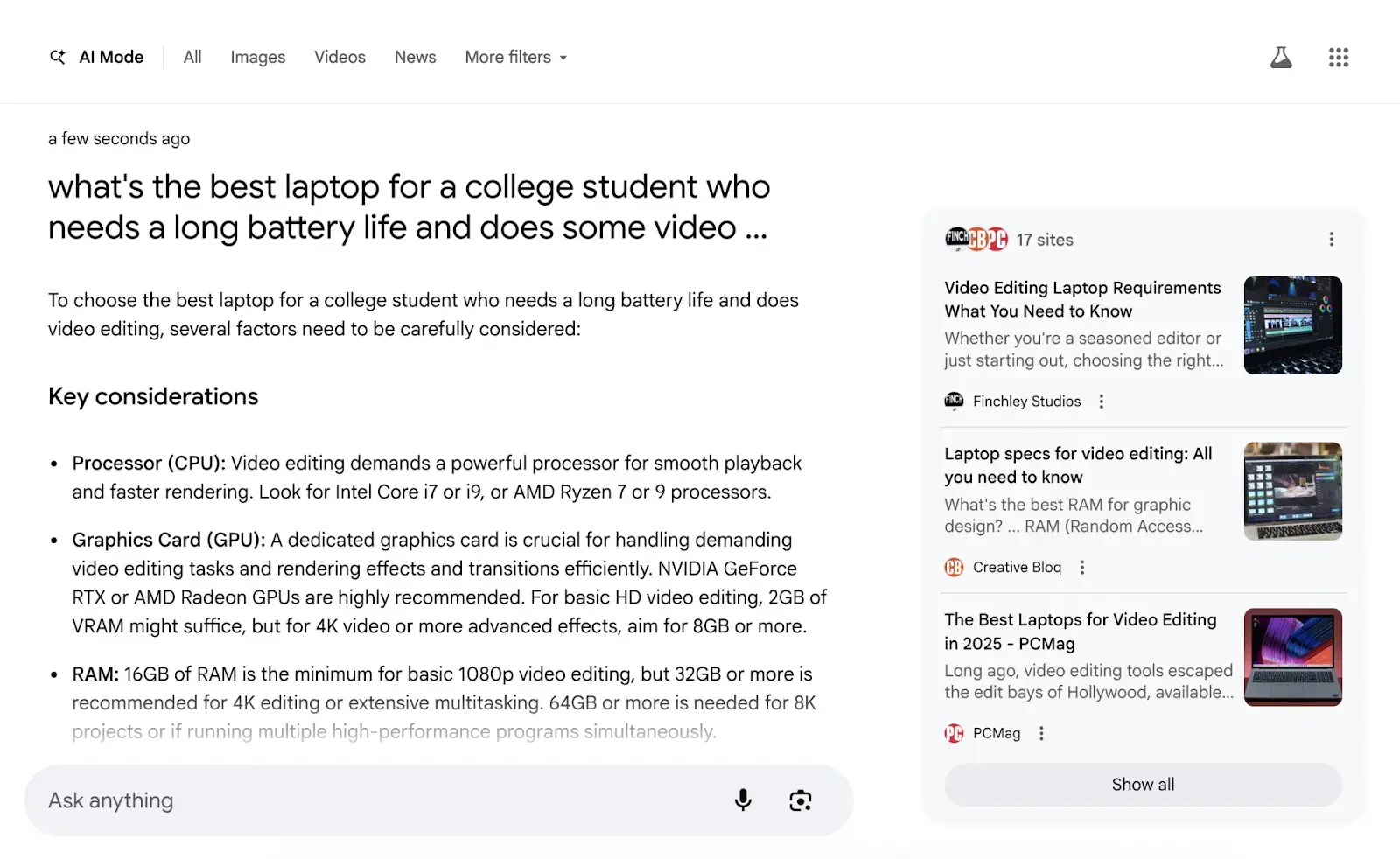
Learn more about the differences between AEO and GEO in our complete guide.
Why Does AEO Matter?
As AI-powered search becomes more common, Answer Engine Optimization (AEO) helps businesses stay visible by making their content easier for AI to understand and reference.
Here are the key reasons why AEO matters:
- Increases Visibility in AI Search: AEO improves the chances of your content appearing in AI-generated answers on platforms like ChatGPT, Google AI Overviews, Perplexity, and Gemini.
- Builds Brand Authority: When AI consistently cites your content, it reinforces your brand as a trusted source of information in your industry.
- Matches Changing Search Behavior: More users now expect direct answers instead of browsing multiple websites. AEO helps your content align with this shift in search habits.
- Improves User Experience: Well-structured, answer-focused content makes it easier for both AI systems and users to find the information they need quickly.
- Complements Traditional SEO: AEO doesn’t replace SEO—it enhances it. Combining both strategies helps maximize visibility across traditional search engines and AI-powered search experiences.
- Prepares Your Website for the Future of Search: As AI continues to reshape how people discover information, investing in AEO helps ensure your content remains competitive and discoverable.
Want to increase your chances of appearing in featured snippets? Read our guide: How to Get Featured Snippets.
How to Optimize Your Content for Answer Engines
As AI-powered search continues to evolve, optimizing your content for Answer Engine Optimization (AEO) means making it easier for AI systems to understand, evaluate, and reference your information.
The following best practices can help improve your chances of being cited in AI-generated responses:
Gain Brand Mentions
AI-powered search engines are more likely to reference brands that have established credibility across multiple trusted sources. The stronger your online presence, the greater your chances of being recognized and cited in AI-generated answers.
To strengthen your brand authority:
- Earn mentions from reputable websites. Focus on being featured by authoritative sources such as industry publications, educational institutions, government websites, and well-known media outlets.
- Maintain consistent brand information. Use the same brand name, business details, and messaging across your website, social profiles, and third-party platforms to reinforce your brand entity.
- Expand your presence in industry communities. Contribute to discussions on forums, participate in podcasts, publish guest articles, and share expert insights to increase your brand’s visibility and credibility.
Answer Questions in Ways AI Understands
To increase your chances of being cited by AI, focus on answering the questions your audience is actually asking. Create content that provides clear, accurate answers and organize it in a way that’s easy for both users and AI systems to understand.
In other words:
- Identify the questions your target audience is searching for.
- Provide direct, concise answers before adding more detail.
- Structure your content with clear headings, bullet points, and logical sections.
Google’s People Also Ask feature is a useful starting point, but it’s only one source of insight. You can also use keyword research tools, community forums, social platforms, and customer feedback to uncover the questions that matter most.
Once you’ve identified those questions, build content that answers them clearly and comprehensively. Well-structured, question-focused content is more likely to be understood, referenced, and cited by AI-powered search engines.
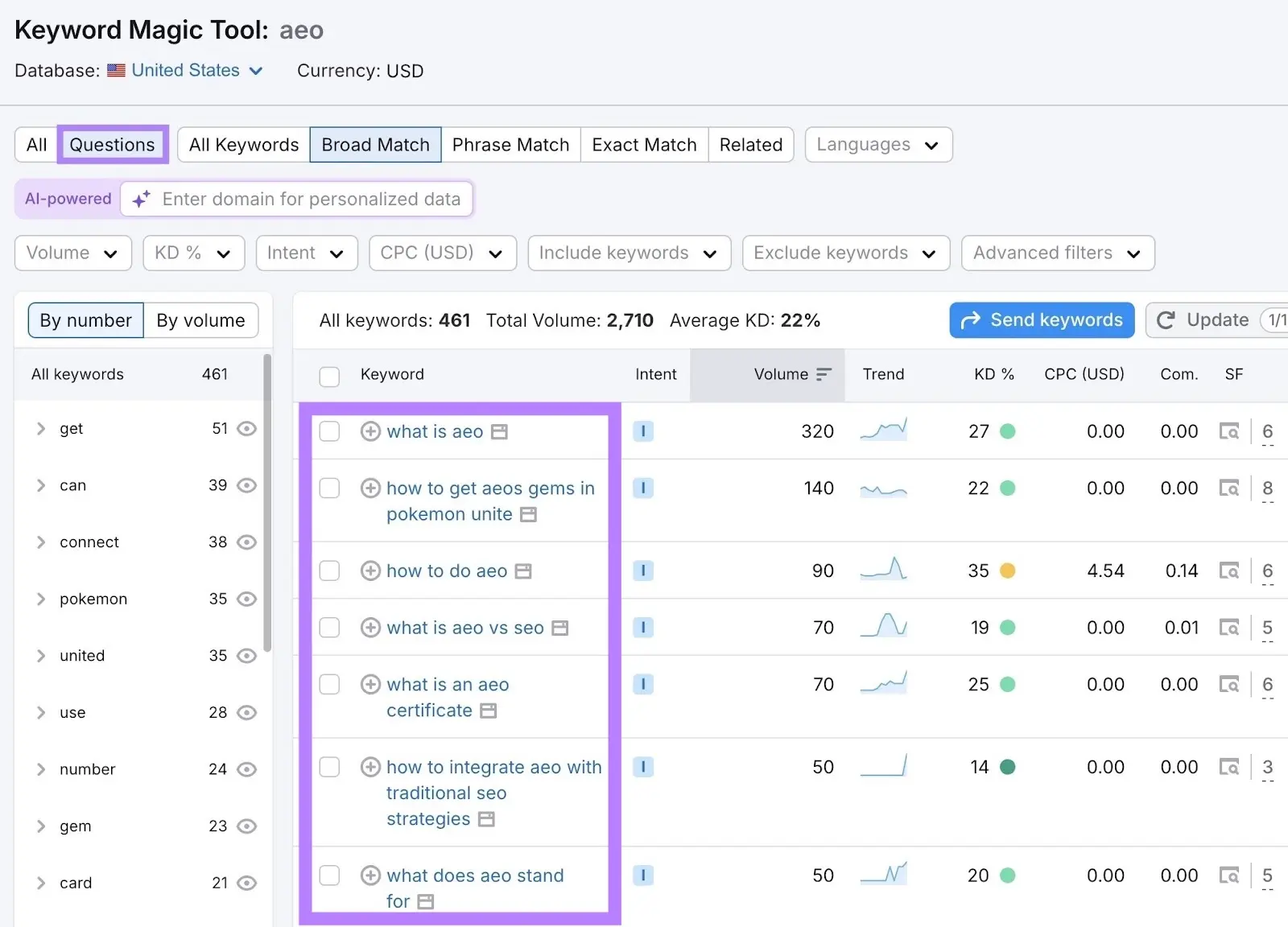
Creating great answers is only part of Answer Engine Optimization. Your content should also be organized in a way that helps AI-powered search engines quickly understand, extract, and reference key information.
To make your content easier for AI to process:
- Use descriptive, question-based headings (such as H2s and H3s).
- Provide a direct answer immediately after each heading.
- Support your answer with relevant explanations, examples, statistics, or actionable steps.
- Improve readability with bullet points, numbered lists, and tables where appropriate.
- Implement structured data (schema markup) to give search engines additional context about your content.
For example, if you’re writing an article about email marketing, you might include a heading like “What Is Email Marketing?” followed by a concise definition before expanding on the topic.
This answer-first structure makes it easier for both users and AI systems to identify and surface the most relevant information.
Create Content That Demonstrates Experience & Expertise
AI-powered search engines tend to prioritize content that demonstrates first-hand experience, expert knowledge, and original insights. This closely aligns with Google’s E-E-A-T framework, which emphasizes creating trustworthy and authoritative content.
Research conducted by university researchers has also found a positive relationship between strong E-E-A-T signals and AI visibility, suggesting that content with higher levels of experience, expertise, authority, and trust is more likely to be surfaced and cited by AI-powered search engines.
“Among other things, we find that including citations, quotations from relevant sources, and statistics can significantly boost source visibility, with an increase of over 40% across various queries.”
Here are some ways to demonstrate experience and expertise in your content:
- Share first-hand experience, practical examples, or lessons learned from real projects.
- Publish original research, proprietary data, or unique insights that provide value beyond existing content.
- Include author bios that showcase relevant expertise, credentials, or industry experience.
- Support your statements with credible sources, research papers, and official statistics.
- Incorporate expert opinions, interviews, or survey findings to strengthen the authority and originality of your content.
Keep Your Content Up to Date
AI-powered search engines are more likely to reference content that is accurate, relevant, and up to date. Regularly refreshing your content helps maintain its credibility and increases the likelihood that AI systems will use it as a trusted source.
Recent research also suggests that newer or recently updated content is cited more frequently by AI-powered search engines, highlighting the importance of keeping information current.
Here are some ways to keep your content fresh:
- Update your content regularly by refreshing statistics, examples, screenshots, and other outdated information.
- Display a “Last Updated” date to show both users and AI systems that your content is actively maintained.
- Use structured data such as datePublished and dateModified to help search engines and AI understand when your content was created and last updated.
Explore our guide on How To Get Cited By AI for practical strategies and optimization tips.
How to Measure AEO Success
To measure the success of your Answer Engine Optimization (AEO) efforts, track the following key metrics:
Track Mentions and Citations in AI Responses
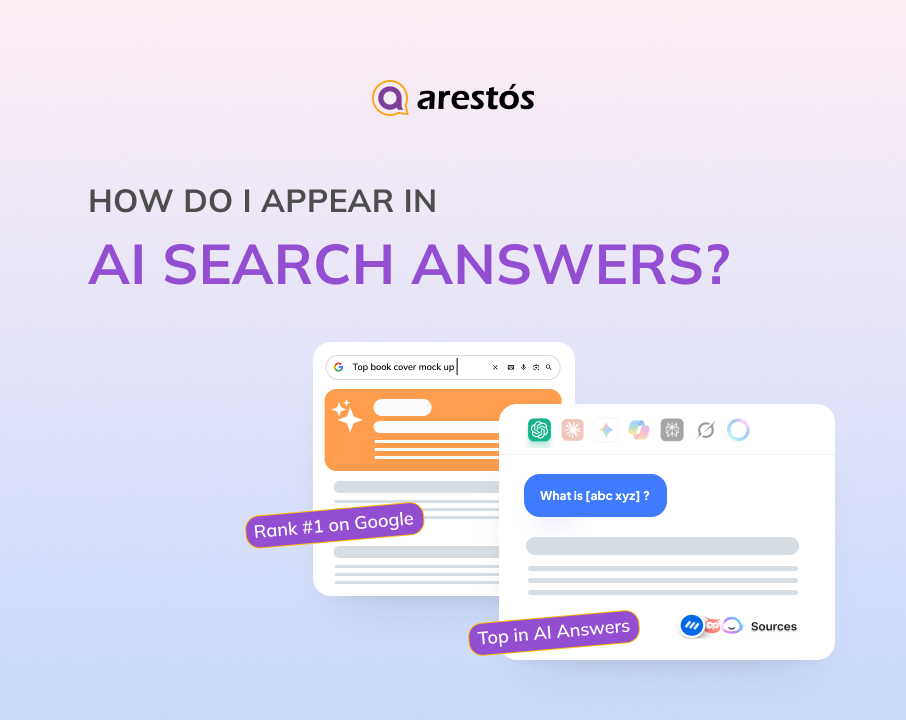
One of the simplest ways to measure AEO performance is to see whether AI-powered search engines mention your brand. Search for the same questions your target audience is asking in tools like ChatGPT, Perplexity, and Gemini, then check if your brand, products, or content appear in the generated answers.
For example, if you run a digital marketing agency, you could ask: “What are the best Answer Engine Optimization agencies?” or “How can businesses improve their visibility in AI search?” and see whether your brand is referenced.
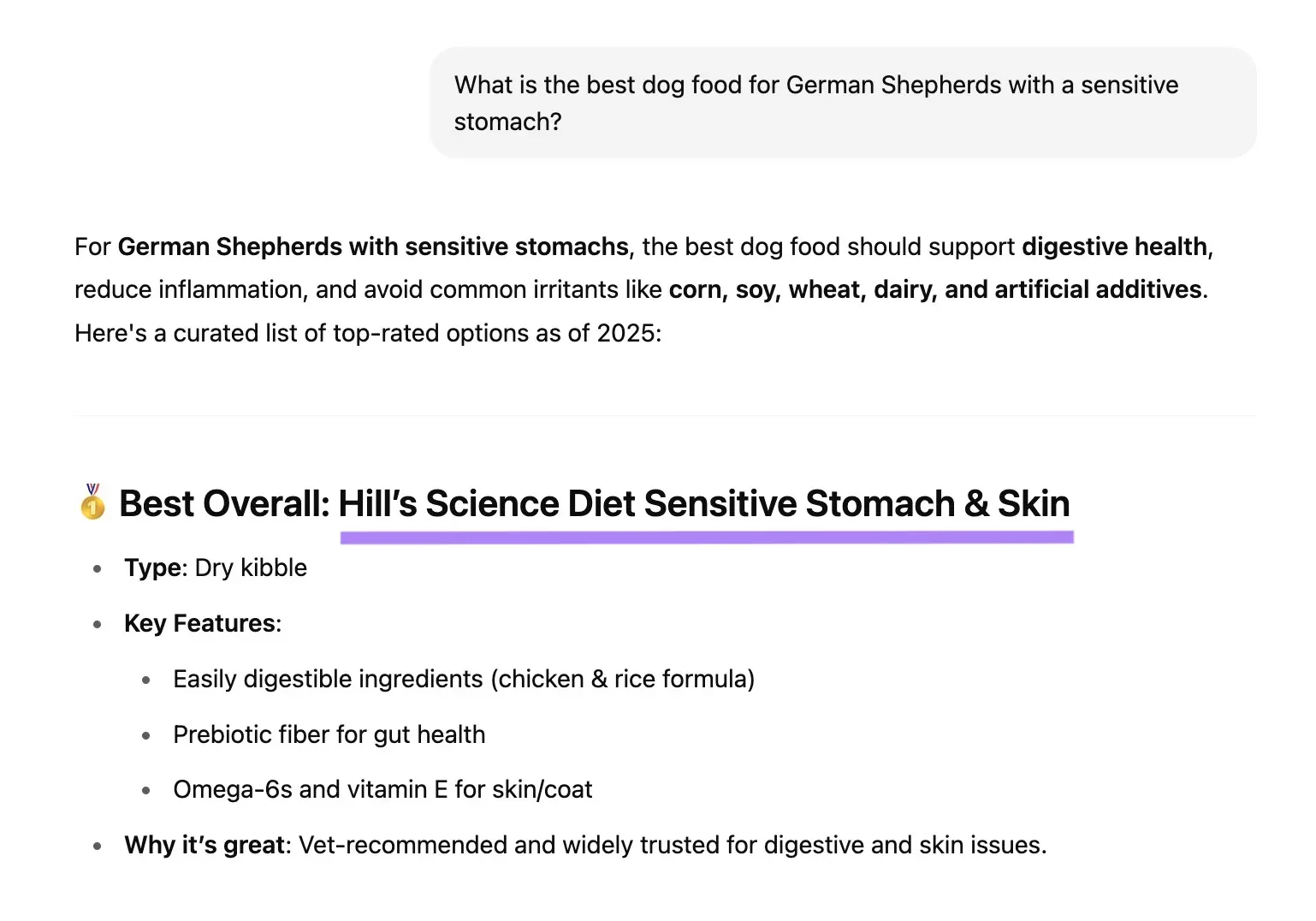
If your brand doesn’t appear in AI-generated recommendations, it may indicate that you need to strengthen your online authority and brand presence. Building high-quality backlinks, earning mentions from reputable websites, and increasing brand visibility across trusted platforms can improve your chances of being cited by AI.
While manual testing provides useful insights, it can be time-consuming and difficult to scale.
For ongoing monitoring, consider using AI visibility tracking tools to measure how often your brand appears across AI-powered search platforms. These tools typically provide metrics such as brand mentions, AI visibility scores, and estimated audience reach, helping you evaluate the effectiveness of your AEO strategy over time.
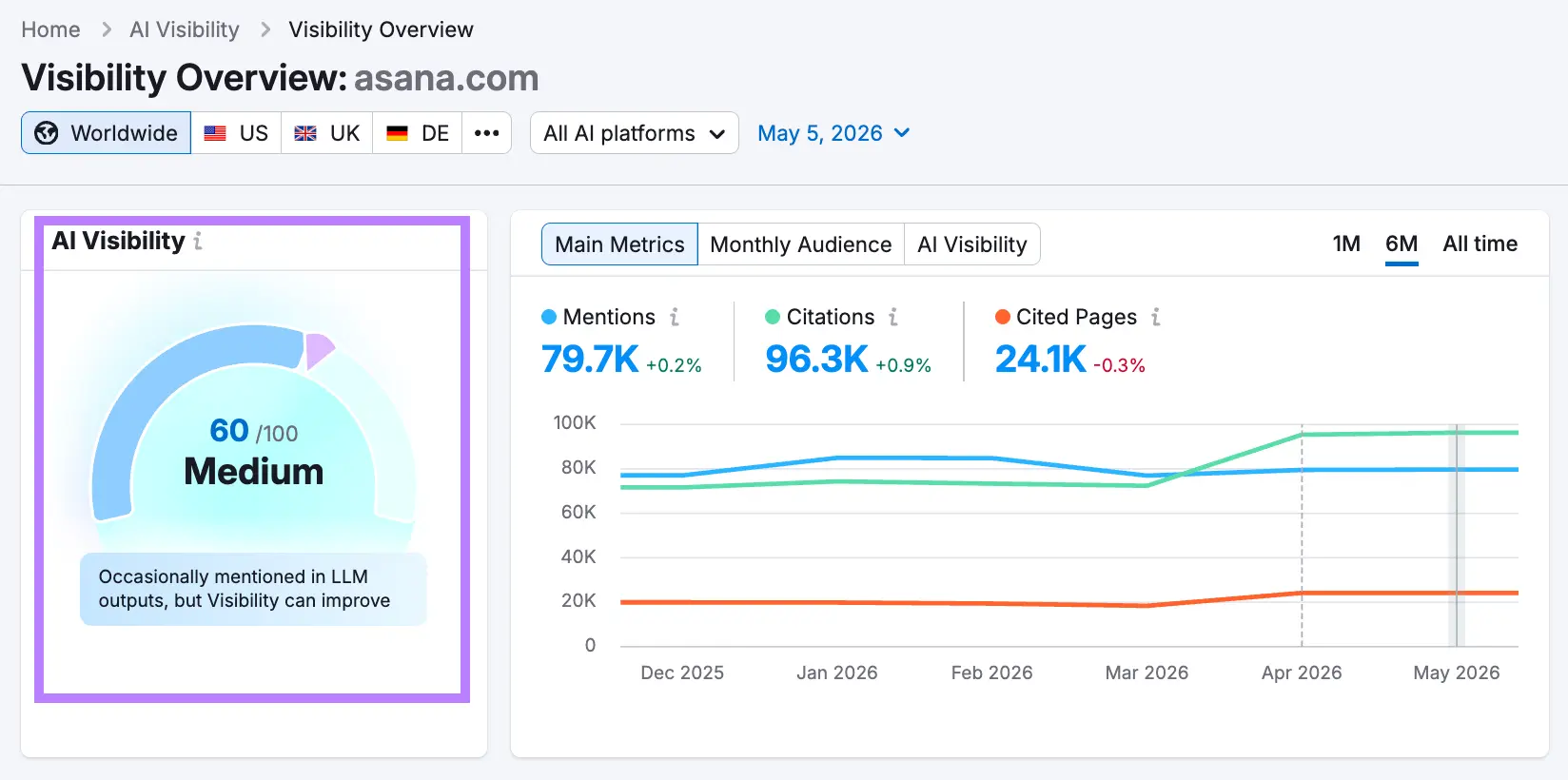
These reports can also identify the topics where your brand has the strongest AI visibility, helping you understand what’s working well and uncover opportunities to improve your presence in other areas.
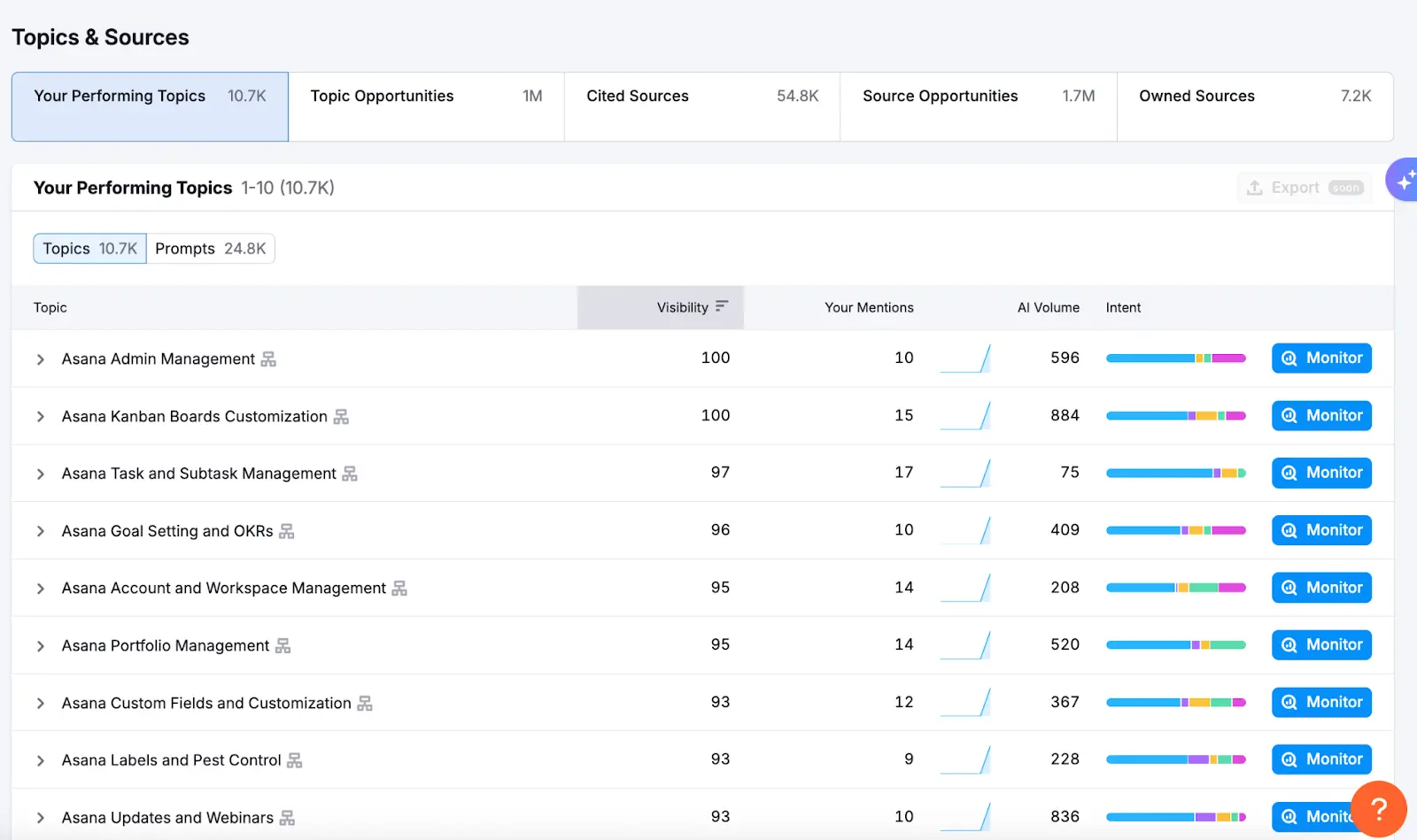
Analyze Other Visibility Metrics
AI-powered search platforms often mention and cite trusted brands in their responses. Even if users don’t click through immediately, seeing your brand in AI-generated answers can increase brand awareness and encourage them to search for your business later.
Brand mentions in AI search can also improve your visibility in Google’s AI experiences, contributing to higher search impressions and stronger branded search demand over time.
To measure this impact, monitor your branded search performance in Google Search Console. Track changes in branded queries, impressions, and clicks to see whether more users are searching for your brand as your AI visibility grows.
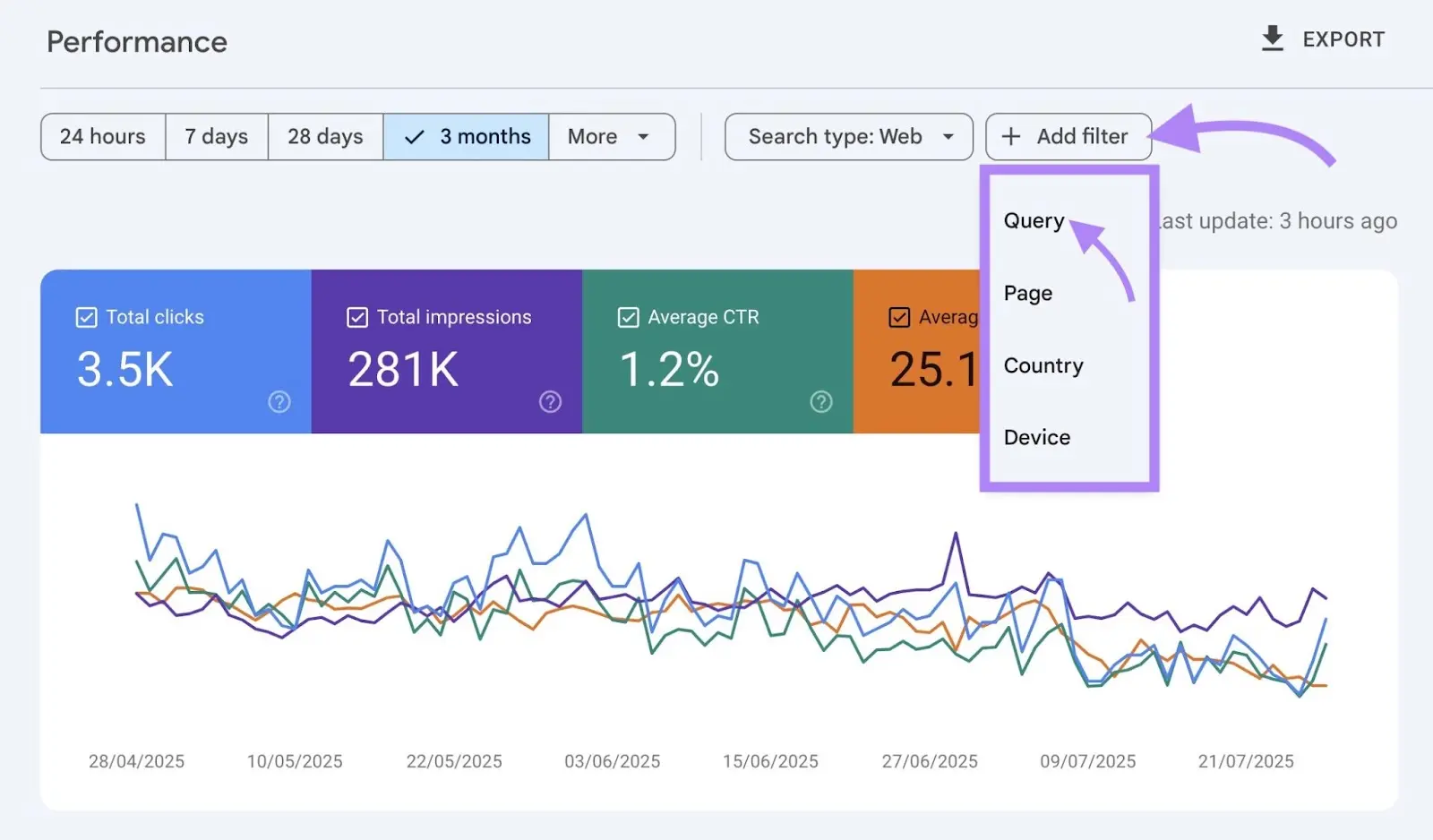
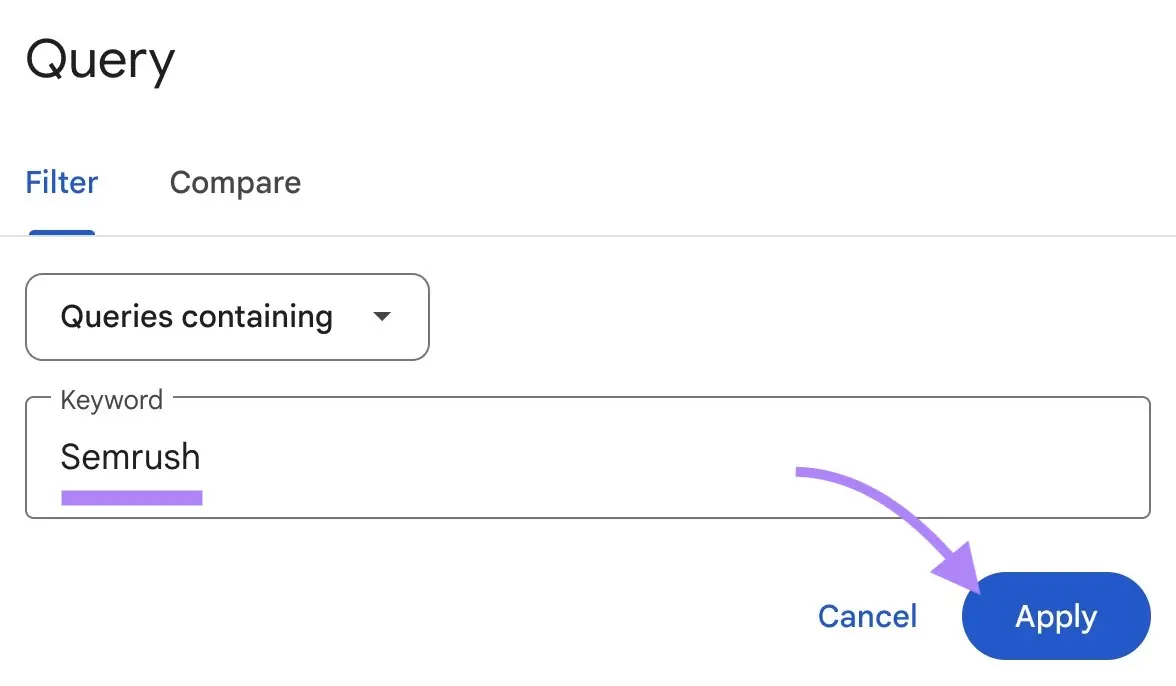
Make sure “Queries containing” is selected, then enter your brand name exactly as it appears. Apply the filter to view search performance metrics for branded queries and monitor how they change over time.
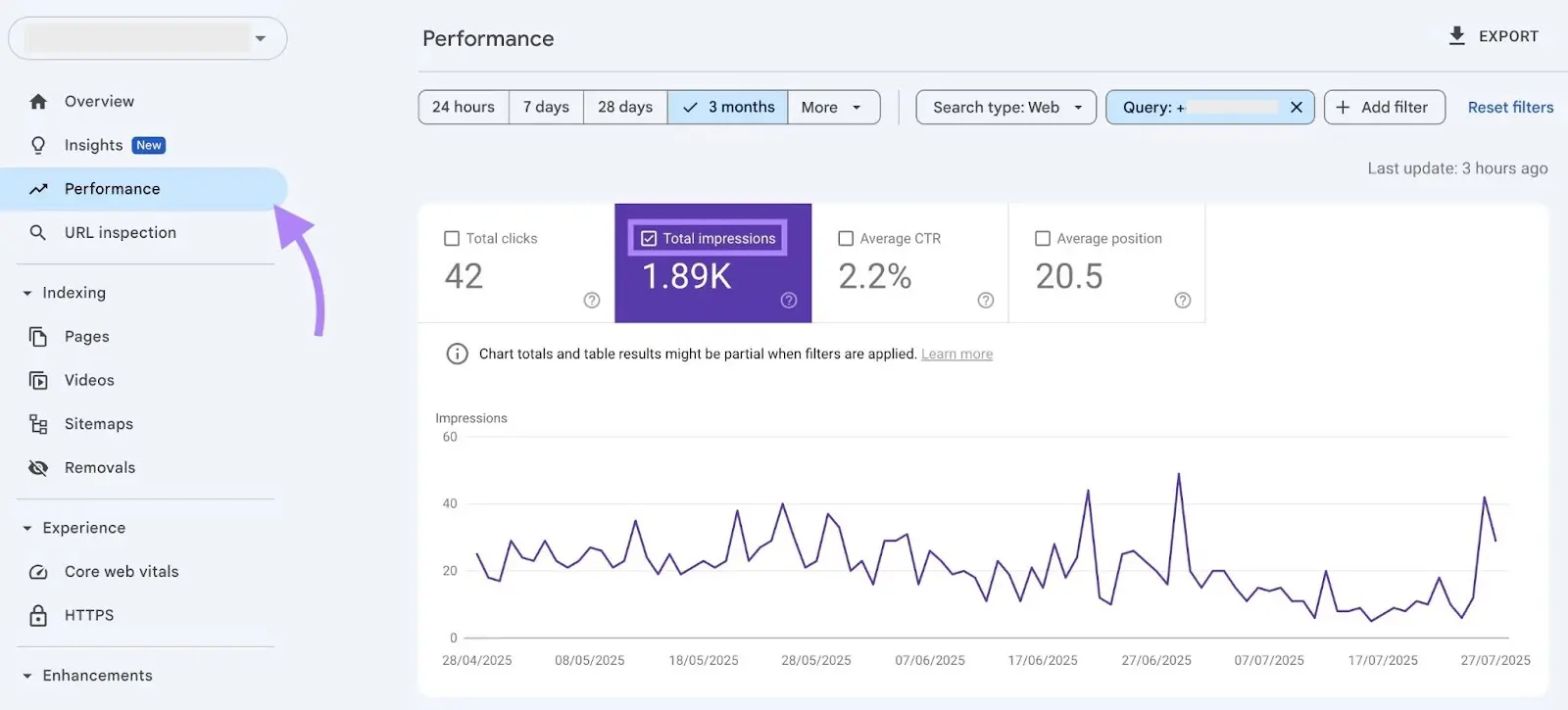
To track search impressions, open the Performance report in Google Search Console (select Search results if applicable), then enable the Total impressions metric to monitor how often your website appears in search results.
For a more comprehensive view, use AI visibility tracking tools to measure your brand’s presence across multiple AI-powered search platforms.
These tools typically provide metrics such as Share of Voice, allowing you to compare how frequently your brand appears in AI-generated answers relative to your competitors and identify opportunities to improve your visibility.
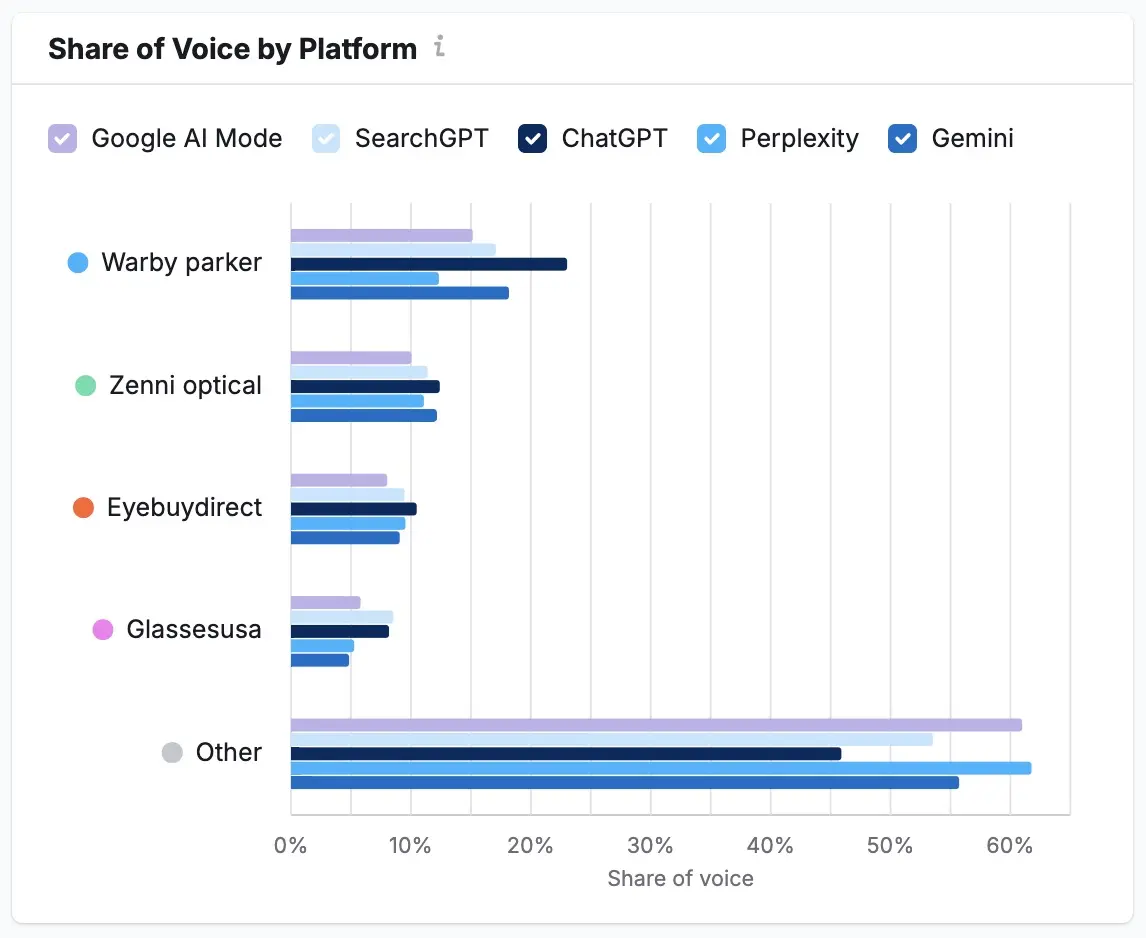
Explore the top AI search ranking factors that impact AI citations.
Frequently Asked Questions
1. What is Answer Engine Optimization?
Answer Engine Optimization (AEO) is the process of optimizing content so AI-powered search engines can understand, retrieve, and cite it in their answers.
2. Is AEO different from SEO?
Yes. SEO focuses on ranking in search results, while AEO focuses on getting your content cited by AI-powered search engines.
3. Does AEO replace SEO?
No. AEO complements SEO. A strong SEO foundation also supports better AEO performance.
4. How can I optimize my website for AEO?
Create answer-focused content, use clear headings, implement structured data, demonstrate E-E-A-T, and keep your content up to date.
5. How do I know if my AEO strategy is working?
Track AI brand mentions, branded search volume, search impressions, and AI visibility metrics to measure your performance.
Conclusion
Answer Engine Optimization (AEO) helps your content become more visible across AI-powered search engines by making it easier for AI to understand and cite your information. By combining AEO with a strong SEO strategy, you can increase brand visibility, build authority, and stay competitive as AI search continues to evolve.
Arestós provides end-to-end Answer Engine Optimization services, helping businesses improve AI visibility through strategic content optimization and AI search best practices.
Ready to grow your AI search presence? Contact us today to get started.
Subscribe to our newsletter!
Get updated to
the lastest IT trends
Related Posts
Update the latest technology trends for your business