Back to featured insights
What Is AEO vs SEO? A Guide for Hong Kong Businesses
Search is evolving beyond traditional rankings. Discover how SEO and AEO differ, how AI-powered search is changing user behaviour, and why Hong Kong businesses need both strategies to stay visible, relevant, and competitive.
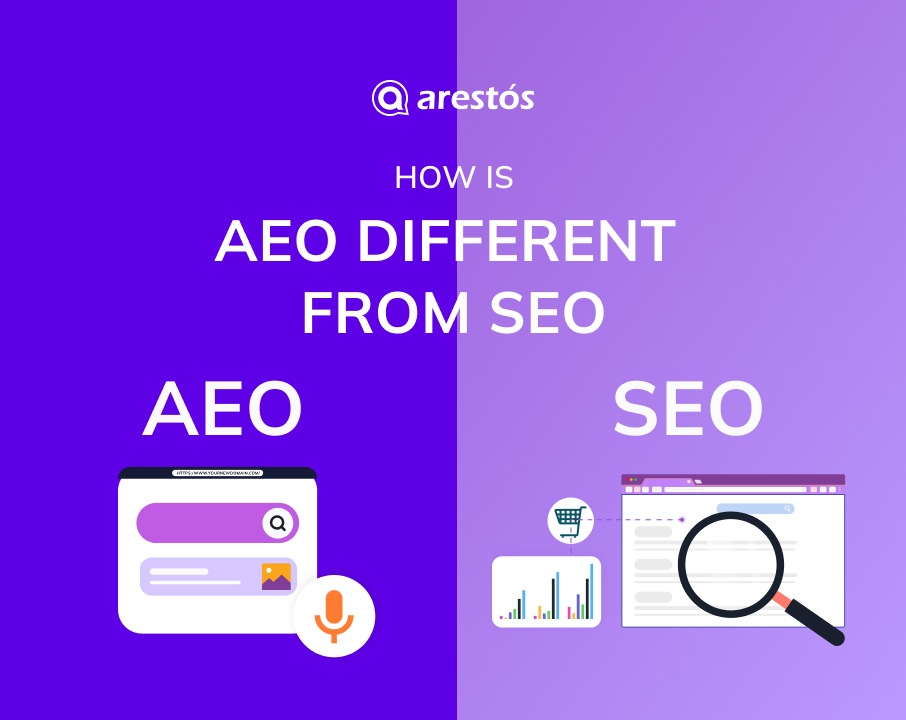
Table of Content
Share
AEO vs. SEO represents the shift from traditional search rankings to a broader search experience shaped by AI-generated answers. Understanding both approaches can help businesses improve online visibility, reach users across different search platforms, and adapt their content strategy to changing search behaviour.
This blog is for Hong Kong businesses and marketing teams looking to strengthen their search presence. In this guide, we’ll explain the key differences between AEO and SEO, how they work together, and when to prioritize each strategy.
What Is SEO?
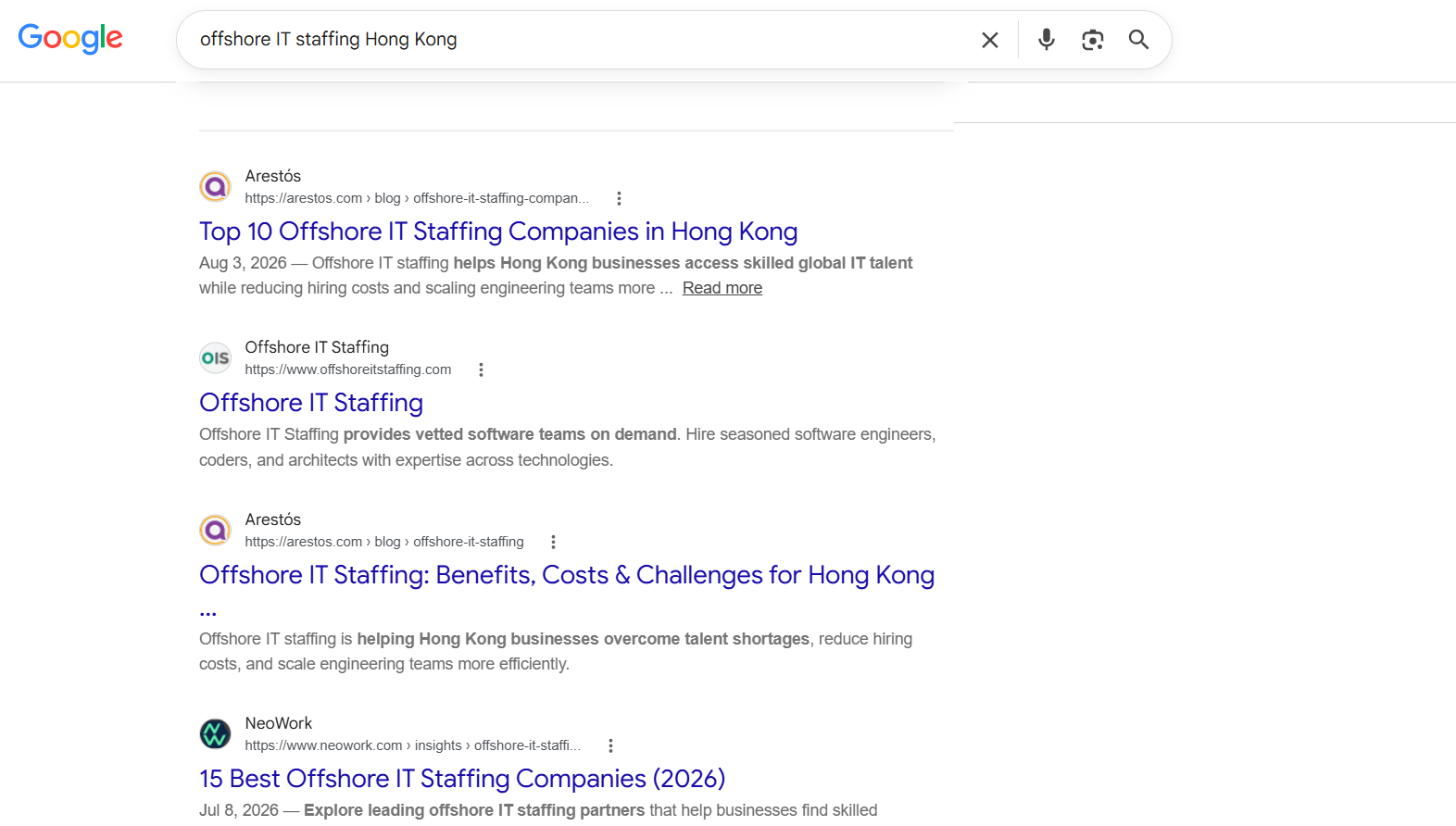
SEO (Search Engine Optimization) is the process of optimizing a website’s content, structure, and authority to improve its visibility in organic search results on platforms such as Google and Bing.
SEO covers three main areas: on-page SEO, including content, keywords, and search intent; technical SEO, such as page speed, crawlability, and structured data; and off-page SEO, which focuses on backlinks and brand authority.
In Hong Kong, where Google accounts for roughly nine in ten searches, SEO still largely means optimizing for Google. However, as AI-powered search changes how people find information, ranking alone is no longer the only goal.
What Is AEO?
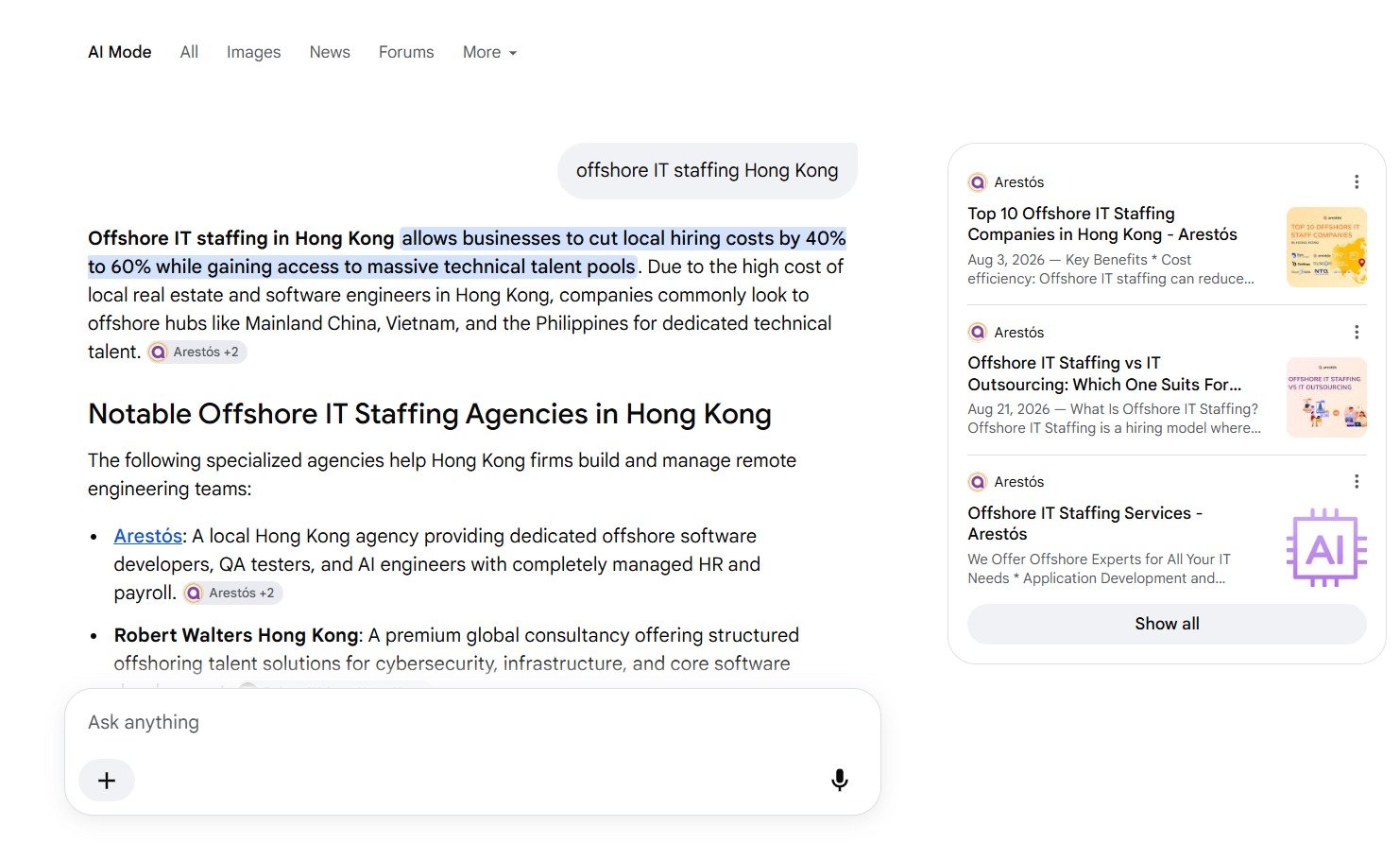
AEO (Answer Engine Optimization) is the process of structuring content so AI systems and answer engines can easily understand, extract, summarize, and cite it when generating direct answers to users’ questions.
AEO helps improve visibility across platforms such as ChatGPT, Perplexity, Google AI Overviews and AI Mode, Gemini, Copilot, and voice assistants. It focuses on making information clear, well-structured, authoritative, and easy for AI systems to interpret and reuse.
To learn more about AEO, read our guide: What Is Answer Engine Optimization?
AEO vs SEO: Key Differences at a Glance
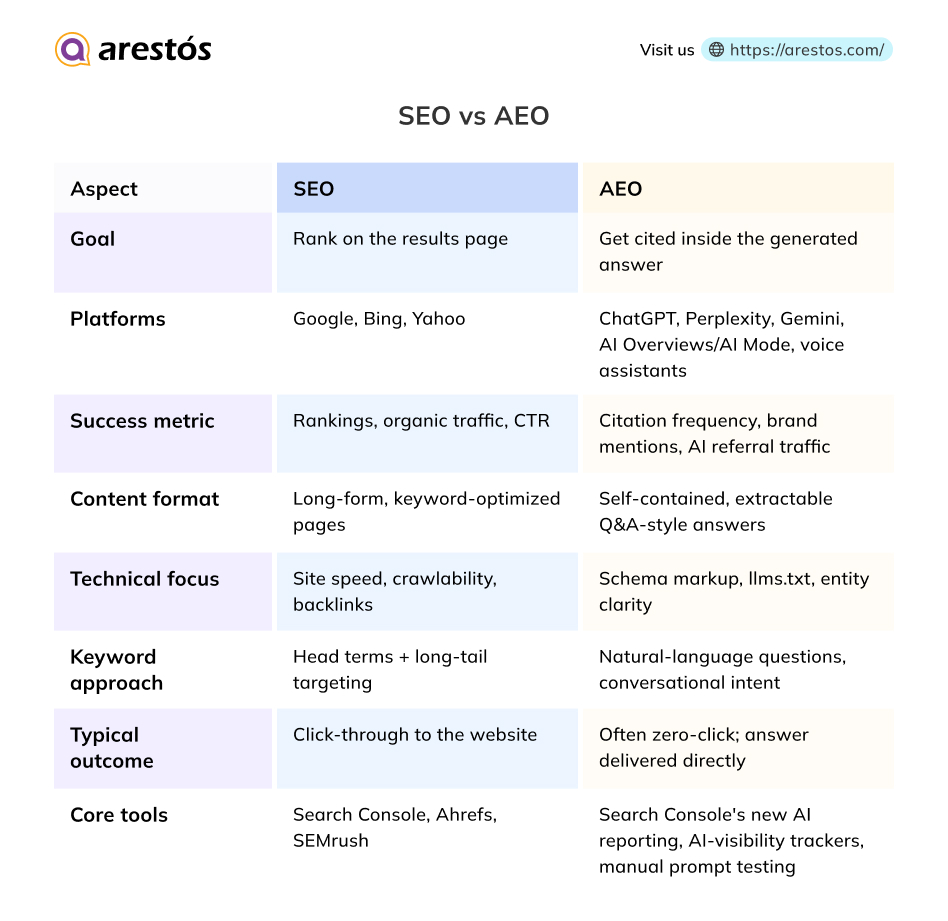
This table highlights the key differences between SEO and AEO, from their goals and content approaches to the signals and metrics used to measure success.
AEO vs SEO: A Detailed Comparison
SEO and AEO both aim to improve online visibility, but they support different ways of helping users find and access information.
Primary Goals
Primary Goals
SEO focuses on improving a website’s visibility in organic search results, helping businesses attract qualified traffic and conversions. AEO focuses on making content easy for search engines and AI platforms to extract, summarize, and present as a direct answer.
SEO primarily aims to:
- Improve organic rankings
- Increase website traffic
- Attract qualified leads and conversions
AEO primarily aims to:
- Provide direct answers to user questions
- Increase visibility in answer-driven search experiences
- Improve the chances of being cited or referenced by AI platforms
The two goals are closely connected: SEO helps users find your content, while AEO helps your content become the answer they see.
Types of Search Queries
SEO often targets keyword-based searches, ranging from broad informational terms to high-intent commercial queries. AEO places greater emphasis on natural-language and conversational questions, reflecting how users increasingly search and interact with AI-powered platforms.
SEO often targets searches such as:
- website development Hong Kong
- SEO agency Hong Kong
- enterprise web design
AEO increasingly targets questions such as:
- What is the difference between SEO and AEO?
- Which SEO strategy works for AI search?
- How can Hong Kong businesses appear in AI search results?
These approaches are not mutually exclusive. A strong page can target both a commercial keyword and the questions surrounding it.
Content Structures
SEO content is typically structured around a primary keyword, search intent, and comprehensive topical coverage. AEO builds on this foundation by making key information easier to extract and understand.
SEO-focused content may include:
- Keyword-optimized titles and headings
- Comprehensive topic coverage
- Internal links to related pages
- Content aligned with search intent
AEO-focused content may additionally include:
- Direct-answer sections
- Question-based headings
- Concise definitions
- Lists, tables, and step-by-step explanations
The strongest content combines both: it covers a topic comprehensively while making important answers clear and easy to find.
Optimization Signals
SEO relies on a broad range of signals that help search engines evaluate a page’s relevance, accessibility, and authority. AEO builds on these foundations while placing greater emphasis on how clearly information can be understood and reused.
Key SEO considerations include:
- Content relevance and search intent
- Technical accessibility and crawlability
- Internal linking and site structure
- Backlinks and website authority
AEO additionally emphasizes:
- Clear and direct answers
- Semantic context
- Structured data
- Entity relationships
- Well-organized, machine-readable information
In practice, AEO does not replace traditional SEO signals—it adds another layer that helps content perform in answer-driven search environments.
Success Metrics
SEO success is traditionally measured by how effectively a website attracts visibility, traffic, and conversions from organic search.
Common SEO metrics include:
- Keyword rankings
- Organic traffic
- Impressions and click-through rate
- Leads, conversions, and revenue
AEO expands the measurement framework to include visibility beyond the traditional search result.
Additional AEO metrics may include:
- Featured snippet visibility
- Appearances in AI-generated answers
- Brand mentions and citations
- Visibility for high-value questions
- Referral traffic from AI platforms, where measurable
The goal is not to replace traditional SEO metrics, but to measure whether answer-driven visibility also contributes to brand awareness, traffic, and business results.
Why This Matters for Hong Kong Right Now
Hong Kong’s search landscape is evolving as AI becomes an increasingly important part of how people discover, evaluate and access information online.
Hong Kong’s search behaviour is shifting faster than the headlines suggest
AI is becoming part of how people in Hong Kong search for information. In a highly connected, mobile-first and bilingual market, users increasingly move between Google, AI tools, social platforms and websites depending on what they need.
They expect information to be:
- Fast and direct
- Easy to understand
- Available across English and Traditional Chinese
For businesses, ranking for keywords is no longer enough. Content also needs to be clear, structured and easy for AI systems to understand and surface.
Google still wins the click — but AI is winning the “first stop”
Google remains essential for discovering websites and taking action. However, AI tools are increasingly used for the first step: understanding a topic, comparing options or finding recommendations.
A typical journey may look like:
Ask AI → Understand or compare → Search Google → Visit a website
This is why AEO should complement SEO, not replace it. SEO helps businesses rank and attract traffic, while AEO helps content become easier for AI systems to understand and use in generated answers.
What’s fuelling the shift in Hong Kong specifically
Hong Kong’s highly digital, mobile-first environment makes AI-assisted search a natural extension of existing behaviour. At the same time, businesses continue investing in search and digital marketing, showing that traditional search still matters.
The bilingual nature of the market adds another layer. Users may search in English, Traditional Chinese or both, while AI can synthesise information across languages.
For Hong Kong businesses, the goal is no longer just to rank on Google. It is to ensure their content can be found, understood and surfaced wherever the search journey begins.
How AI-Powered Search Is Reshaping Hong Kong’s Search Landscape
AI is changing how users search, research, and discover businesses. For Hong Kong companies, traditional rankings still matter, but visibility now extends beyond the standard search results page.
Google AI Overviews & AI Mode
Google is introducing more AI-driven ways for users to find information, changing how people interact with traditional search results.
- AI Overviews: AI-generated summaries that appear within Google Search, with links to supporting sources.
- AI Mode: A more conversational search experience that allows users to ask follow-up questions and explore a topic further.
- Why it matters: Users can increasingly get answers without clicking through to a website, contributing to the growth of zero-click searches.
To learn more about how to optimize your content for AI-generated search results, read our guide: How to Rank in Google’s AI Overviews.
ChatGPT, Perplexity & Gemini as Search Tools
Beyond Google, AI platforms are increasingly becoming part of how users research, compare options, and make decisions.
- Users increasingly use AI platforms to research topics, compare options, and create initial vendor shortlists.
- In Hong Kong’s increasingly AI-enabled business environment, potential customers may evaluate a brand before visiting its website.
- This means businesses need to consider not only whether they rank, but also whether their information can be found and referenced by AI.
For a closer look at how businesses can gain visibility in AI-generated answers, see: How Does My Company Appear in AI Search Answers?
Voice Search & Conversational Queries
As search becomes more conversational, the way users phrase their queries is also changing.
- Search queries are becoming longer and more conversational.
- Users increasingly ask complete questions instead of entering short keyword phrases.
- Clear headings, direct answers, and question-based content can therefore improve visibility in featured snippets, voice search, and AI-driven results.
For practical strategies to improve visibility in spoken searches, see Voice Search Optimization: How to Rank for Spoken Searches.
Generative & Zero-Click Search — What It Means for Traffic
As more answers are delivered directly within search and AI platforms, businesses may need to rethink how they measure search performance.
- Generative search can reduce clicks for some informational queries because users may get answers directly within the search interface.
- However, organic rankings still matter because authoritative web content remains an important source for AI-generated answers.
- Businesses should look beyond traffic alone and also track AI visibility, citations, brand mentions, and conversion quality.
Explore practical ways to prepare your content for AI search: How to Optimize Content for AI Search.
Do You Need SEO, AEO, or Both? A Decision Framework
The right balance depends on how customers discover, research, and choose your business.
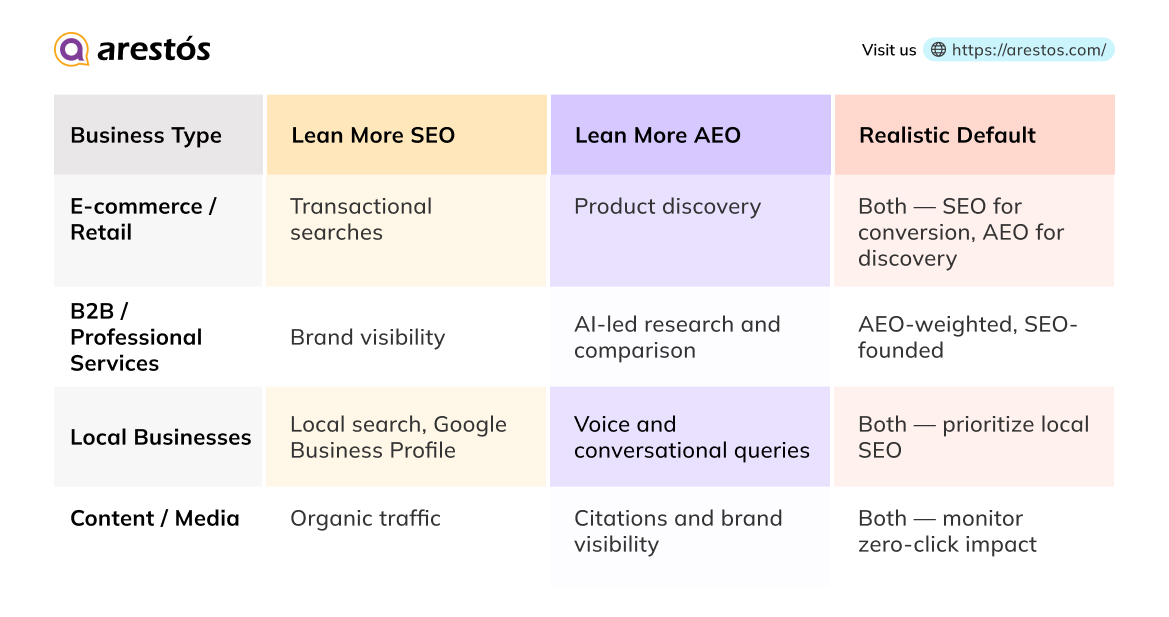
The key takeaway: AEO does not replace SEO. The best approach is usually to build a strong SEO foundation, then use AEO to improve visibility across AI-powered search experiences.
For e-commerce businesses looking to strengthen their SEO foundation, explore: How to Improve E-Commerce SEO in Hong Kong.
Frequently Asked Questions
1. What is the main difference between AEO and SEO?
SEO focuses on improving a website’s visibility and rankings in traditional search results, while AEO focuses on making content easy for search engines and AI systems to extract and present as direct answers.
2. Does AEO replace SEO?
No. AEO complements SEO rather than replacing it. A strong SEO foundation helps establish relevance, authority, and discoverability, while AEO helps content perform in answer-driven and AI-powered search experiences.
3. Can SEO and AEO work together?
Yes. The same page can target relevant keywords for SEO while answering related questions clearly for AEO. Combining both helps businesses reach users across traditional search results, featured snippets, and AI-generated answers.
4. How does AEO help businesses appear in AI search results?
AEO makes content easier for AI systems to understand, extract, and reference by using clear answers, question-based headings, structured content, and authoritative information. This can improve a brand’s chances of being cited in AI-generated responses.
5. How do you measure AEO performance?
AEO can be measured through AI visibility, citations, brand mentions, featured snippet appearances, and referral traffic from AI platforms where measurable. These should be considered alongside traditional SEO metrics such as rankings, organic traffic, and conversions.
Conclusion
SEO and AEO are not competing strategies. SEO helps businesses build organic visibility and authority, while AEO makes content easier for search engines and AI platforms to understand, extract, and reference. For businesses in Hong Kong, combining both provides a stronger foundation for staying visible as search continues to evolve.
At Arestós, we help businesses strengthen their digital presence through SEO and AEO-focused content and website optimization, from search-friendly content structures to technical improvements that support visibility across traditional and AI-powered search.
Ready to strengthen your search visibility? Contact us today to discuss your SEO and AEO strategy.
Subscribe to our newsletter!
Get updated to
the lastest IT trends
Related Posts
Update the latest technology trends for your business