Back to featured insights
What is Generative Engine Optimization? The Complete Guide
Generative Engine Optimization is reshaping how brands are discovered online. As AI-powered search continues to grow, understanding how content is evaluated, referenced, and surfaced by AI systems is becoming essential for maintaining visibility and staying competitive.
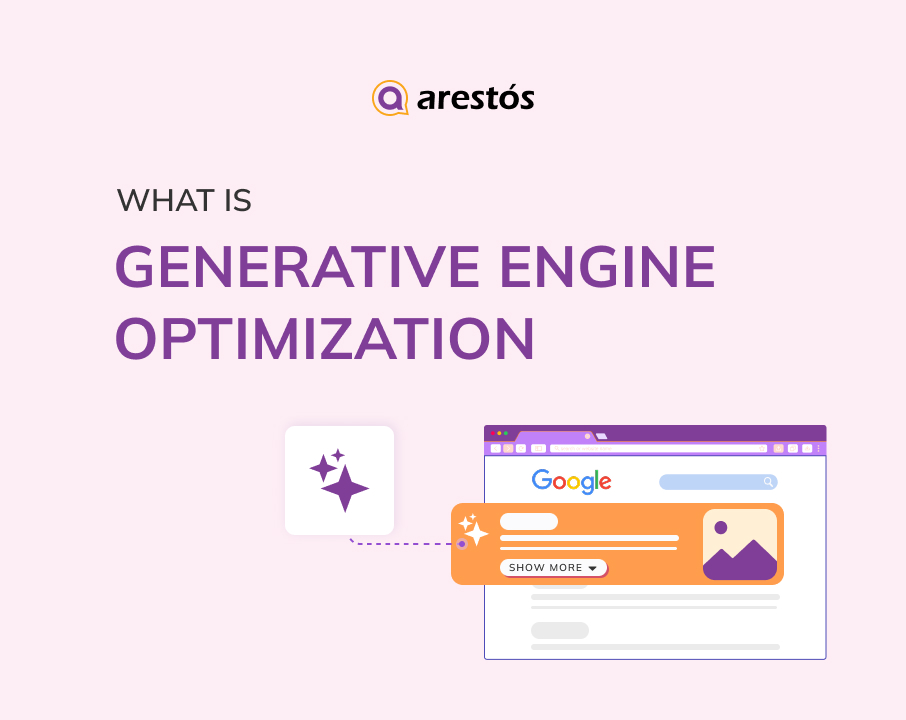

Table of Content
Share
Generative Engine Optimization is the process of optimizing content to improve visibility in AI-generated search results and responses. A strong GEO strategy can help increase brand awareness, AI visibility, and organic traffic.
Whether you’re a business owner, marketer, or SEO professional, understanding GEO is becoming increasingly important as AI search continues to grow. In this guide, you’ll learn what GEO is, why it matters, and how to optimize your content for AI-powered search platforms.
What is Generative Engine Optimization?
Generative engine optimization refers to the process of optimizing content so that AI-powered search and answer engines can better interpret, evaluate, and utilize information from a website when generating responses for users.
The purpose of generative engine optimization is to improve a brand’s visibility across AI-driven search experiences by making content more accessible, relevant, and trustworthy to generative AI systems. This can help businesses increase their chances of being mentioned or referenced when users seek information through conversational AI platforms.
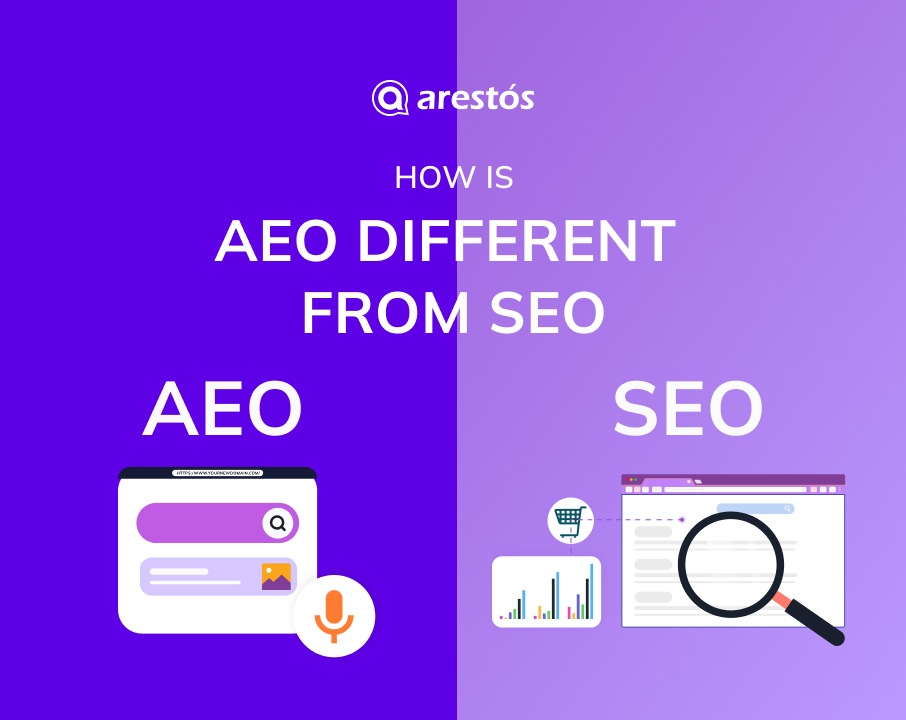
Learn more about GEO in our guide: AEO vs GEO: What’s the Difference?
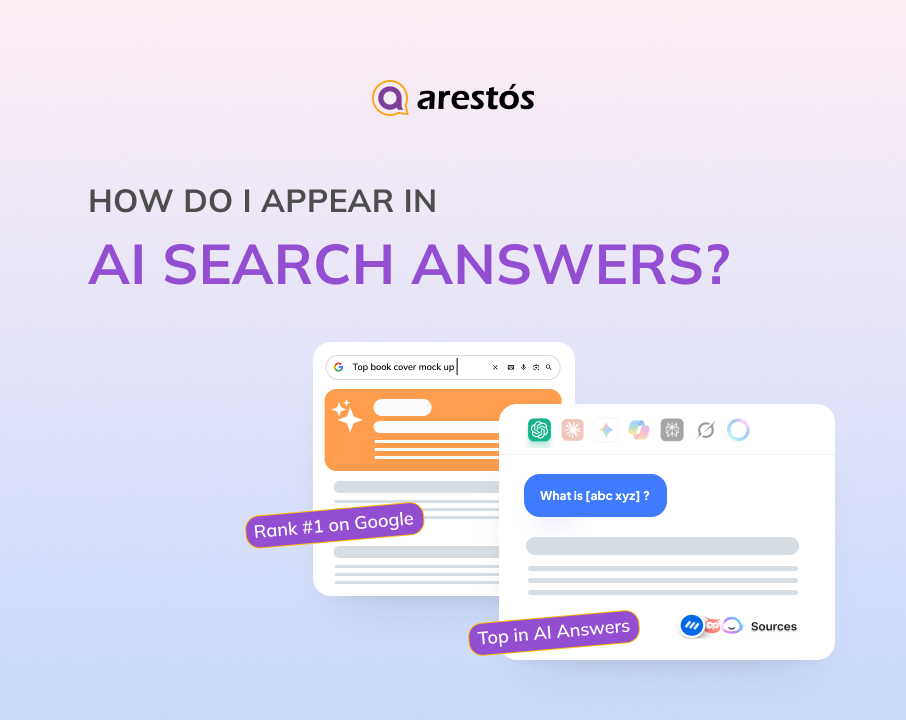
Here’s an example of how a website may be featured within a generative AI platform such as ChatGPT:
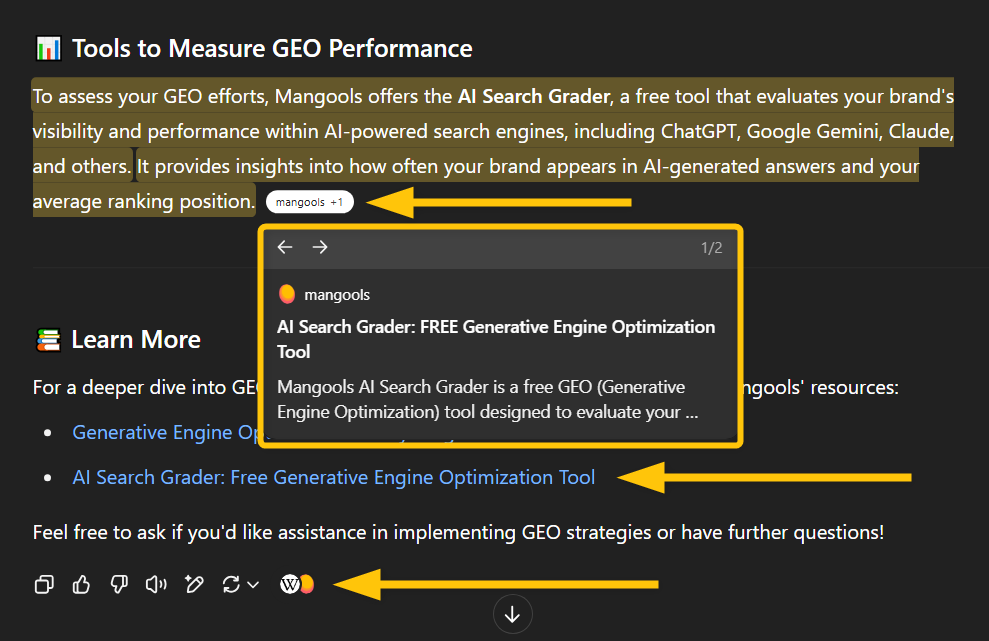
Unlike traditional search engines, which primarily return a list of ranked web pages, AI-powered search platforms are designed to generate direct responses by synthesizing information from multiple sources. Rather than requiring users to browse through several results, these systems can deliver contextual answers that address a query in a more conversational and comprehensive manner.
In a traditional search experience, users must evaluate and navigate individual pages to find the information they need. Generative AI platforms, on the other hand, analyze relevant content and present a consolidated response, often accompanied by citations or references to supporting sources.
Want to improve your visibility in Google’s AI-generated results? Read our How to Rank in Google’s AI Overviews guide.
Why Generative Engine Optimization Matters Today
As AI-powered search platforms continue to reshape how users find information, Generative Engine Optimization is becoming increasingly important for maintaining online visibility.
- AI search adoption is growing rapidly: More users are relying on conversational AI platforms to find information, research products, and make decisions.
- Search experiences are becoming answer-focused: Instead of browsing multiple web pages, users can receive direct responses generated from various sources.
- Visibility extends beyond traditional rankings: Appearing in AI-generated answers creates new opportunities for brands to reach potential customers.
- Authority and trust are increasingly important: AI systems tend to prioritize content that demonstrates expertise, relevance, and credibility.
- User behavior is evolving: As conversational search becomes more common, businesses need to adapt their content strategies to align with how information is discovered and presented.
- Early adoption can provide a competitive advantage: Organizations that begin optimizing for AI-driven search today may be better positioned as generative search continues to develop.
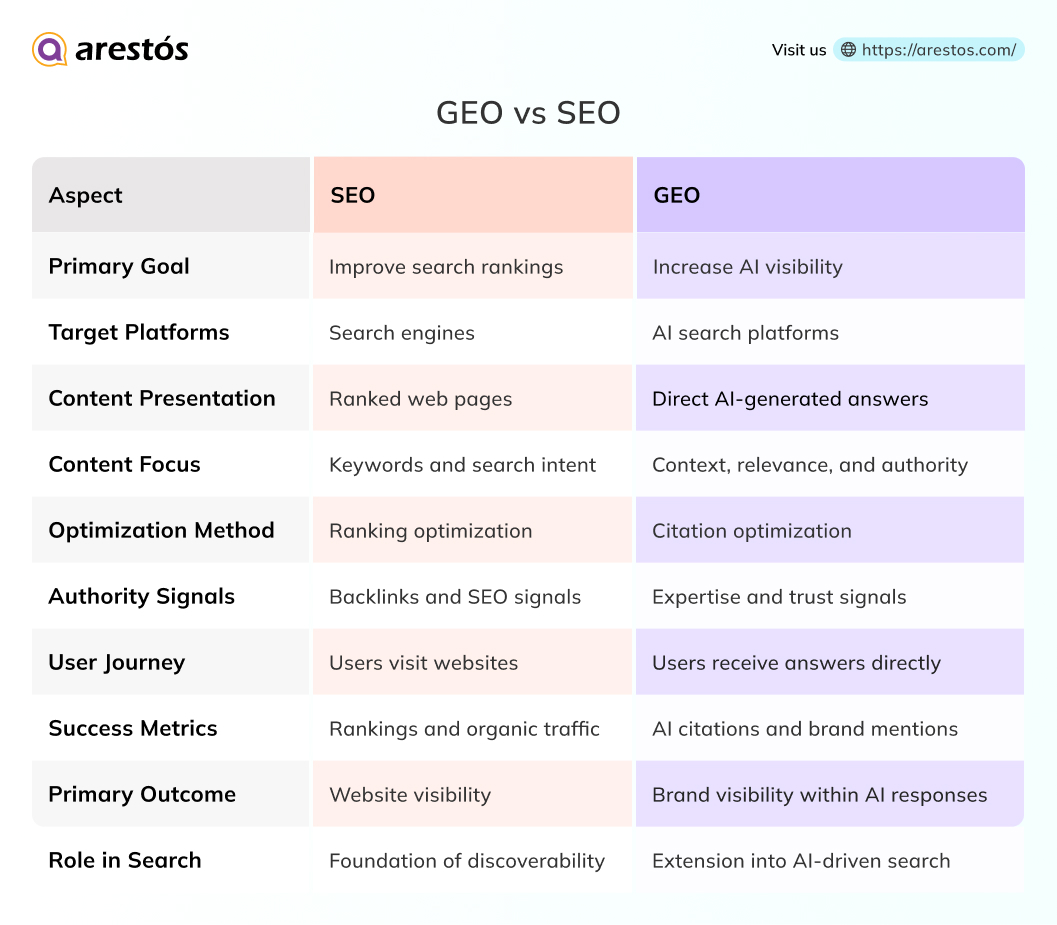
The difference between GEO and SEO
How do generative AI engines work?
Generative AI platforms are powered by large language models (LLMs), which are trained on vast amounts of information from books, websites, articles, and other digital sources. Instead of simply retrieving existing content, these models can analyze information, understand context, and generate original responses that align with a user’s query.
At a high level, generative AI systems work through several key processes:
- Training Data: Models learn language patterns, relationships, and concepts from large-scale datasets.
- Natural Language Processing (NLP): AI interprets the meaning, intent, and context behind a user’s question.
- Pattern Recognition: The model identifies relevant information and predicts the most appropriate response.
- Context Understanding: AI evaluates the full query rather than focusing solely on individual keywords.
- Continuous Improvement: Models and underlying systems are regularly updated to enhance accuracy and relevance.
Some of the most widely used generative AI platforms today include:
- ChatGPT
- Claude
- Gemini
- Perplexity
- Microsoft Copilot
- Google AI Overviews
Optimization Tips for the Most Popular LLMs
Different AI platforms use different models and data sources, which can influence how they discover, evaluate, and reference content. Understanding these differences can help improve visibility across a wider range of AI-driven search experiences.
ChatGPT

ChatGPT aims to provide users with accurate, relevant, and trustworthy information. While there is no direct ranking system for ChatGPT, businesses can improve their visibility by focusing on content quality, authority, and brand credibility.
How to Optimize Content for ChatGPT
- Build Brand Authority: Increase your presence across reputable websites, industry publications, and trusted online sources.
- Create High-Quality Content: Publish accurate, comprehensive content that directly addresses user questions and search intent.
- Demonstrate Expertise: Showcase industry knowledge through original insights, case studies, and expert-driven content.
- Earn Trust Signals: Strengthen credibility through reviews, testimonials, citations, and authoritative backlinks.
- Use Natural Language: Write in a clear, conversational style that aligns with how users interact with AI platforms.
- Keep Content Updated: Regularly review and refresh content to ensure information remains accurate and relevant.
Perplexity

Perplexity combines AI-generated responses with real-time web information, making content freshness and source credibility particularly important. To improve visibility within Perplexity, focus on building authority and publishing content that provides clear, valuable insights.
How to Optimize Content for Perplexity
- Create Topically Relevant Content: Publish content that thoroughly covers topics within your area of expertise.
- Earn Quality Citations: Increase mentions and references from trusted industry publications and authoritative websites.
- Maintain Fresh Content: Regularly update key pages to keep information accurate and relevant.
- Build Industry Authority: Establish credibility through thought leadership, research, and expert-driven content.
- Cover Topics in Depth: Create comprehensive resources that answer related questions and provide complete context.
Claude
Claude is designed to generate helpful, reliable, and context-aware responses. To improve visibility within Claude-powered experiences, focus on creating trustworthy content that demonstrates expertise and provides clear value to users.
How to Optimize Content for Claude
- Publish Comprehensive Content: Create in-depth resources that thoroughly address a topic or question.
- Demonstrate Expertise: Support content with original insights, research, and industry knowledge.
- Build Credibility: Earn mentions and citations from reputable organizations, publications, and industry sources.
- Prioritize Clarity: Use clear headings, logical structure, and concise language to improve readability.
- Focus on User Value: Write content that is informative, accurate, and genuinely helpful rather than optimized solely for keywords.
DeepSeek

DeepSeek focuses on delivering relevant, context-aware responses by analyzing content quality, user intent, and overall usefulness. To improve visibility, prioritize creating valuable content that clearly addresses user needs.
How to Optimize Content for DeepSeek
- Focus on Content Quality: Publish accurate, detailed, and informative content that provides meaningful value.
- Address User Intent: Structure content around the questions, challenges, and goals of your target audience.
- Strengthen Technical SEO: Ensure your website is fast, mobile-friendly, and easy for search systems to understand.
- Use Structured Data: Implement schema markup and clear content organization to improve content interpretation.
- Localize Content When Relevant: Adapt content to regional audiences, languages, and market-specific needs.
Qwen
Qwen is designed to understand user intent and deliver relevant, context-aware responses. To improve visibility, focus on creating useful content that answers user questions clearly and stays aligned with evolving industry topics.
How to Optimize Content for Qwen
- Answer User Questions Clearly: Provide direct, concise answers to common questions and search queries.
- Cover Emerging Topics: Create content around new developments, industry trends, and innovative ideas.
- Use Structured Content: Organize information with headings, lists, tables, and clear content hierarchy.
- Implement Structured Data: Use schema markup to help search systems better understand your content.
- Stay Current: Regularly publish and update content to reflect recent changes and developments.
Gemini
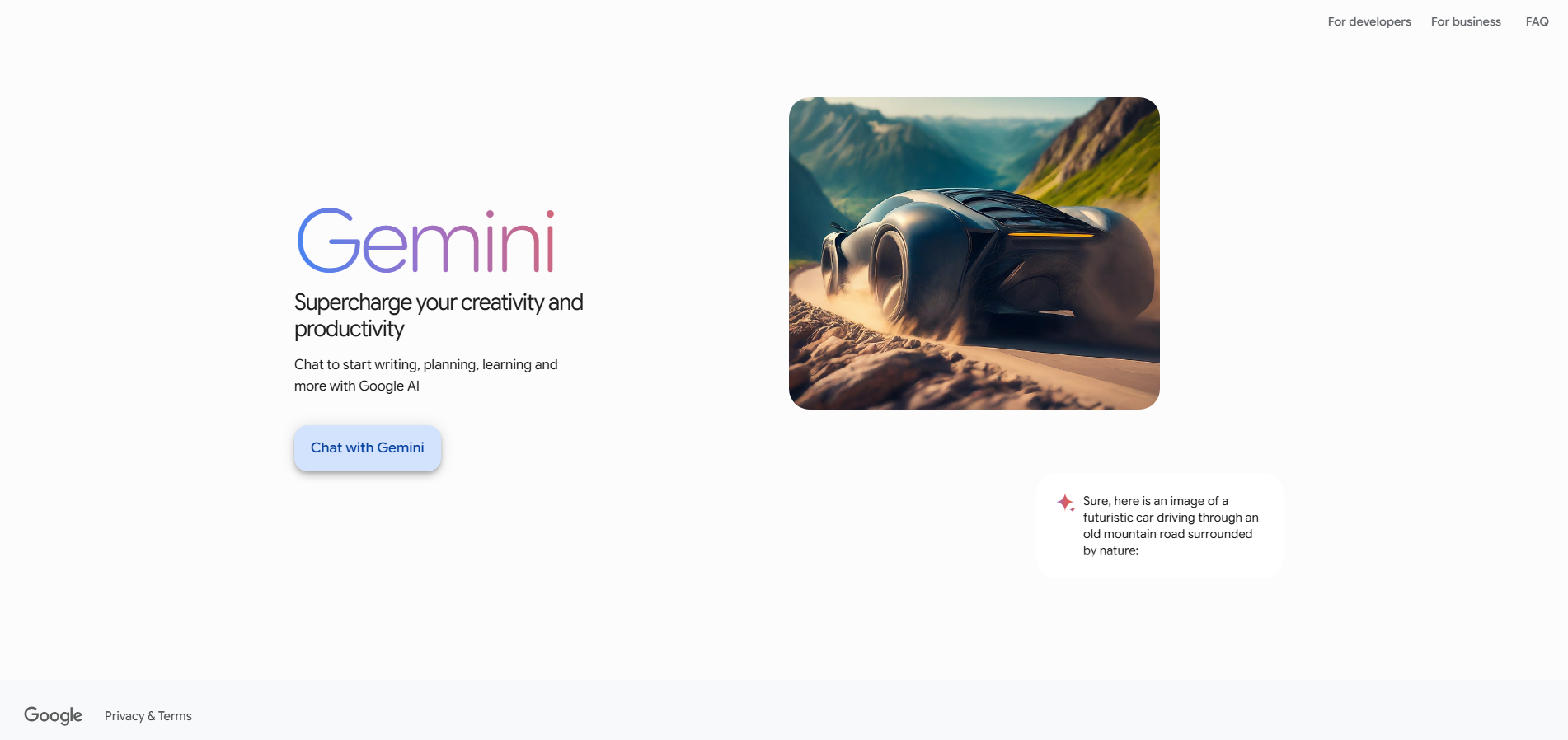
Gemini is integrated with Google’s search ecosystem, making content quality, relevance, and strong SEO fundamentals especially important. To improve visibility, focus on creating authoritative content that aligns with user intent and follows established SEO best practices.
How to Optimize Content for Gemini
- Build a Strong SEO Foundation: Ensure your website follows technical SEO and on-page optimization best practices.
- Publish Authoritative Content: Create accurate, trustworthy content that demonstrates expertise and experience.
- Keep Content Updated: Regularly refresh important pages to maintain relevance and accuracy.
- Optimize for Mobile and Performance: Improve page speed, mobile usability, and overall user experience.
- Focus on Search Intent: Structure content around user needs with clear headings, logical organization, and comprehensive answers.
Want to improve your chances of being referenced by AI platforms? Learn more in our How To Get Cited By AI guide.
How to optimize for GEO and SEO?
As AI-powered search continues to evolve, businesses should optimize for both traditional search engines and generative AI platforms. A combined SEO and GEO strategy can help maximize visibility across the modern search landscape.
Below are some key steps businesses can take to strengthen their presence in both search and AI-generated results.
Perform holistic research
A strong GEO strategy begins with a thorough understanding of your audience, industry, and competitive landscape. Research helps identify the topics, questions, and information that users are actively seeking across both traditional and AI-powered search platforms.
Key areas to focus on include:
- Long-Tail Keywords and Questions: Identify specific search queries that reflect user intent and common information needs.
- Competitor Analysis: Review competitor content, topic coverage, and search visibility to uncover content opportunities.
- AI Search Presence: Monitor how your brand is represented across AI platforms and identify gaps in visibility or messaging.
- Content Research: Gather insights from reliable sources to create comprehensive, accurate, and valuable content.
Create high-quality & relevant content
High-quality content is the foundation of both SEO and GEO. Content that is accurate, trustworthy, and valuable is more likely to perform well in search results and be referenced by AI-powered platforms.
To strengthen your content strategy:
- Implement Structured Data: Use schema markup to help search engines and AI systems better understand your content and its context.
- Distribute Content Across Multiple Channels: Increase visibility by sharing content through blogs, social media, newsletters, and other relevant platforms.
- Demonstrate E-E-A-T: Showcase experience, expertise, authoritativeness, and trustworthiness through expert insights, references, and credible sources.
- Build Brand Authority: Establish your brand as a trusted voice by consistently publishing valuable insights and industry-focused content.
Focus on technical SEO
Technical SEO helps search engines and AI systems efficiently discover, access, and understand your content. A well-optimized website improves both visibility and user experience, making it an essential component of any GEO strategy.
Key areas to focus on include:
- Optimize Page Speed and Mobile Experience: Ensure your website loads quickly and performs well across all devices.
- Use Clear URL Structures: Create descriptive and easy-to-understand URLs that reflect page content.
- Implement Internal Linking: Connect related pages to improve navigation and help search systems understand content relationships.
- Monitor Technical Performance: Regularly identify and fix issues such as broken links, redirect errors, and crawlability problems.
For a broader look at AI content optimization best practices, read: How to Optimize Content for AI Search.
Frequently Asked Questions
1. What is Generative Engine Optimization (GEO)?
Generative Engine Optimization (GEO) is the practice of optimizing content to increase its visibility in AI-generated responses from platforms like ChatGPT, Gemini, and Perplexity.
2. Is GEO replacing SEO?
No. GEO complements SEO by helping content appear in AI-generated answers, while SEO focuses on traditional search rankings.
3. How can I get my website mentioned in ChatGPT?
Create authoritative content, build brand credibility, and earn mentions from trusted sources to improve your chances of being referenced.
4. How do I optimize my website for AI search?
Focus on high-quality content, technical SEO, structured data, topical authority, and user intent.
5. What types of content perform best in AI search?
Content that is accurate, well-structured, comprehensive, and directly answers user questions tends to perform best.
Conclusion
Generative Engine Optimization is becoming an increasingly important part of digital visibility as more users turn to AI-powered platforms for information. By combining strong SEO fundamentals with GEO best practices, businesses can improve their chances of being discovered, referenced, and trusted across both traditional search engines and AI-generated search experiences.
At Arestós, we help businesses adapt to the changing search landscape through integrated SEO, AEO, and GEO strategies. Our approach focuses on improving visibility, strengthening brand authority, and creating sustainable growth across both traditional and AI-driven search channels.
Contact us to learn how AEO and GEO can support your long-term growth.
Subscribe to our newsletter!
Get updated to
the lastest IT trends
Related Posts
Update the latest technology trends for your business